
WT1 在心肌细胞分化中的作用。
Implications of the Wilms' Tumor Suppressor Wt1 in Cardiomyocyte Differentiation.
机构信息
CNRS, INSERM, iBV, Université Côte d'Azur, 06107 Nice, France.
Roche Glycart AG, 8952 Schlieren, Switzerland.
出版信息
Int J Mol Sci. 2021 Apr 21;22(9):4346. doi: 10.3390/ijms22094346.
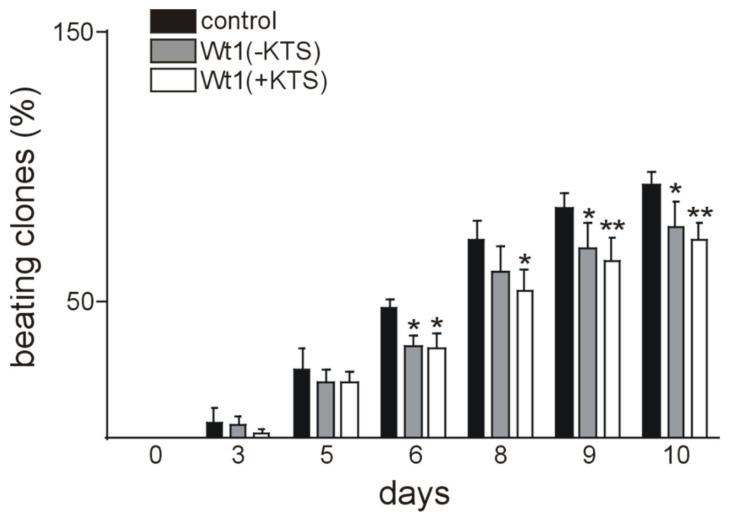
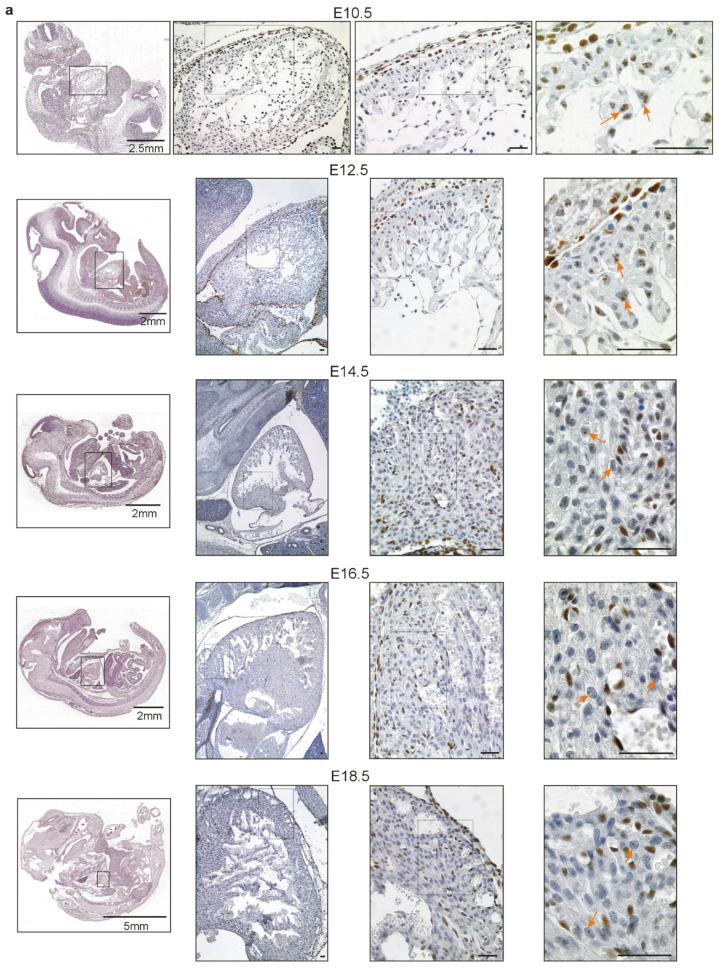
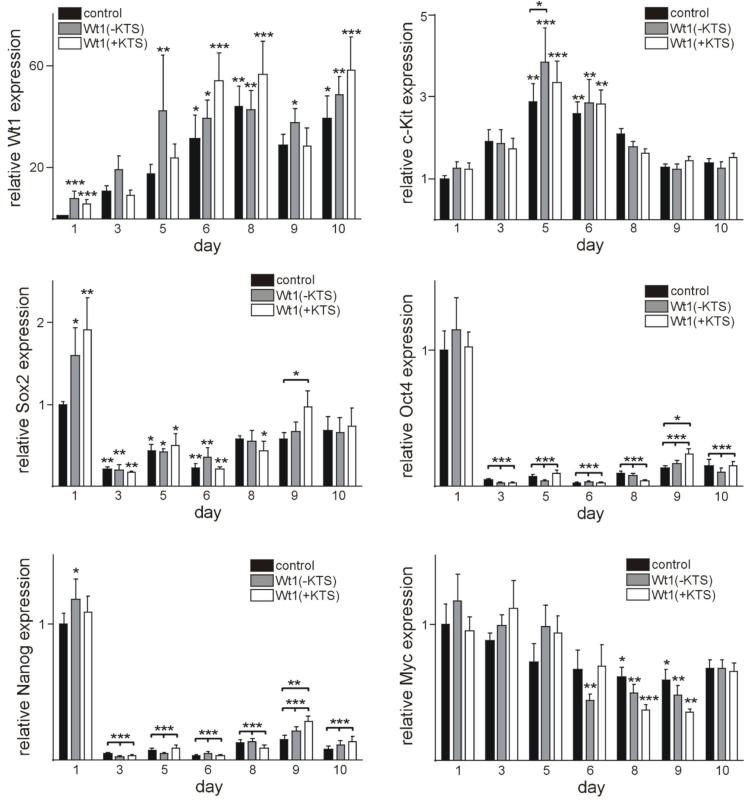
The Wilms' tumor suppressor Wt1 is involved in multiple developmental processes and adult tissue homeostasis. The first phenotypes recognized in Wt1 knockout mice were developmental cardiac and kidney defects. Wt1 expression in the heart has been described in epicardial, endothelial, smooth muscle cells, and fibroblasts. Expression of Wt1 in cardiomyocytes has been suggested but remained a controversial issue, as well as the role of Wt1 in cardiomyocyte development and regeneration after injury. We determined cardiac Wt1 expression during embryonic development, in the adult, and after cardiac injury by quantitative RT-PCR and immunohistochemistry. As in vitro model, phenotypic cardiomyocyte differentiation, i.e., the appearance of rhythmically beating clones from mouse embryonic stem cells (mESCs) and associated changes in gene expression were analyzed. We detected Wt1 in cardiomyocytes from embryonic day (E10.5), the first time point investigated, until adult age. Cardiac Wt1 mRNA levels decreased during embryonic development. In the adult, Wt1 was reactivated in cardiomyocytes 48 h and 3 weeks following myocardial infarction. Wt1 mRNA levels were increased in differentiating mESCs. Overexpression of Wt1(-KTS) and Wt1(+KTS) isoforms in ES cells reduced the fraction of phenotypically cardiomyocyte differentiated clones, which was preceded by a temporary increase in c-kit expression in Wt1(-KTS) transfected ES cell clones and induction of some cardiomyocyte markers. Taken together, Wt1 shows a dynamic expression pattern during cardiomyocyte differentiation and overexpression in ES cells reduces their phenotypical cardiomyocyte differentiation.
Wilms 肿瘤抑制因子 WT1 参与多种发育过程和成人组织稳态。WT1 敲除小鼠中最早识别的表型是心脏和肾脏发育缺陷。WT1 在心脏中的表达已在心脏外膜、内皮细胞、平滑肌细胞和成纤维细胞中描述过。虽然已经提出了 WT1 在心肌细胞中的表达,但这仍然是一个有争议的问题,以及 WT1 在心肌损伤后的发育和再生中的作用。我们通过定量 RT-PCR 和免疫组织化学检测了胚胎发育、成年期和心脏损伤后的心脏 WT1 表达。作为体外模型,分析了表型心肌细胞分化,即从小鼠胚胎干细胞 (mESC) 出现节律性搏动克隆以及相关基因表达的变化。我们从胚胎第 10.5 天 (E10.5),即研究的第一个时间点,检测到 WT1 在心肌细胞中的表达,直到成年。胚胎发育过程中,心脏 WT1 mRNA 水平下降。成年后,心肌梗死后 48 小时和 3 周,心肌细胞中重新激活 WT1。分化的 mESC 中 WT1 mRNA 水平增加。在 ES 细胞中过表达 WT1(-KTS)和 WT1(+KTS)同工型会减少表型心肌细胞分化克隆的比例,这之前是 WT1(-KTS)转染的 ES 细胞克隆中 c-kit 表达的暂时增加和一些心肌细胞标记物的诱导。总之,WT1 在心肌细胞分化过程中表现出动态表达模式,ES 细胞中的过表达会降低其表型心肌细胞分化。




 Zotero 插件