
心肌中 Reg3A、Reg3γ 和 Oncostatin M 的蓄积与心脏结节病患者肉芽肿的形成有关。
Myocardial Accumulations of Reg3A, Reg3γ and Oncostatin M Are Associated with the Formation of Granulomata in Patients with Cardiac Sarcoidosis.
机构信息
Department of Cardiac Surgery, Kerckhoff Heart Center, Benekestr. 2-8, 61231 Bad Nauheim, Germany.
Campus Kerckhoff, Justus-Liebig-University Giessen, 61231 Bad Nauheim, Germany.
出版信息
Int J Mol Sci. 2021 Apr 16;22(8):4148. doi: 10.3390/ijms22084148.
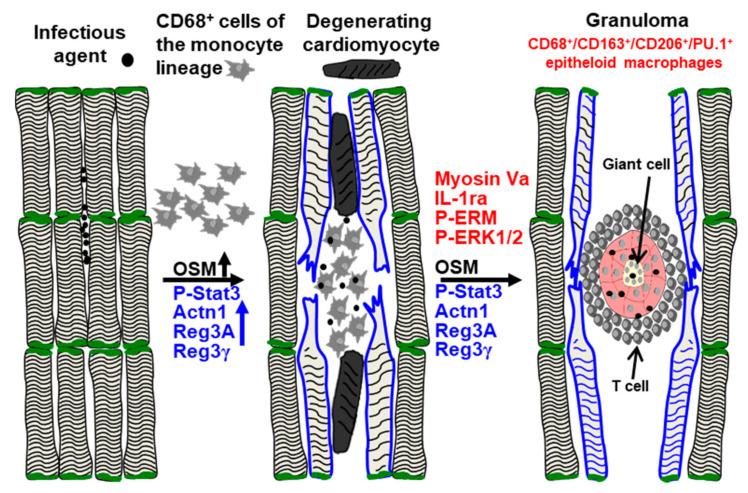
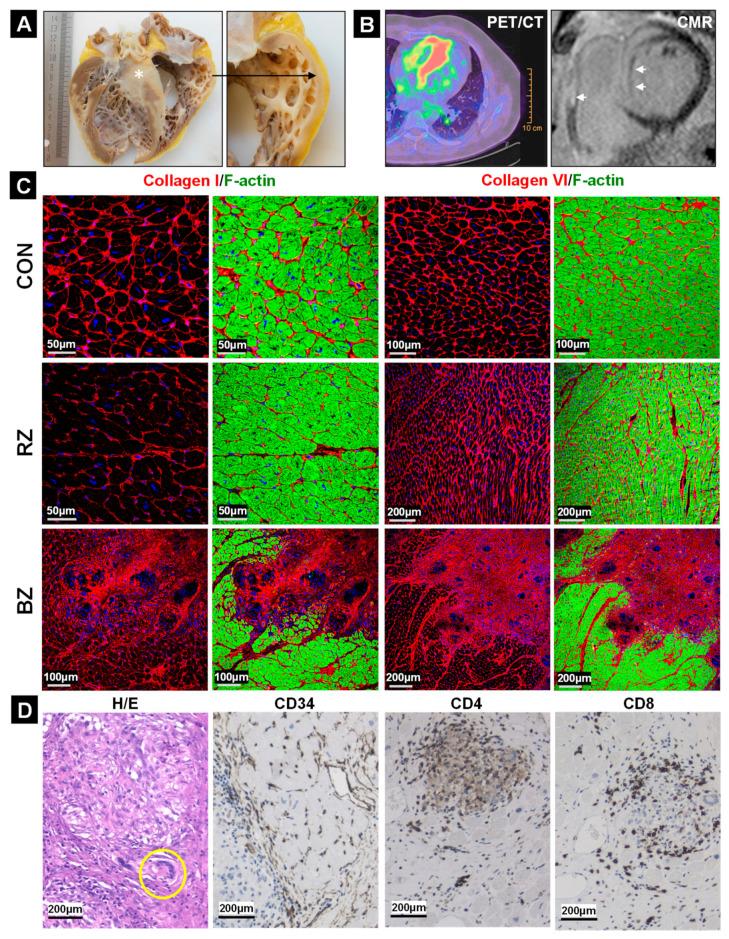
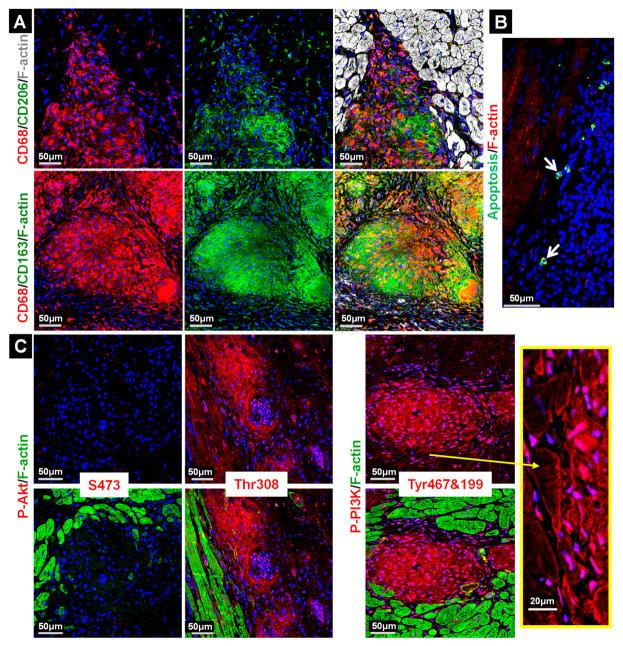
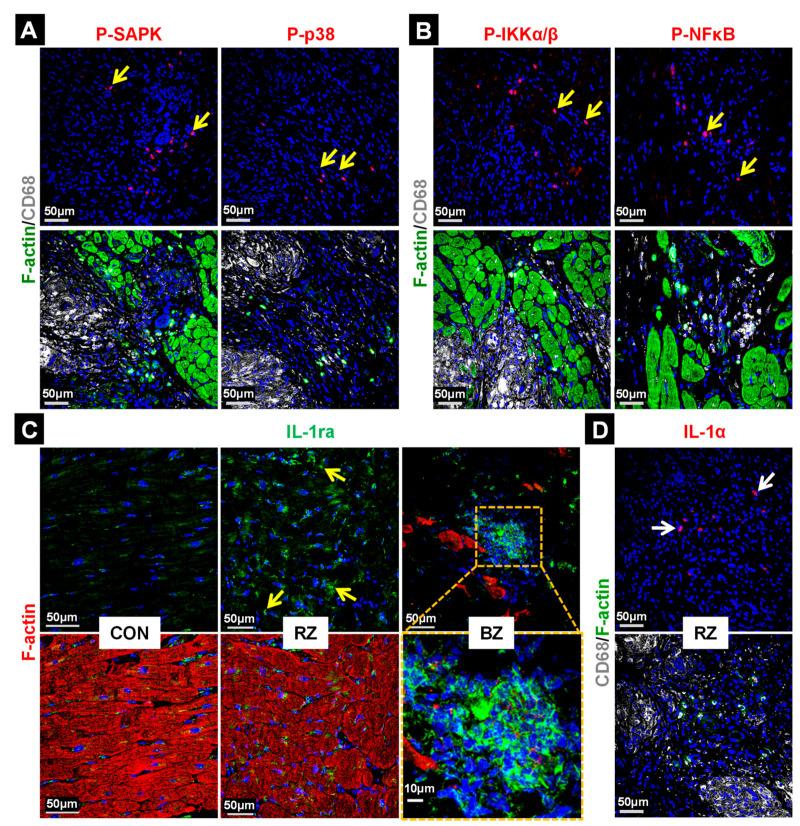
Cardiac sarcoidosis (CS) is a poorly understood disease and is characterized by the focal accumulation of immune cells, thus leading to the formation of granulomata (GL). To identify the developmental principles of fatal GL, fluorescence microscopy and Western blot analysis of CS and control patients is presented here. CS is visualized macroscopically by positron emission tomography (PET)/ computed tomography (CT). A battery of antibodies is used to determine structural, cell cycle and inflammatory markers. GL consist of CD68, CD163 and CD206 macrophages surrounded by T-cells within fibrotic areas. Cell cycle markers such as phospho-histone H3, phospho-Aurora and Ki67 were moderately present; however, the phosphorylated ERM (ezrin, radixin and moesin) and Erk1/2 proteins, strong expression of the myosin motor protein and the macrophage transcription factor PU.1 indicate highly active GL. Mild apoptosis is consistent with PI3 kinase and Akt activation. Massive amounts of the IL-1R antagonist reflect a mild activation of stress and inflammatory pathways in GL. High levels of oncostatin M and the Reg3A and Reg3γ chemokines are in accordance with macrophage accumulation in areas of remodeling cardiomyocytes. We conclude that the formation of GL occurs mainly through chemoattraction and less by proliferation of macrophages. Furthermore, activation of the oncostatin/Reg3 axis might help at first to wall-off substances but might initiate the chronic development of heart failure.
心肌肉样瘤病(CS)是一种尚未被充分了解的疾病,其特征是免疫细胞的局灶性聚集,从而导致肉芽肿(GL)的形成。为了确定致命 GL 的发育原理,我们对 CS 和对照患者进行了荧光显微镜和 Western blot 分析。CS 通过正电子发射断层扫描(PET)/计算机断层扫描(CT)进行宏观可视化。使用一系列抗体来确定结构、细胞周期和炎症标志物。GL 由 CD68、CD163 和 CD206 巨噬细胞组成,周围是纤维化区域内的 T 细胞。磷酸化组蛋白 H3、磷酸化 Aurora 和 Ki67 等细胞周期标志物中度存在;然而,磷酸化 ERM(ezrin、radixin 和 moesin)和 Erk1/2 蛋白、肌球蛋白马达蛋白和巨噬细胞转录因子 PU.1 的强表达表明 GL 非常活跃。轻度凋亡与 PI3 激酶和 Akt 激活一致。大量的 IL-1R 拮抗剂反映了 GL 中应激和炎症途径的轻度激活。高水平的 Oncostatin M 和 Reg3A 和 Reg3γ趋化因子与重塑心肌细胞区域的巨噬细胞积累一致。我们得出结论,GL 的形成主要通过趋化作用发生,而巨噬细胞的增殖作用较小。此外,oncostatin/Reg3 轴的激活最初可能有助于隔离物质,但可能会引发心力衰竭的慢性发展。



 Zotero 插件