
基于壳聚糖的材料作为药物递送纳米载体的最新生物医学方法。
Recent Biomedical Approaches for Chitosan Based Materials as Drug Delivery Nanocarriers.
作者信息
Iacob Andreea Teodora, Lupascu Florentina Geanina, Apotrosoaei Maria, Vasincu Ioana Mirela, Tauser Roxana Georgiana, Lupascu Dan, Giusca Simona Eliza, Caruntu Irina-Draga, Profire Lenuta
机构信息
Department of Pharmaceutical Chemistry, Faculty of Pharmacy, Grigore T. Popa University of Medicine and Pharmacy of Iasi, 16 University Street, 700115 Iasi, Romania.
Department of Morphofunctional Sciences, Faculty of Medicine, Grigore T. Popa University of Medicine and Pharmacy of Iasi, 16 University Street, 700115 Iasi, Romania.
出版信息
Pharmaceutics. 2021 Apr 20;13(4):587. doi: 10.3390/pharmaceutics13040587.
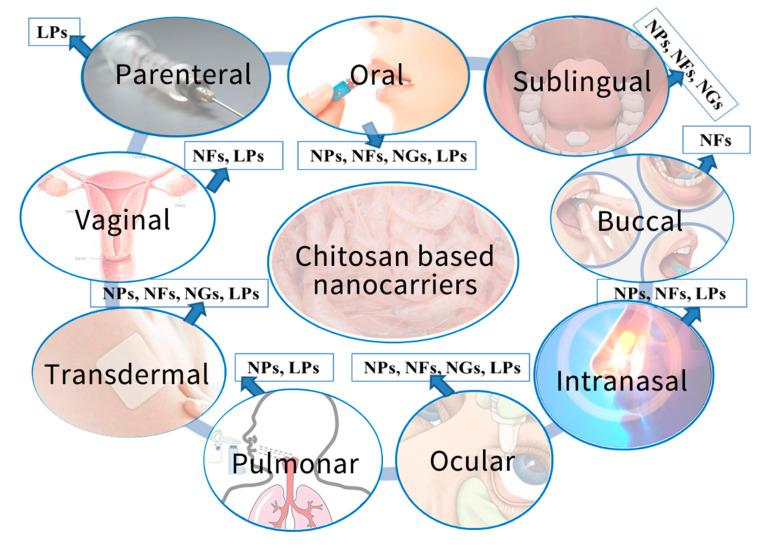
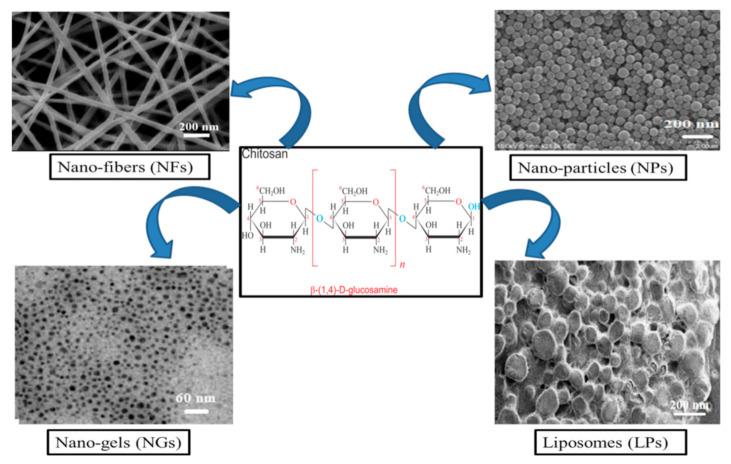
In recent decades, drug delivery systems (DDSs) based on nanotechnology have been attracting substantial interest in the pharmaceutical field, especially those developed based on natural polymers such as chitosan, cellulose, starch, collagen, gelatin, alginate and elastin. Nanomaterials based on chitosan (CS) or chitosan derivatives are broadly investigated as promising nanocarriers due to their biodegradability, good biocompatibility, non-toxicity, low immunogenicity, great versatility and beneficial biological effects. CS, either alone or as composites, are suitable substrates in the fabrication of different types of products like hydrogels, membranes, beads, porous foams, nanoparticles, in-situ gel, microparticles, sponges and nanofibers/scaffolds. Currently, the CS based nanocarriers are intensely studied as controlled and targeted drug release systems for different drugs (anti-inflammatory, antibiotic, anticancer etc.) as well as for proteins/peptides, growth factors, vaccines, small DNA (DNAs) and short interfering RNA (siRNA). This review targets the latest biomedical approaches for CS based nanocarriers such as nanoparticles (NPs) nanofibers (NFs), nanogels (NGs) and chitosan coated liposomes (LPs) and their potential applications for medical and pharmaceutical fields. The advantages and challenges of reviewed CS based nanocarriers for different routes of administration (oral, transmucosal, pulmonary and transdermal) with reference to classical formulations are also emphasized.
近几十年来,基于纳米技术的药物递送系统(DDSs)在制药领域引起了广泛关注,尤其是那些基于壳聚糖、纤维素、淀粉、胶原蛋白、明胶、藻酸盐和弹性蛋白等天然聚合物开发的系统。基于壳聚糖(CS)或壳聚糖衍生物的纳米材料因其生物可降解性、良好的生物相容性、无毒性、低免疫原性、多功能性和有益的生物学效应而被广泛研究为有前景的纳米载体。CS单独或作为复合材料,是制造不同类型产品(如水凝胶、膜、珠子、多孔泡沫、纳米颗粒、原位凝胶、微粒、海绵和纳米纤维/支架)的合适基质。目前,基于CS的纳米载体作为不同药物(抗炎药、抗生素、抗癌药等)以及蛋白质/肽、生长因子、疫苗、小DNA(DNAs)和短干扰RNA(siRNA)的控释和靶向药物递送系统受到深入研究。本综述针对基于CS的纳米载体的最新生物医学方法,如纳米颗粒(NPs)、纳米纤维(NFs)、纳米凝胶(NGs)和壳聚糖包被脂质体(LPs)及其在医学和制药领域的潜在应用。还强调了与传统制剂相比,所综述的基于CS的纳米载体用于不同给药途径(口服、经粘膜、肺部和透皮)的优点和挑战。


 Zotero 插件