
新冠疫情期间摩洛哥社区使用口罩的处理行为:潜在的环境影响。
Disposal Behavior of Used Masks during the COVID-19 Pandemic in the Moroccan Community: Potential Environmental Impact.
机构信息
Laboratory of Applied Geology, Geomatics, and Environment, Ben M'sik Faculty of Sciences, Casablanca 20670, Morocco.
Department of Geology Laboratory of GMSSURAC 45, Faculty of Sciences, Chouaib Doukkali University, El Jadida 24000, Morocco.
出版信息
Int J Environ Res Public Health. 2021 Apr 20;18(8):4382. doi: 10.3390/ijerph18084382.
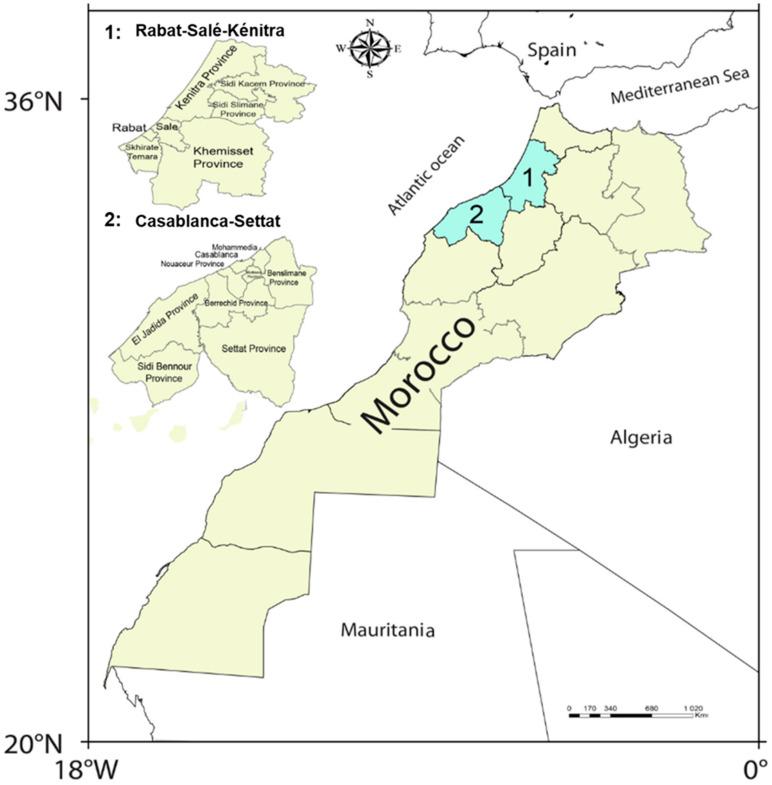
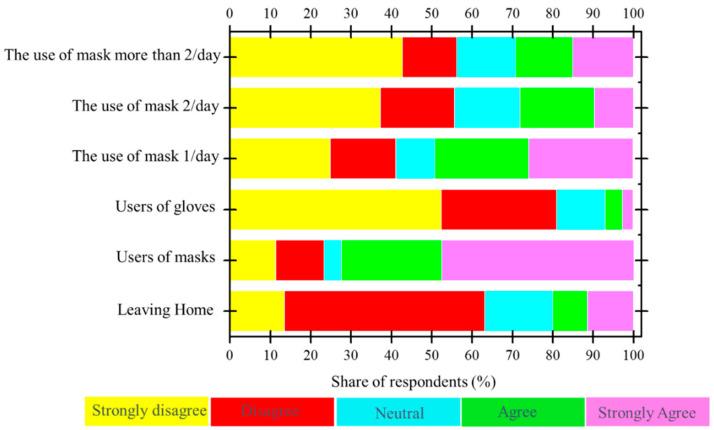
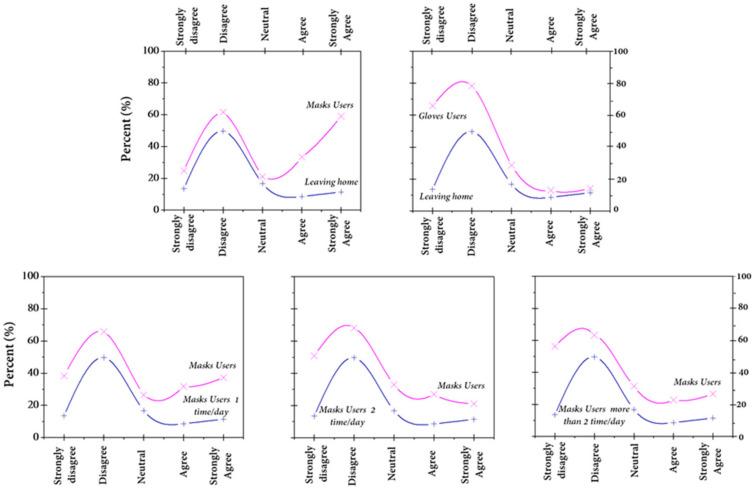
The spread of coronavirus disease-2019 (COVID-19) levied on the Moroccan authorities to increase their mask production capacity, which reached up to 12 million facemask units produced per day. This increase in personal protective equipment (PPE) production and consumption is an efficient tool to address the spread of COVID-19. However, this results in more plastic and microplastic debris being added into the land and marine environments, which will harm the ecosystem, wildlife, and public health. Such a situation needs deep individual behavior observation and tracking, as well as an assessment of the potential environmental impact of this new type of waste. For this reason, we assessed the Moroccan population's behavior regarding the use and disposal of facemasks and gloves. An exploratory survey was prepared and shared via social media and email with the population of Rabat-Salé-Kénitra and Casablanca-Settat regions. Additionally, we calculated the estimated number and weight of daily and weekly PPE used and generated by the studied regions. The survey showed that 70% of the respondents threw their discarded masks and gloves in house trash or trash bins after their first use, whereas nearly 30% of respondents admitted that they did not wear masks because they did not leave their homes during the lockdown, while from the 70% of facemask users, more than five million (equivalent to 40,000 kg) of facemasks would be generated and disposed of daily by the community of these regions, which presents 35% of the total engendered facemask waste in Morocco. Accordingly, the environment impact of facemasks showed that the greenhouse gas footprint is about 640 kT CO eq./year for the whole of Morocco, while the energy footprint is around 60,000 GWh/year. Furthermore, an urgent multidisciplinary environmental assessment of the potential impact of PPE must be conducted among the 12 Moroccan regions. This study demonstrated the real impact of the COVID-19 PPE on human behavior and the environment and suggests a need for providing new didactic management of facemasks and gloves.
2019 年冠状病毒病(COVID-19)的传播促使摩洛哥当局增加口罩生产能力,口罩日产量高达 1200 万只。个人防护设备(PPE)生产和消费的增加是控制 COVID-19 传播的有效工具。然而,这导致更多的塑料和微塑料碎片被添加到陆地和海洋环境中,从而危害生态系统、野生动物和公共健康。这种情况需要对个人行为进行深入观察和跟踪,并评估这种新型废物对环境的潜在影响。为此,我们评估了摩洛哥人口对面罩和手套的使用和处理行为。我们准备了一项探索性调查,并通过社交媒体和电子邮件分发给拉巴特-塞勒-凯尼特拉和卡萨布兰卡-塞塔特大区的居民。此外,我们还计算了研究区域内每天和每周使用和产生的 PPE 的估计数量和重量。调查显示,70%的受访者在首次使用后将用过的口罩和手套扔进家庭垃圾或垃圾桶,而近 30%的受访者承认他们没有戴口罩,因为在封锁期间他们没有离开家,而在 70%的口罩使用者中,这些地区的社区每天会产生和处理超过 500 万个(相当于 4 万公斤)口罩,占摩洛哥产生的口罩废物总量的 35%。因此,口罩对环境的影响表明,整个摩洛哥的温室气体足迹约为 640 千吨二氧化碳当量/年,而能源足迹约为 6 万 GWh/年。此外,必须在摩洛哥的 12 个地区对 PPE 的潜在影响进行紧急多学科环境评估。这项研究表明了 COVID-19 PPE 对人类行为和环境的真正影响,并建议提供新的口罩和手套管理教学。






 Zotero 插件