
用于抗菌治疗的无机纳米粒子和复合薄膜。
Inorganic Nanoparticles and Composite Films for Antimicrobial Therapies.
机构信息
Department of Science and Engineering of Oxide Materials and Nanomaterials, University Politehnica of Bucharest, 011061 Bucharest, Romania.
Research Institute of the University of Bucharest-ICUB, University of Bucharest, 050657 Bucharest, Romania.
出版信息
Int J Mol Sci. 2021 Apr 27;22(9):4595. doi: 10.3390/ijms22094595.
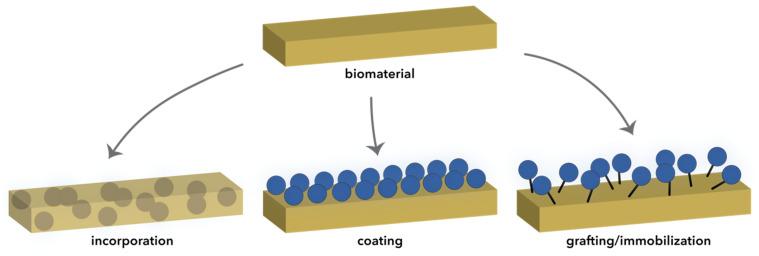
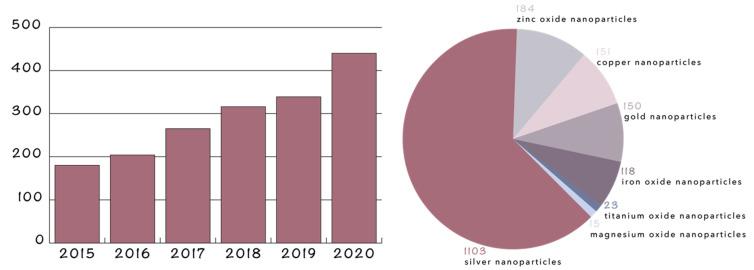
The development of drug-resistant microorganisms has become a critical issue for modern medicine and drug discovery and development with severe socio-economic and ecological implications. Since standard and conventional treatment options are generally inefficient, leading to infection persistence and spreading, novel strategies are fundamentally necessary in order to avoid serious global health problems. In this regard, both metal and metal oxide nanoparticles (NPs) demonstrated increased effectiveness as nanobiocides due to intrinsic antimicrobial properties and as nanocarriers for antimicrobial drugs. Among them, gold, silver, copper, zinc oxide, titanium oxide, magnesium oxide, and iron oxide NPs are the most preferred, owing to their proven antimicrobial mechanisms and bio/cytocompatibility. Furthermore, inorganic NPs can be incorporated or attached to organic/inorganic films, thus broadening their application within implant or catheter coatings and wound dressings. In this context, this paper aims to provide an up-to-date overview of the most recent studies investigating inorganic NPs and their integration into composite films designed for antimicrobial therapies.
耐药微生物的发展已经成为现代医学和药物发现与开发的一个关键问题,具有严重的社会经济和生态影响。由于标准和常规的治疗选择通常效率低下,导致感染持续存在和传播,因此为了避免严重的全球健康问题,从根本上需要新的策略。在这方面,由于固有抗菌特性和作为抗菌药物的纳米载体,金属和金属氧化物纳米粒子(NPs)作为纳米杀菌剂显示出更高的效果。其中,金、银、铜、氧化锌、氧化钛、氧化镁和氧化铁 NPs 是最受欢迎的,因为它们具有已证明的抗菌机制和生物/细胞相容性。此外,无机 NPs 可以被掺入或附着到有机/无机薄膜上,从而拓宽了它们在植入物或导管涂层和伤口敷料中的应用。在这种情况下,本文旨在提供最新的综述,介绍最近研究无机 NPs 及其整合到设计用于抗菌治疗的复合薄膜中的研究。


 Zotero 插件