
与胃肠道微生物群之间的相互作用。
The interplay between and gastrointestinal microbiota.
机构信息
Division of Gastroenterology and Hepatology, Department of Internal Medicine, National Taiwan University Hospital, Taipei, Taiwan.
Department of Internal Medicine, National Taiwan University College of Medicine, Taipei, Taiwan.
出版信息
Gut Microbes. 2021 Jan-Dec;13(1):1-22. doi: 10.1080/19490976.2021.1909459.
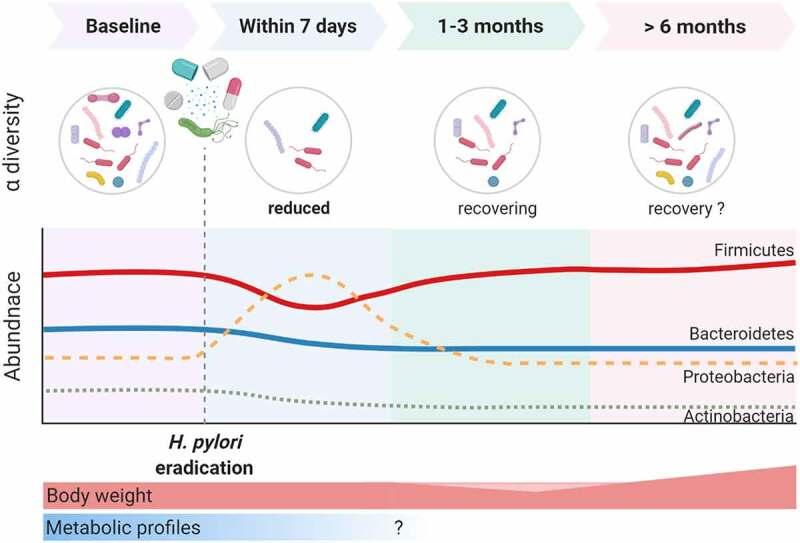
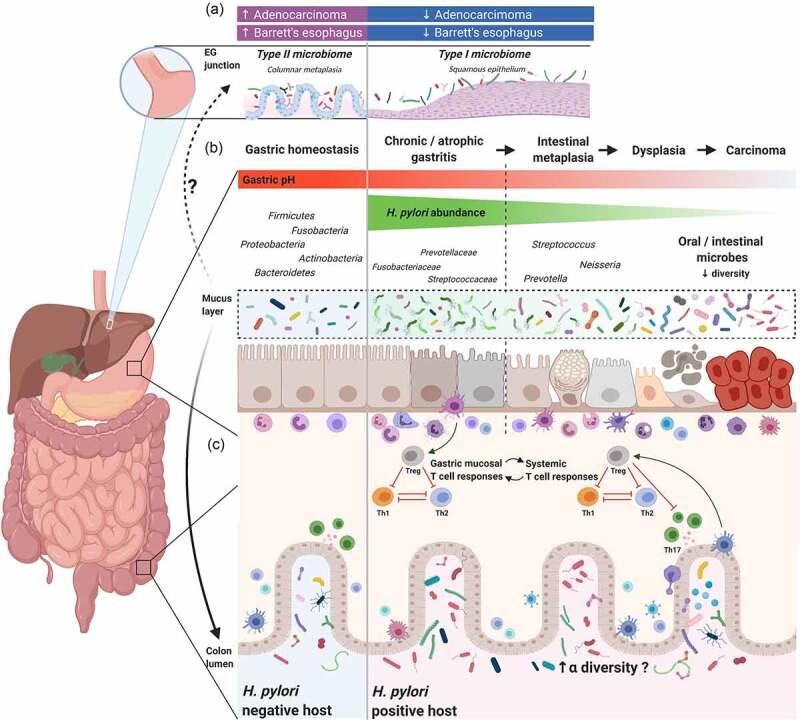
The complex population of microbes in the human gastrointestinal (GI) tract interacts with itself and with the host, exerting a deep influence on health and disease development. The development of modern sequencing technology has enabled us to gain insight into GI microbes. colonization significantly affects the gastric microenvironment, which in turn affects gastric microbiota and may be correlated with colonic microbiota changes. Crosstalk between and GI commensal flora may play a role in -related carcinogenicity and extragastric manifestations. We review current knowledge on how shapes GI microbiota with a specific focus on its impact on the stomach and colon. We also review current evidence on colonic microbiota changes attributed to eradication therapy based on the clinical studies performed to date.
人类胃肠道(GI)中的微生物群体复杂多样,它们相互作用,并与宿主相互作用,对健康和疾病的发展产生深远影响。现代测序技术的发展使我们能够深入了解 GI 微生物。定植显著影响胃微环境,进而影响胃微生物群,并可能与结肠微生物群的变化相关。与 GI 共生菌群的相互作用可能在与相关的致癌性和胃外表现中发挥作用。我们综述了目前关于如何塑造 GI 微生物群的知识,特别关注其对胃和结肠的影响。我们还综述了目前基于迄今为止进行的临床研究归因于根除治疗的结肠微生物群变化的证据。
 Zotero 插件