
弓形虫感染在家庭和野生猫科动物中的公共卫生问题:系统评价和荟萃分析。
Toxoplasma gondii infection in domestic and wild felids as public health concerns: a systematic review and meta-analysis.
机构信息
School of Medicine, Iranshahr University of Medical Sciences, Iranshahr, Iran.
SALUVET, Animal Health Department, Faculty of Veterinary Sciences, Complutense University of Madrid, Madrid, Spain.
出版信息
Sci Rep. 2021 May 4;11(1):9509. doi: 10.1038/s41598-021-89031-8.
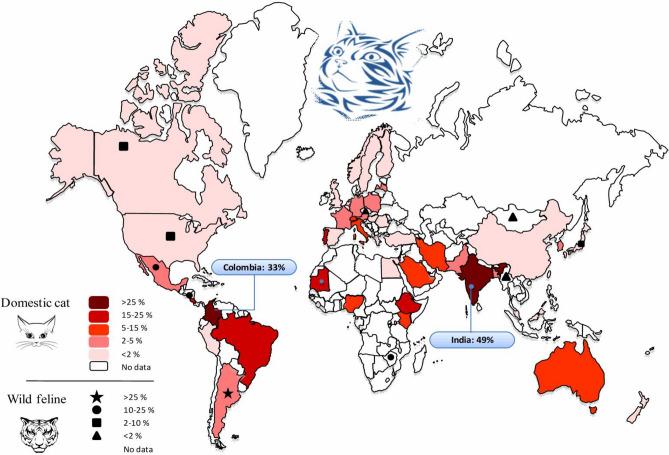
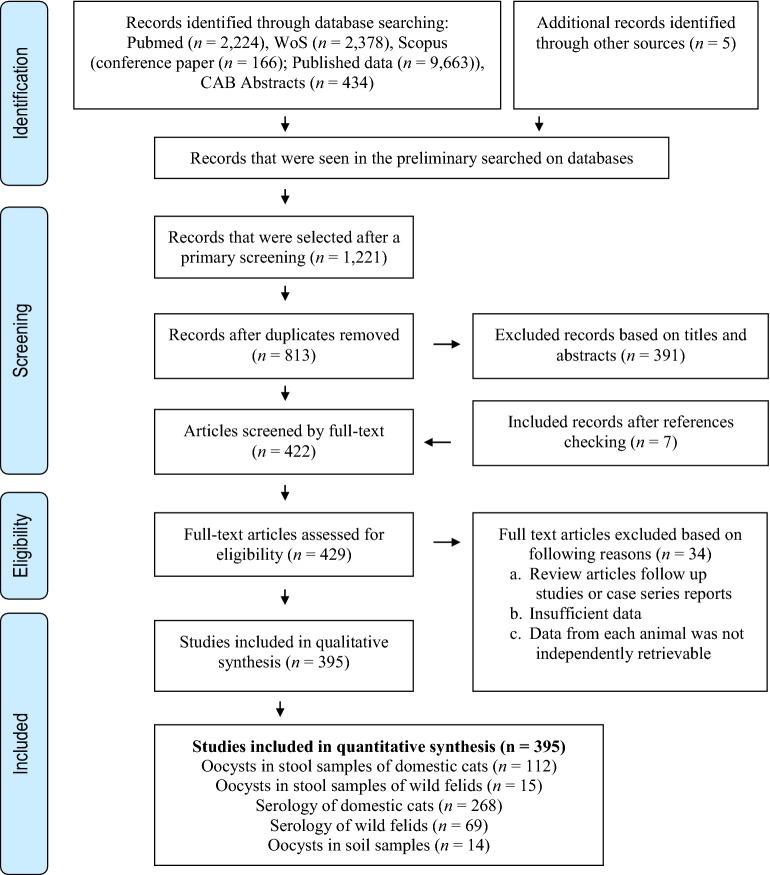
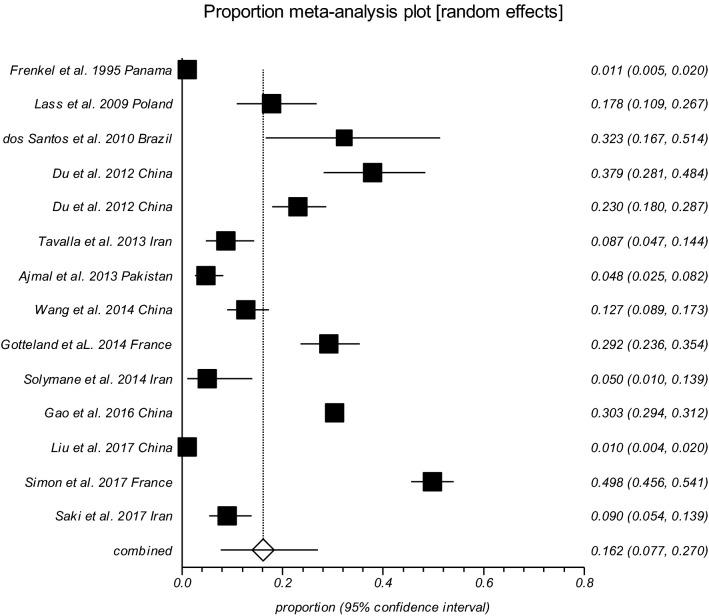
Felidae as definitive hosts for Toxoplasma gondii play a major role in transmission to all warm-blooded animals trough oocysts dissemination. Therefore the current comprehensive study was performed to determine the global status of T. gondii infection in domestic and wild felids aiming to provide comprehensive data of interest for further intervention approaching the One Health perspective. Different databases were searched by utilizing particular key words for publications related to T. gondii infecting domestic and wild feline host species, worldwide, from 1970 to 2020. The review of 337 reports showed that the seroprevalence of T. gondii in domestic cats and wild felids was estimated in 37.5% (95% CI 34.7-40.3) (I = 98.3%, P < 0.001) and 64% (95% CI 60-67.9) (I = 88%, P < 0.0001), respectively. The global pooled prevalence of oocysts in the fecal examined specimens from domestic cats was estimated in 2.6% (95% CI 1.9-3.3) (I = 96.1%, P < 0.0001), and that in fecal samples from wild felids was estimated in 2.4% (95% CI 1.1-4.2) (I = 86.4%, P < 0.0001). In addition, from 13,252 examined soil samples in 14 reviewed studies, the pooled occurrence of T. gondii oocysts was determined in 16.2% (95% CI 7.66-27.03%). The observed high rates of anti-T. gondii antibodies seroprevalence levels and oocyst excretion frequency in the felids, along with soil (environmental) contamination with oocysts may constitute a potential threat to animal and public health, and data will result of interest in further prophylaxis programs.
猫科动物作为刚地弓形虫的终末宿主,通过卵囊传播,在将弓形虫传播给所有温血动物方面发挥着重要作用。因此,目前进行了一项全面的研究,以确定全球家养和野生猫科动物感染弓形虫的状况,旨在为进一步采取“同一健康”方法提供相关数据。从 1970 年到 2020 年,利用特定关键词在不同数据库中搜索了与感染家养和野生猫科宿主物种的弓形虫相关的出版物。对 337 份报告的审查表明,家猫和野生猫科动物感染弓形虫的血清阳性率估计分别为 37.5%(95%CI 34.7-40.3)(I=98.3%,P<0.001)和 64%(95%CI 60-67.9)(I=88%,P<0.0001)。从家养猫粪便检查样本中估计的全球卵囊总流行率为 2.6%(95%CI 1.9-3.3)(I=96.1%,P<0.0001),从野生猫科动物粪便样本中估计的流行率为 2.4%(95%CI 1.1-4.2)(I=86.4%,P<0.0001)。此外,在 14 项综述研究中,从 13252 份检查的土壤样本中,确定了弓形虫卵囊的总发生率为 16.2%(95%CI 7.66-27.03%)。在家猫中观察到的高抗弓形虫抗体血清阳性率水平和卵囊排泄频率,以及土壤(环境)中卵囊的污染,可能对动物和公共卫生构成潜在威胁,这些数据将对进一步的预防计划具有重要意义。

 Zotero 插件