
长读宏基因组从犬粪便中获得完整的单菌基因组。
Long-read metagenomics retrieves complete single-contig bacterial genomes from canine feces.
机构信息
Vetgenomics, Ed Eureka, Parc de Recerca UAB, Barcelona, Spain.
Molecular Genetics Veterinary Service (SVGM), Veterinary School, Universitat Autònoma de Barcelona, Barcelona, Spain.
出版信息
BMC Genomics. 2021 May 6;22(1):330. doi: 10.1186/s12864-021-07607-0.
BACKGROUND
Long-read sequencing in metagenomics facilitates the assembly of complete genomes out of complex microbial communities. These genomes include essential biologic information such as the ribosomal genes or the mobile genetic elements, which are usually missed with short-reads. We applied long-read metagenomics with Nanopore sequencing to retrieve high-quality metagenome-assembled genomes (HQ MAGs) from a dog fecal sample.
RESULTS
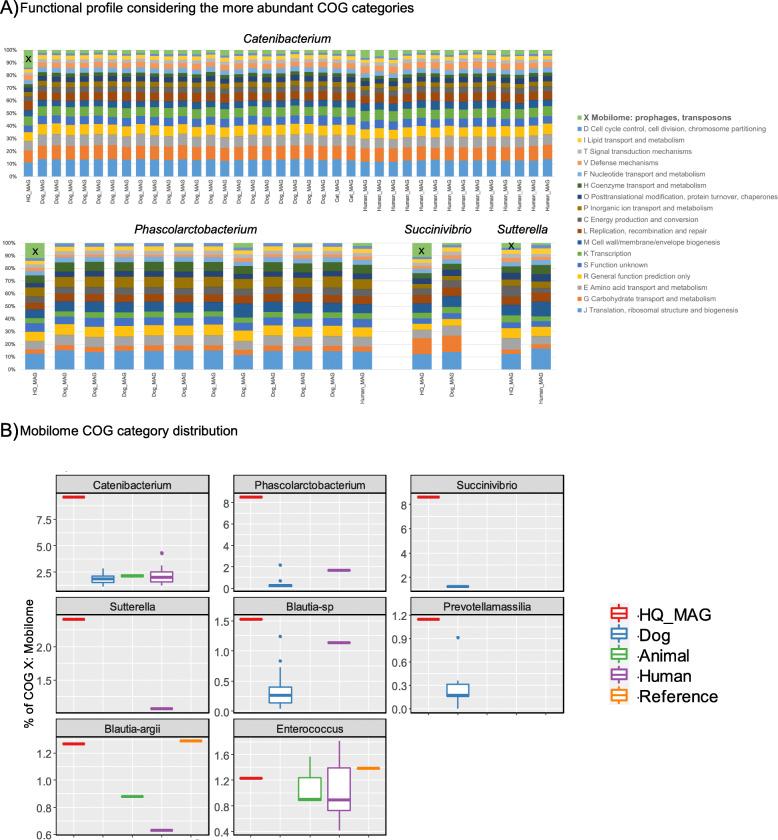
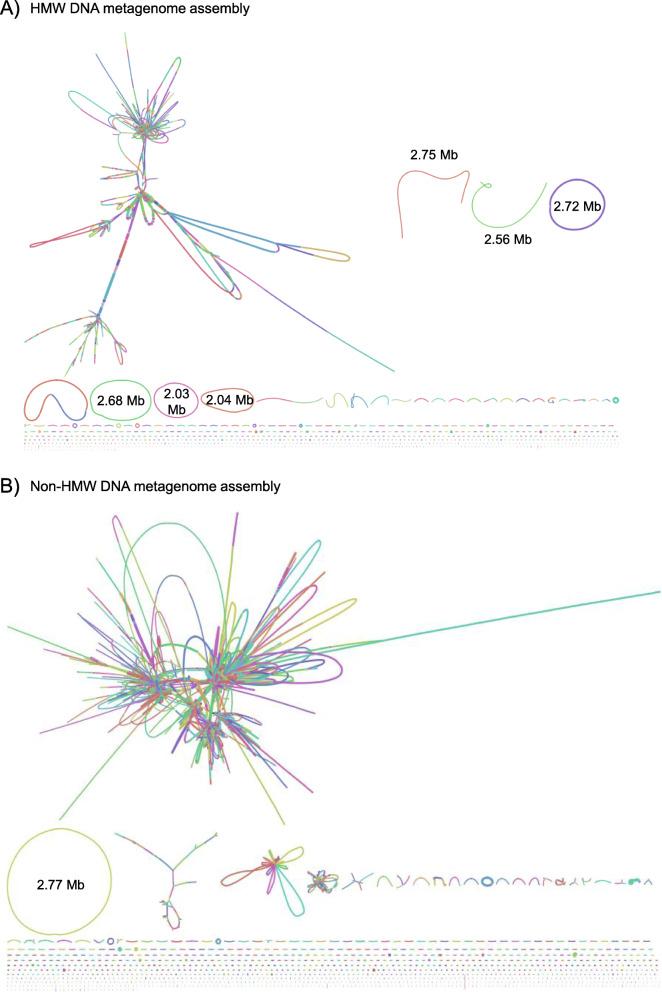
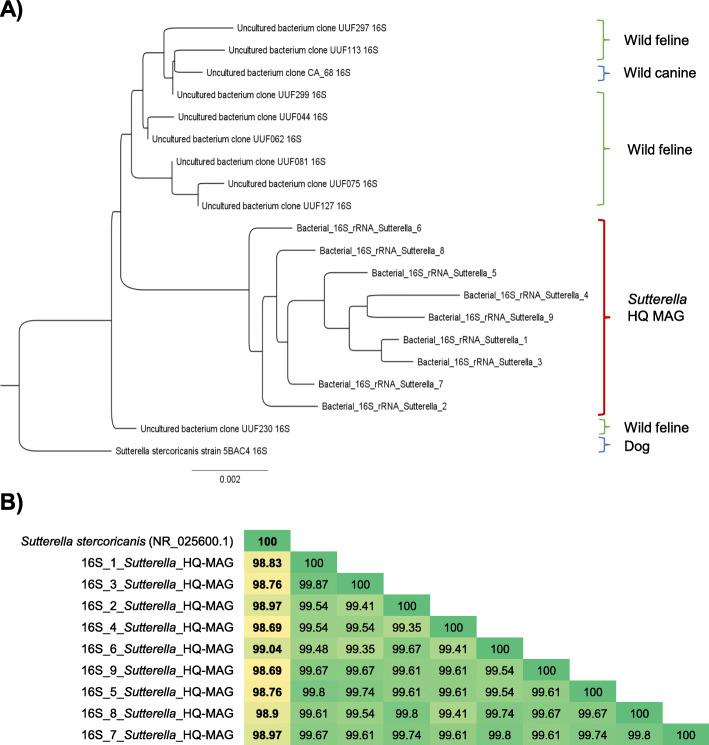
We used nanopore long-read metagenomics and frameshift aware correction on a canine fecal sample and retrieved eight single-contig HQ MAGs, which were > 90% complete with < 5% contamination, and contained most ribosomal genes and tRNAs. At the technical level, we demonstrated that a high-molecular-weight DNA extraction improved the metagenomics assembly contiguity, the recovery of the rRNA operons, and the retrieval of longer and circular contigs that are potential HQ MAGs. These HQ MAGs corresponded to Succinivibrio, Sutterella, Prevotellamassilia, Phascolarctobacterium, Catenibacterium, Blautia, and Enterococcus genera. Linking our results to previous gastrointestinal microbiome reports (metagenome or 16S rRNA-based), we found that some bacterial species on the gastrointestinal tract seem to be more canid-specific -Succinivibrio, Prevotellamassilia, Phascolarctobacterium, Blautia_A sp900541345-, whereas others are more broadly distributed among animal and human microbiomes -Sutterella, Catenibacterium, Enterococcus, and Blautia sp003287895. Sutterella HQ MAG is potentially the first reported genome assembly for Sutterella stercoricanis, as assigned by 16S rRNA gene similarity. Moreover, we show that long reads are essential to detect mobilome functions, usually missed in short-read MAGs.
CONCLUSIONS
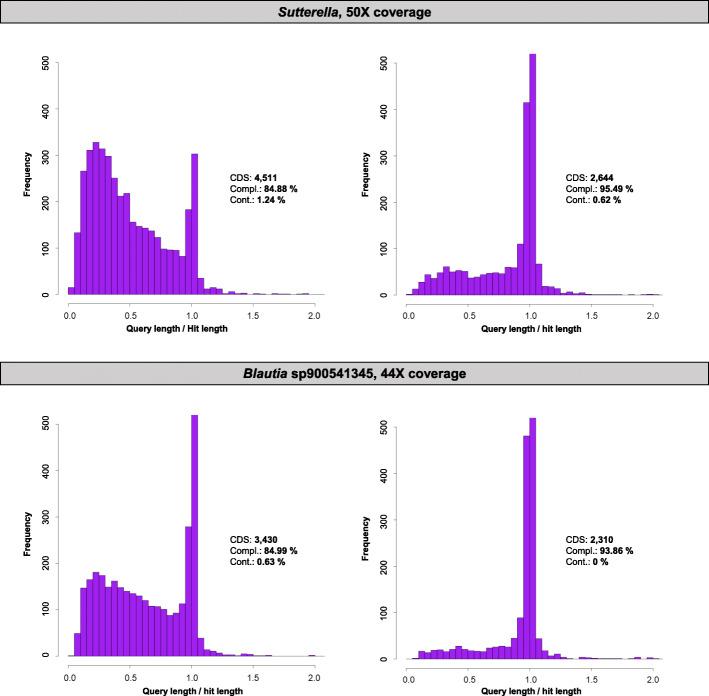
We recovered eight single-contig HQ MAGs from canine feces of a healthy dog with nanopore long-reads. We also retrieved relevant biological insights from these specific bacterial species previously missed in public databases, such as complete ribosomal operons and mobilome functions. The high-molecular-weight DNA extraction improved the assembly's contiguity, whereas the high-accuracy basecalling, the raw read error correction, the assembly polishing, and the frameshift correction reduced the insertion and deletion errors. Both experimental and analytical steps ensured the retrieval of complete bacterial genomes.
背景
宏基因组学中的长读测序有助于从复杂的微生物群落中组装完整的基因组。这些基因组包括核糖体基因或移动遗传元件等重要的生物信息,而这些信息通常会在短读测序中丢失。我们应用纳米孔长读宏基因组学测序从犬粪便样本中获取高质量的宏基因组组装基因组(HQ MAG)。
结果
我们使用纳米孔长读宏基因组学和移码感知校正对犬粪便样本进行处理,获得了 8 个单聚体 HQ MAG,它们的完整性超过 90%,污染率低于 5%,并且包含大多数核糖体基因和 tRNA。在技术层面,我们证明了高分子量 DNA 提取可以提高宏基因组组装的连续性、rRNA 操纵子的恢复以及更长和环状的连续序列的获取,这些序列可能是潜在的 HQ MAG。这些 HQ MAG 对应于琥珀酸弧菌、萨特氏菌、普雷沃氏菌、粪球菌、卡他球菌、布劳特氏菌和肠球菌属。将我们的结果与之前的胃肠道微生物组报告(宏基因组或 16S rRNA 为基础)联系起来,我们发现胃肠道中的一些细菌物种似乎更具有犬科特异性——琥珀酸弧菌、普雷沃氏菌、粪球菌、布劳特氏菌_A sp900541345,而其他细菌则更广泛地分布在动物和人类的微生物组中——萨特氏菌、卡他球菌、肠球菌和布劳特氏菌 sp003287895。萨特氏菌 HQ MAG 可能是第一个根据 16S rRNA 基因相似性分配给萨特氏菌粪亚种的基因组组装。此外,我们还表明,长读序列对于检测移动遗传元件的功能至关重要,而这些功能通常会在短读 MAG 中丢失。
结论
我们从一只健康犬的粪便中用纳米孔长读序列获得了 8 个单聚体 HQ MAG。我们还从这些以前在公共数据库中丢失的特定细菌物种中获得了相关的生物学见解,例如完整的核糖体操纵子和移动遗传元件功能。高分子量 DNA 提取提高了组装的连续性,而高准确性碱基调用、原始读取错误校正、组装抛光和移码校正减少了插入和删除错误。实验和分析步骤都确保了完整细菌基因组的获取。

 Zotero 插件