
生物源银纳米颗粒与抗生素联合对某些致病微生物的协同和拮抗作用。
Synergistic and Antagonistic Effects of Biogenic Silver Nanoparticles in Combination With Antibiotics Against Some Pathogenic Microbes.
作者信息
Aabed Kawther, Mohammed Afrah E
机构信息
Department of Biology, College of Science, Princess Nourah Bint Abdulrahman University, Riyadh, Saudi Arabia.
出版信息
Front Bioeng Biotechnol. 2021 Apr 20;9:652362. doi: 10.3389/fbioe.2021.652362. eCollection 2021.
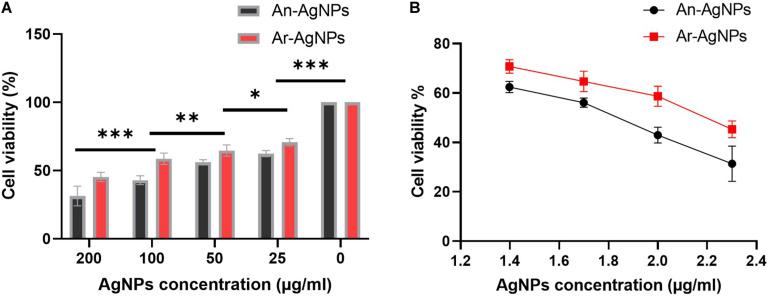
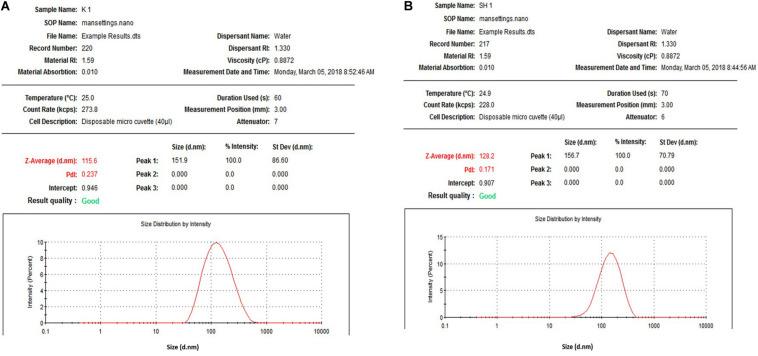
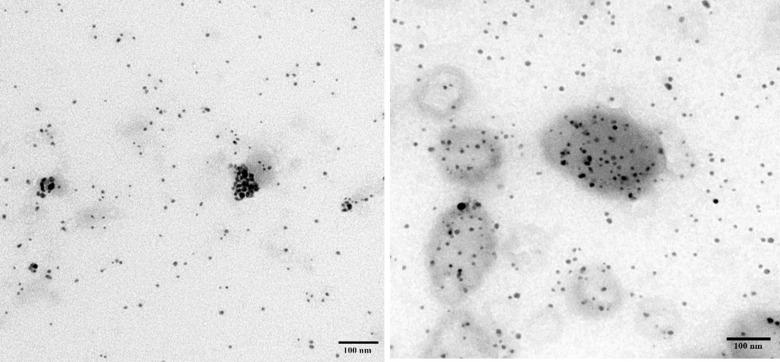
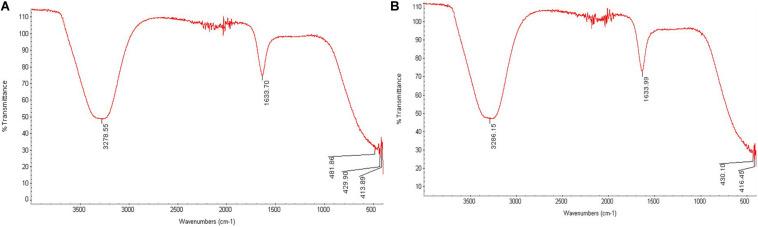
The latest advances in green nanoparticle synthesis have preserved natural and non-renewable resources and decreased environmental pollution. The current study was designed to evaluate silver nanoparticles (AgNPs) fabricated using aqueous extracts of two medicinal plants, L. (Kaff Maryam) and . The phytochemicals were detected by Fourier-transform infrared spectroscopy (FTIR) and Chromatography/Mass Spectrometry (GC-MS). The effects of the AgNPs on , , and as well as the cytotoxicity against MDA-MB-231 cells were examined. The synergistic and antagonistic effects of the biogenic AgNPs in combination with standard antibiotics against several microbes were also investigated. The ability of the plant extracts to transfer silver ions to AgNPs was measured via dynamic light scattering, zeta potential measurement, and transmission electron microscopy. The most sensitive microbes to AgNP treatment were examined via scanning electron microscopy to assess morphological changes. Biogenic AgNPs showed significant antibacterial effects against most of the tested microbes and significant cytotoxicity was noted. Polysaccharides, proteins and Phenolic compounds are likely involved in AgNP biosynthesis since hydroxyl groups and amides were detected via FTIR as well as GC-MS. This study confirmed that plant-based AgNP fabrication with AgNO as the Ag (I) delivering salt can be an economical and practical approach for large-scale production of particles with antimicrobial and cytotoxic potential. The synergistic effects of biogenic AgNPs in combination with some antibiotics support their potential as a safe therapeutic for bacterial infections because they are capped with organic biomolecules.
绿色纳米颗粒合成的最新进展保护了自然和不可再生资源,并减少了环境污染。本研究旨在评估使用两种药用植物(L.(卡芙·玛丽亚姆)和 )的水提取物制备的银纳米颗粒(AgNPs)。通过傅里叶变换红外光谱(FTIR)和色谱/质谱(GC-MS)检测植物化学物质。检测了AgNPs对 、 和 的影响以及对MDA-MB-231细胞的细胞毒性。还研究了生物源AgNPs与标准抗生素联合对几种微生物的协同和拮抗作用。通过动态光散射、zeta电位测量和透射电子显微镜测量植物提取物将银离子转化为AgNPs的能力。通过扫描电子显微镜检查对AgNP处理最敏感的微生物,以评估形态变化。生物源AgNPs对大多数测试微生物显示出显著的抗菌作用,并观察到显著的细胞毒性。由于通过FTIR以及GC-MS检测到羟基和酰胺,多糖、蛋白质和酚类化合物可能参与了AgNP的生物合成。本研究证实,以AgNO作为Ag(I)输送盐的基于植物的AgNP制备方法对于大规模生产具有抗菌和细胞毒性潜力的颗粒可能是一种经济实用的方法。生物源AgNPs与某些抗生素的协同作用支持了它们作为细菌感染安全治疗剂的潜力,因为它们被有机生物分子覆盖。


 Zotero 插件