
辣椒素可减轻严重干眼疾病的角膜疼痛综合征。
Capsazepine decreases corneal pain syndrome in severe dry eye disease.
机构信息
Sorbonne Université, INSERM, CNRS, Institut de la Vision, 17 rue Moreau, F-75012, Paris, France.
R&D Department, Laboratoires Théa, 12 rue Louis Biérot, F-63000, Clermont-Ferrand, France.
出版信息
J Neuroinflammation. 2021 May 11;18(1):111. doi: 10.1186/s12974-021-02162-7.
BACKGROUND
Dry eye disease (DED) is a multifactorial disease of the ocular surface accompanied by neurosensory abnormalities. Here, we evaluated the effectiveness of transient receptor potential vanilloid-1 (TRPV1) blockade to alleviate ocular pain, neuroinflammation, and anxiety-like behavior associated with severe DED.
METHODS
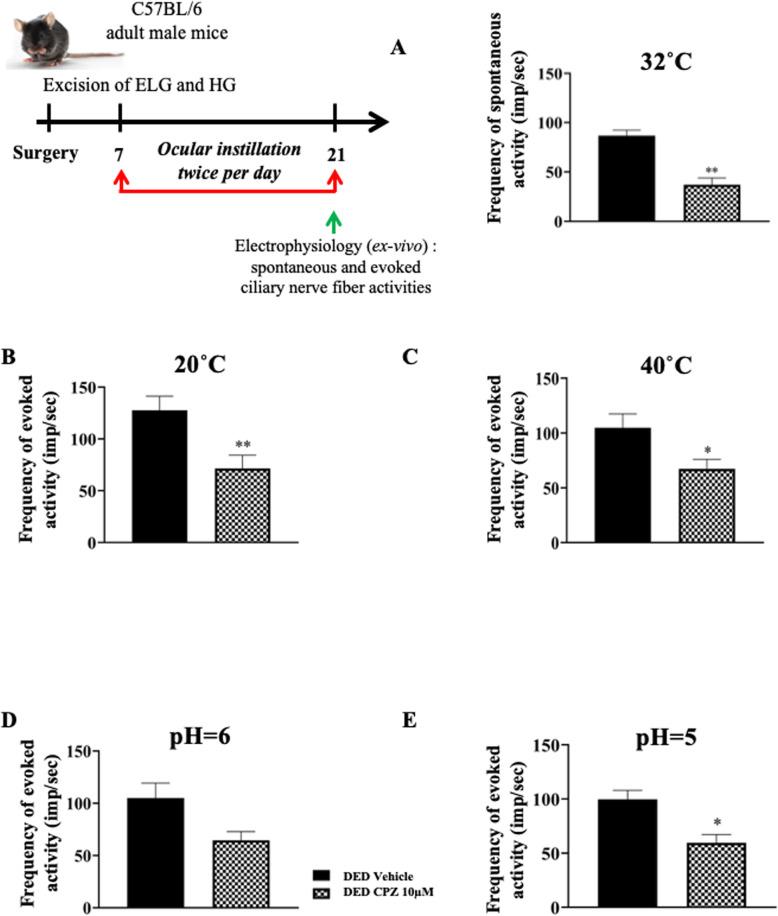
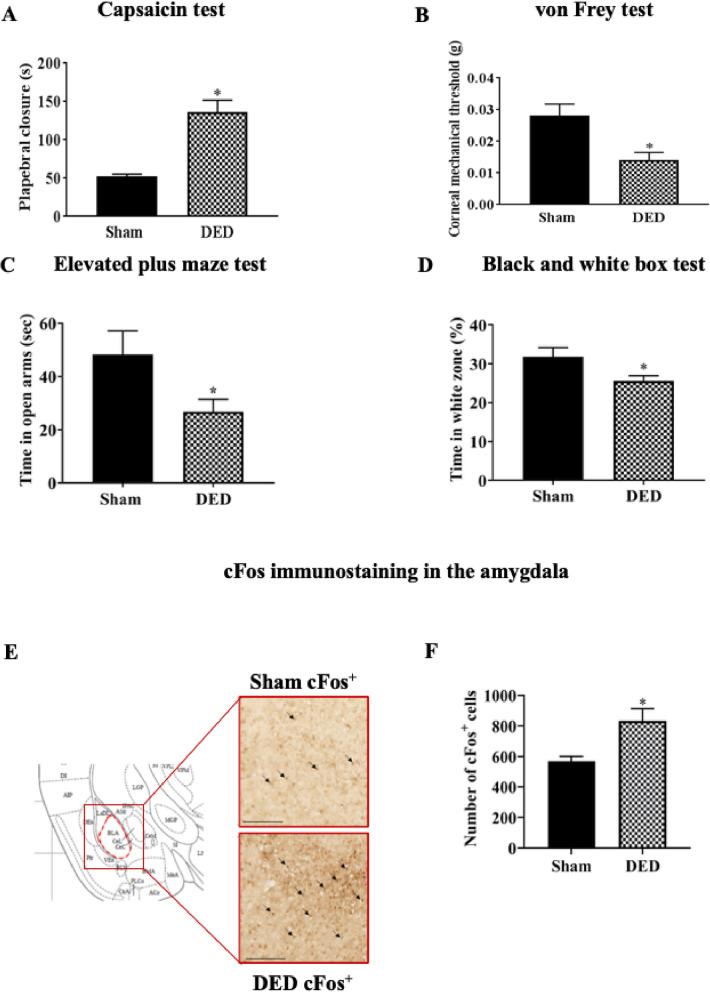
Chronic DED was induced by unilateral excision of the Harderian and extraorbital lacrimal glands of adult male mice. Investigations were conducted at 21 days after surgery. The mRNA levels of TRPV1, transient receptor potential ankyrin-1 (TRPA1), and acid-sensing ion channels 1 and 3 (ASIC1 and ASIC3) in the trigeminal ganglion (TG) were evaluated by RNAscope in situ hybridization. Multi-unit extracellular recording of ciliary nerve fiber activity was used to monitor spontaneous and stimulated (cold, heat, and acid) corneal nerve responsiveness in ex vivo eye preparations. DED mice received topical instillations of the TRPV1 antagonist (capsazepine) twice a day for 2 weeks from d7 to d21 after surgery. The expression of genes involved in neuropathic and inflammatory pain was evaluated in the TG using a global genomic approach. Chemical and mechanical corneal nociception and spontaneous ocular pain were monitored. Finally, anxiety-like behaviors were assessed by elevated plus maze and black and white box tests.
RESULTS
First, in situ hybridization showed DED to trigger upregulation of TRPV1, TRPA1, ASIC1, and ASIC3 mRNA in the ophthalmic branch of the TG. DED also induced overexpression of genes involved in neuropathic and inflammatory pain in the TG. Repeated instillations of capsazepine reduced corneal polymodal responsiveness to heat, cold, and acidic stimulation in ex vivo eye preparations. Consistent with these findings, chronic capsazepine instillation inhibited the upregulation of genes involved in neuropathic and inflammatory pain in the TG of DED animals and reduced the sensation of ocular pain, as well as anxiety-like behaviors associated with severe DED.
CONCLUSION
These data provide novel insights on the effectiveness of TRPV1 antagonist instillation in alleviating abnormal corneal neurosensory symptoms induced by severe DED, opening an avenue for the repositioning of this molecule as a potential analgesic treatment for patients suffering from chronic DED.
背景
干眼疾病(DED)是一种眼表多因素疾病,伴有神经感觉异常。在这里,我们评估了瞬时受体电位香草酸 1 型(TRPV1)阻断剂缓解与严重 DED 相关的眼部疼痛、神经炎症和焦虑样行为的有效性。
方法
通过单侧切除成年雄性小鼠的哈氏腺和眶外泪腺来诱导慢性 DED。在手术后 21 天进行研究。通过 RNAscope 原位杂交评估三叉神经节(TG)中 TRPV1、瞬时受体电位锚蛋白 1(TRPA1)和酸感应离子通道 1 和 3(ASIC1 和 ASIC3)的 mRNA 水平。使用睫状神经纤维活动的多单位细胞外记录来监测体外眼标本中自发性和刺激(冷、热和酸)角膜神经反应性。DED 小鼠在手术后第 7 天至第 21 天每天接受 TRPV1 拮抗剂(辣椒素)两次滴眼治疗 2 周。使用全局基因组方法评估 TG 中与神经病理性和炎性疼痛相关的基因表达。监测化学和机械角膜伤害感受和自发性眼部疼痛。最后,通过高架十字迷宫和黑白箱测试评估焦虑样行为。
结果
首先,原位杂交显示 DED 触发 TG 眼支中 TRPV1、TRPA1、ASIC1 和 ASIC3 mRNA 的上调。DED 还诱导 TG 中与神经病理性和炎性疼痛相关的基因过度表达。重复滴眼辣椒素可降低体外眼标本中角膜多模态对热、冷和酸性刺激的反应性。与这些发现一致,慢性辣椒素滴眼抑制 DED 动物 TG 中与神经病理性和炎性疼痛相关的基因上调,并减轻眼部疼痛感觉以及与严重 DED 相关的焦虑样行为。
结论
这些数据提供了 TRPV1 拮抗剂滴眼缓解严重 DED 诱导的异常角膜神经感觉症状的有效性的新见解,为将该分子重新定位为治疗慢性 DED 患者的潜在镇痛治疗方法开辟了道路。



 Zotero 插件