
B 群链球菌在多元醇,赤藓糖醇、山梨糖醇和甘露醇存在下生长时的表型变化。
Phenotypic changes in group B streptococci grown in the presence of the polyols, erythritol, sorbitol and mannitol.
机构信息
Division of Diagnostic and Applied Microbiology, Department of Laboratory Medicine and Pathology, University of Alberta, Edmonton, Canada.
Department of Clinical Laboratory Sciences, College of Applied Medical Sciences, Taif University, Taif, Saudi Arabia.
出版信息
BMC Microbiol. 2021 May 13;21(1):145. doi: 10.1186/s12866-021-02208-z.
BACKGROUND
Group B streptococci (GBS) are important neonatal bacterial pathogens that can cause severe invasive disease in the newborn. It is thought that in many cases of invasive neonatal GBS disease, the bacteria ascend the vagina into the uterus and infect the amniotic fluid surrounding the fetus. Important constituents of this environment include the polyols or sugar alcohols of which erythritol, sorbitol and mannitol are examples. The aim of our study was to investigate the effect of polyols on GBS grown in media containing these sugar alcohols.
RESULTS
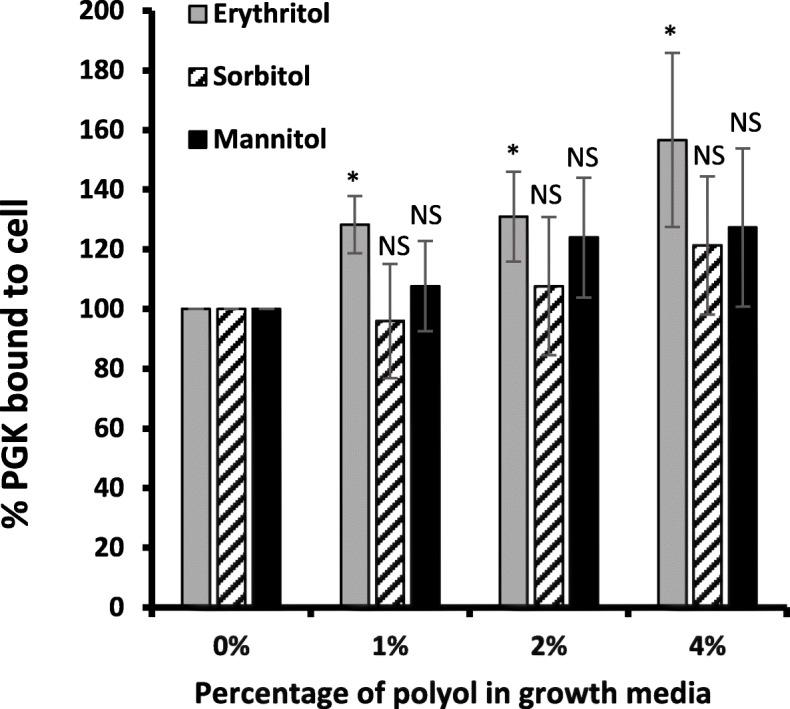
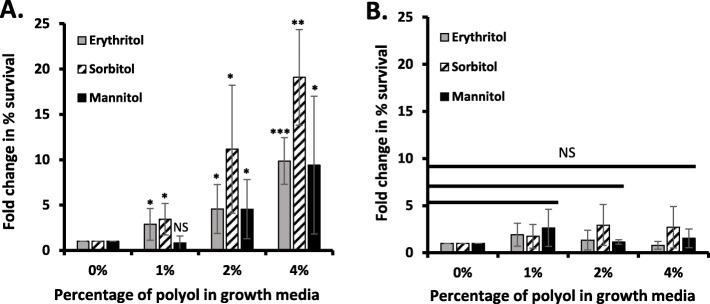
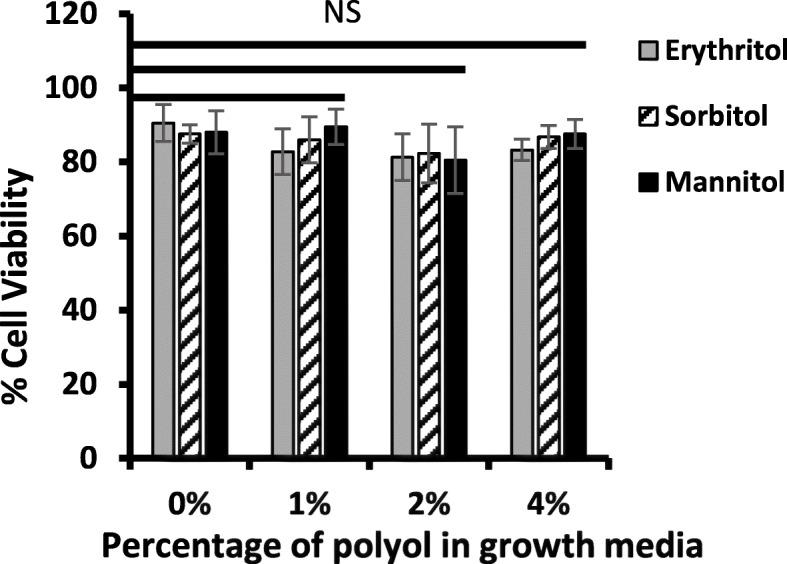
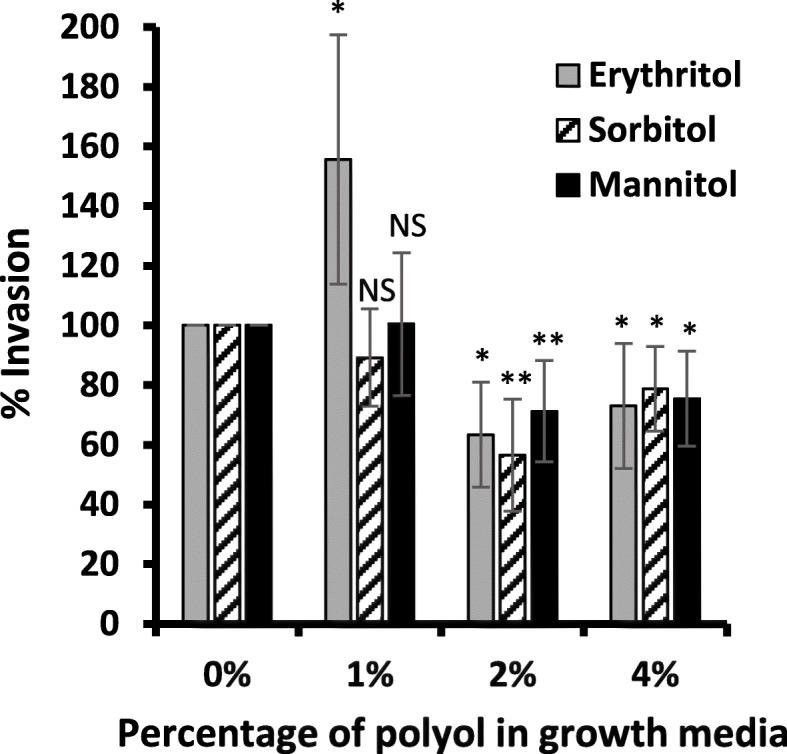
GBS incubated in varying concentrations of polyols (erythritol, sorbitol or mannitol) did not display any significant enhancement or inhibition of bacterial growth. However, growth of GBS in the presence of erythritol significantly increased the surface expression of GBS-PGK (a plasminogen binding protein) 1.25 to 1.5-fold depending on the erythritol concentration and significantly enhanced the survival in human blood 3X to 18X depending on the concentration of polyol used. Interestingly, GBS grown in 1% erythritol significantly increased invasion by the bacteria of HeLa cells (epithelial cell line) (150% vs 100%) however, at higher concentrations (2% or 4% of polyol) the number of CFUs was significantly reduced (55-75% vs 100%) suggesting higher concentrations of polyols may inhibit invasion. Erythritol also increased GBS hemolytic activity as well as enhancing biofilm formation 1.4X to 3.3X depending on the concentration of polyol used.
CONCLUSIONS
GBS grown in the presence of polyols alters the bacteria's phenotype resulting in changes associated with GBS virulence. This effect was greatest for the polyol erythritol.
背景
B 群链球菌(GBS)是重要的新生儿细菌性病原体,可导致新生儿侵袭性疾病。据认为,在许多侵袭性新生儿 GBS 疾病病例中,细菌从阴道上升到子宫并感染胎儿周围的羊水。该环境的重要组成部分包括多元醇或糖醇,其中赤藓糖醇、山梨糖醇和甘露醇就是例子。我们研究的目的是研究多元醇对在含有这些糖醇的培养基中生长的 GBS 的影响。
结果
在不同浓度多元醇(赤藓糖醇、山梨糖醇或甘露醇)孵育的 GBS 没有显示出任何明显的细菌生长增强或抑制。然而,GBS 在赤藓糖醇存在下的生长显著增加了 GBS-PGK(一种纤溶酶原结合蛋白)的表面表达 1.25 到 1.5 倍,具体取决于赤藓糖醇的浓度,并显著增强了在人血中的存活 3 到 18 倍,具体取决于使用的多元醇浓度。有趣的是,在 1%赤藓糖醇中生长的 GBS 显著增加了细菌对 HeLa 细胞(上皮细胞系)的侵袭(150%对 100%),然而,在更高浓度(2%或 4%的多元醇)下,CFU 的数量显著减少(55-75%对 100%),表明更高浓度的多元醇可能抑制侵袭。赤藓糖醇还增加了 GBS 的溶血活性,并增强了生物膜形成 1.4 到 3.3 倍,具体取决于使用的多元醇浓度。
结论
在多元醇存在下生长的 GBS 改变了细菌的表型,导致与 GBS 毒力相关的变化。这种影响在多元醇赤藓糖醇中最大。




 Zotero 插件