
如何通过将稀疏核磁共振(NMR)和电子顺磁共振(EPR)约束与分子动力学模拟相结合来评估转录因子的结构动力学。
How to assess the structural dynamics of transcription factors by integrating sparse NMR and EPR constraints with molecular dynamics simulations.
作者信息
Kozak Fanny, Kurzbach Dennis
机构信息
University Vienna, Faculty of Chemistry, Institute of Biological Chemistry, Waehringer Str. 38, 1090 Vienna, Austria.
出版信息
Comput Struct Biotechnol J. 2021 Apr 21;19:2097-2105. doi: 10.1016/j.csbj.2021.04.020. eCollection 2021.
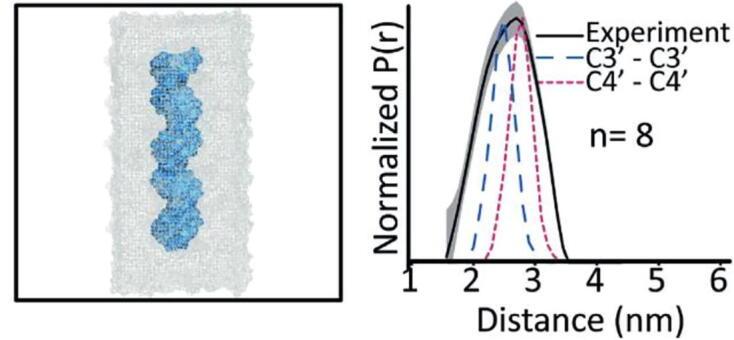
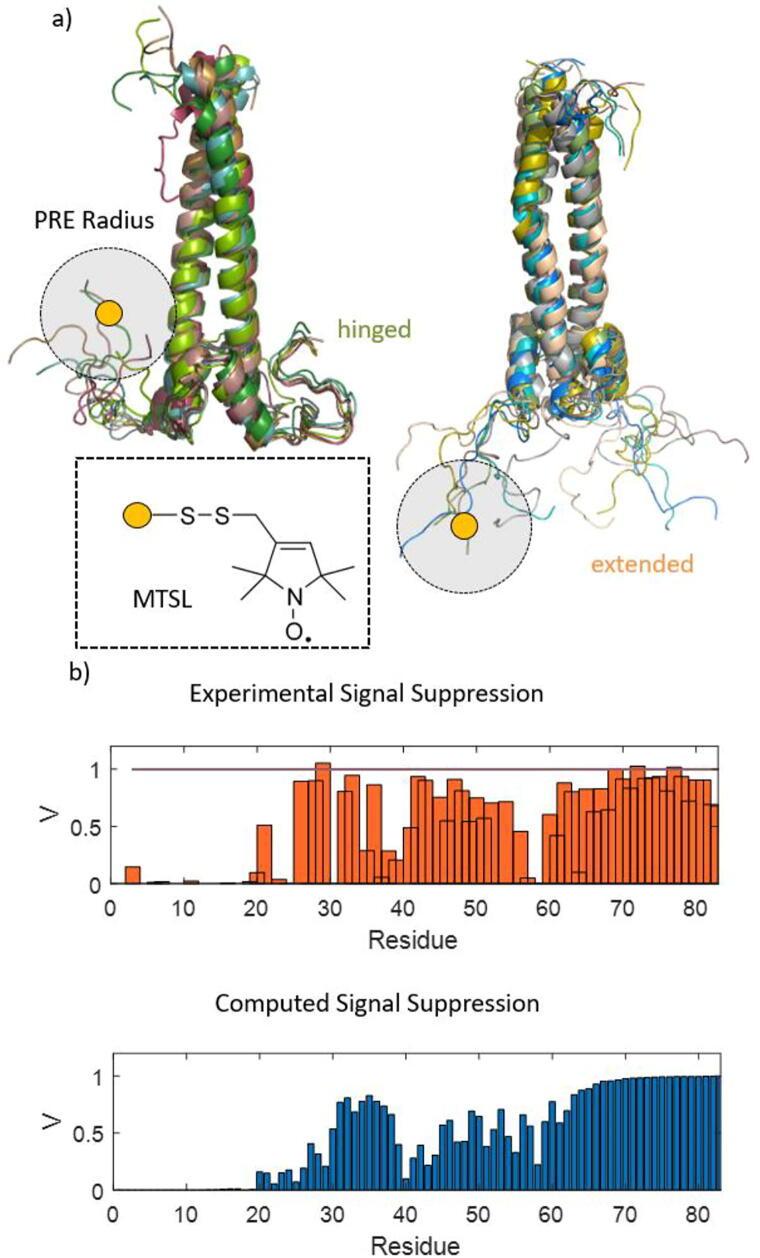
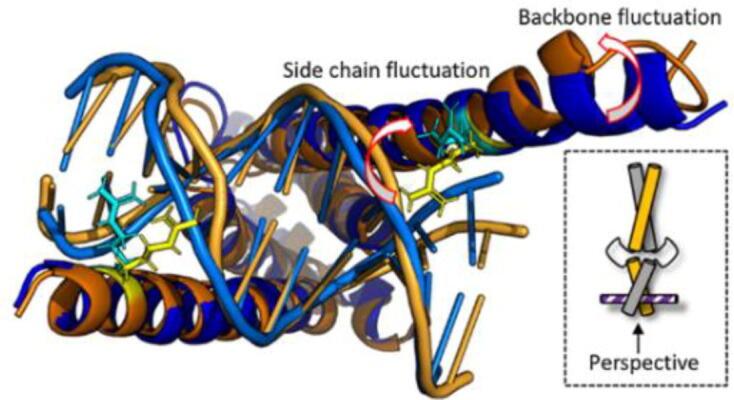
We review recent advances in modeling structural ensembles of transcription factors from nuclear magnetic resonance (NMR) and electron paramagnetic resonance (EPR) spectroscopic data, integrated with molecular dynamics (MD) simulations. We focus on approaches that confirm computed conformational ensembles by sparse constraints obtained from magnetic resonance. This combination enables the deduction of functional and structural protein models even if nuclear Overhauser effects (NOEs) are too scarce for conventional structure determination. We highlight recent insights into the folding-upon-DNA binding transitions of intrinsically disordered transcription factors that could be assessed using such integrative approaches.
我们回顾了利用核磁共振(NMR)和电子顺磁共振(EPR)光谱数据以及分子动力学(MD)模拟来构建转录因子结构集合的最新进展。我们重点关注通过磁共振获得的稀疏约束来确认计算出的构象集合的方法。即使核Overhauser效应(NOE)对于传统结构测定来说过于稀少,这种结合也能够推导功能和结构蛋白质模型。我们强调了最近对内在无序转录因子在DNA结合时的折叠转变的见解,这些见解可以通过这种综合方法进行评估。

 Zotero 插件