
三阴性乳腺癌快速复发与晚期复发的基因组特征。
Genomic features of rapid versus late relapse in triple negative breast cancer.
机构信息
Ohio State University College of Medicine, 370 W 9th Ave, Columbus, OH, 43210, USA.
Division of Medical Oncology, Ohio State University Comprehensive Cancer Center, 460 W 10th Ave, Columbus, OH, 43210, USA.
出版信息
BMC Cancer. 2021 May 18;21(1):568. doi: 10.1186/s12885-021-08320-7.
BACKGROUND
Triple-negative breast cancer (TNBC) is a heterogeneous disease and we have previously shown that rapid relapse of TNBC is associated with distinct sociodemographic features. We hypothesized that rapid versus late relapse in TNBC is also defined by distinct clinical and genomic features of primary tumors.
METHODS
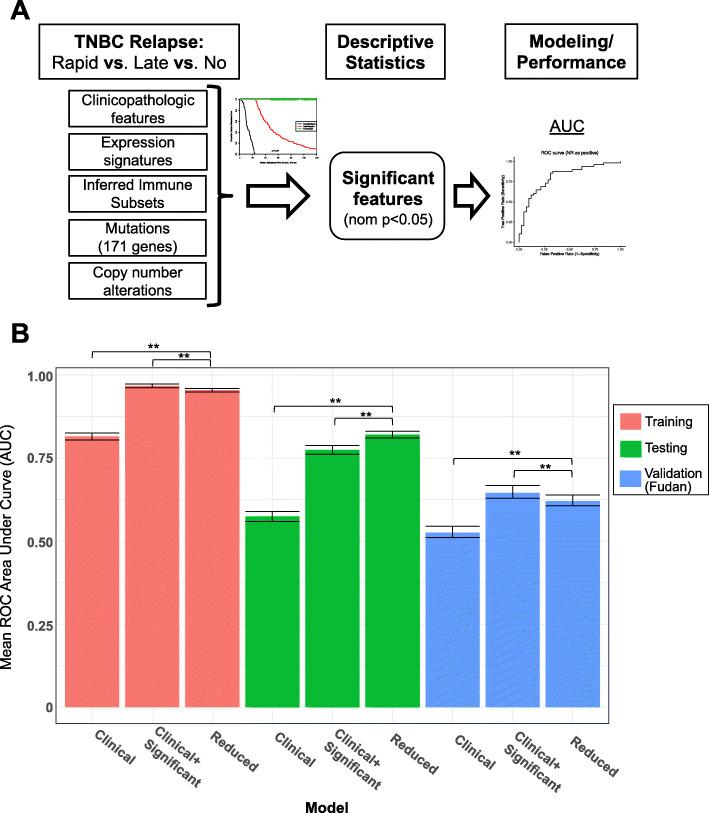
Using three publicly-available datasets, we identified 453 patients diagnosed with primary TNBC with adequate follow-up to be characterized as 'rapid relapse' (rrTNBC; distant relapse or death ≤2 years of diagnosis), 'late relapse' (lrTNBC; > 2 years) or 'no relapse' (nrTNBC: > 5 years no relapse/death). We explored basic clinical and primary tumor multi-omic data, including whole transcriptome (n = 453), and whole genome copy number and mutation data for 171 cancer-related genes (n = 317). Association of rapid relapse with clinical and genomic features were assessed using Pearson chi-squared tests, t-tests, ANOVA, and Fisher exact tests. We evaluated logistic regression models of clinical features with subtype versus two models that integrated significant genomic features.
RESULTS
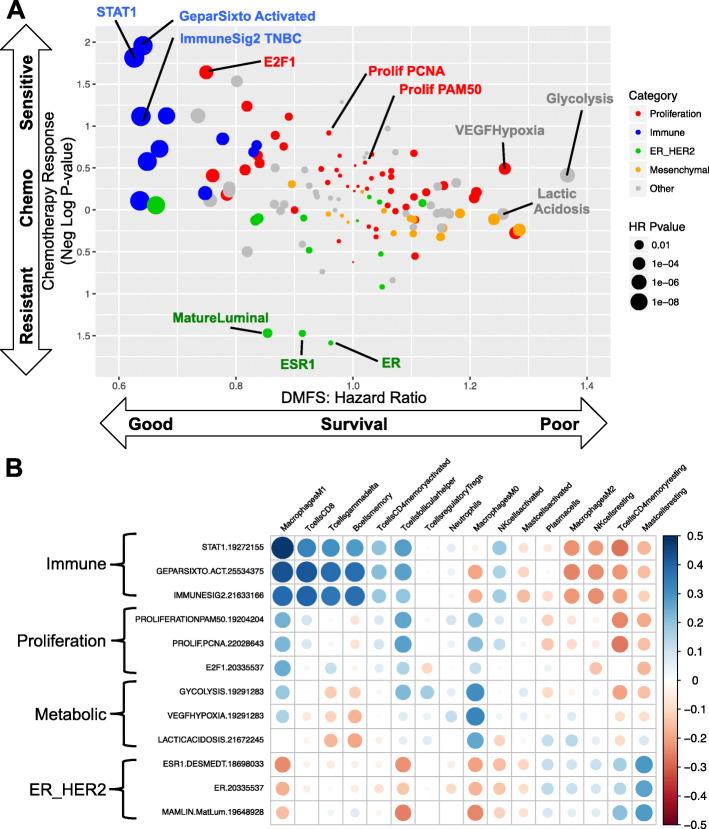
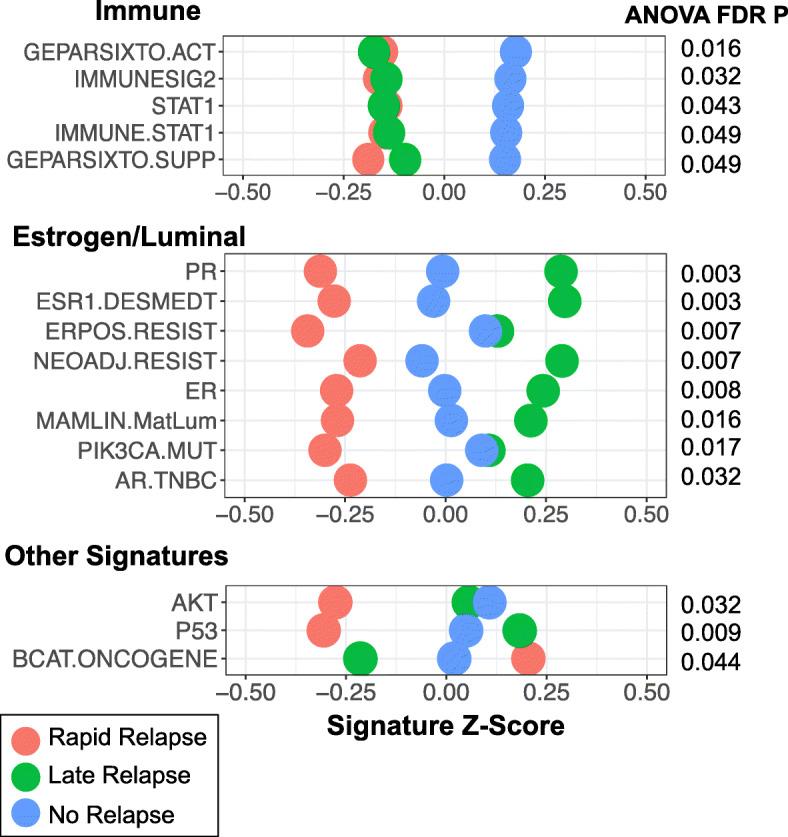
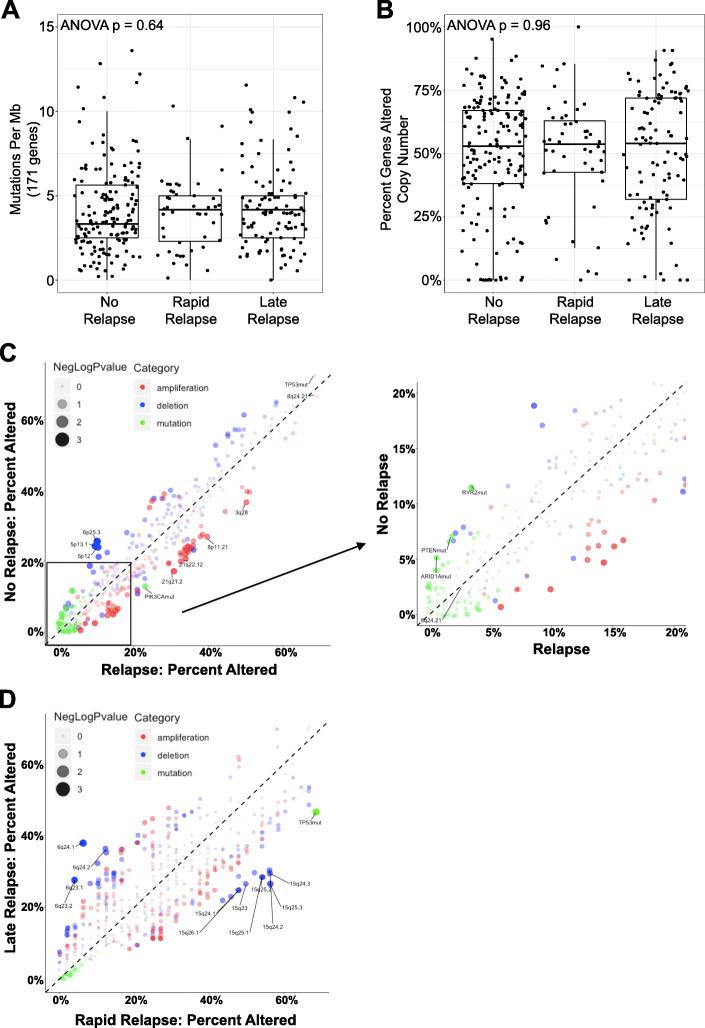
Relative to nrTNBC, both rrTNBC and lrTNBC had significantly lower immune signatures and immune signatures were highly correlated to anti-tumor CD8 T-cell, M1 macrophage, and gamma-delta T-cell CIBERSORT inferred immune subsets. Intriguingly, lrTNBCs were enriched for luminal signatures. There was no difference in tumor mutation burden or percent genome altered across groups. Logistic regression mModels that incorporate genomic features significantly outperformed standard clinical/subtype models in training (n = 63 patients), testing (n = 63) and independent validation (n = 34) cohorts, although performance of all models were overall modest.
CONCLUSIONS
We identify clinical and genomic features associated with rapid relapse TNBC for further study of this aggressive TNBC subset.
背景
三阴性乳腺癌(TNBC)是一种异质性疾病,我们之前已经表明,TNBC 的快速复发与独特的社会人口统计学特征相关。我们假设,TNBC 的快速与晚期复发也由原发性肿瘤的不同临床和基因组特征定义。
方法
使用三个公开可用的数据集,我们确定了 453 名诊断为原发性 TNBC 的患者,这些患者具有足够的随访时间,可以被描述为“快速复发”(rrTNBC;远处复发或死亡≤2 年)、“晚期复发”(lrTNBC;>2 年)或“无复发”(nrTNBC:>5 年无复发/死亡)。我们探索了基本的临床和原发性肿瘤多组学数据,包括全转录组(n=453)和 171 个与癌症相关基因的全基因组拷贝数和突变数据(n=317)。使用 Pearson 卡方检验、t 检验、方差分析和 Fisher 精确检验评估快速复发与临床和基因组特征的关联。我们评估了临床特征与亚型的逻辑回归模型,以及整合显著基因组特征的两个模型。
结果
与 nrTNBC 相比,rrTNBC 和 lrTNBC 的免疫特征明显较低,免疫特征与抗肿瘤 CD8 T 细胞、M1 巨噬细胞和 gamma-delta T 细胞 CIBERSORT 推断的免疫亚群高度相关。有趣的是,lrTNBC 富含 luminal 特征。各组之间的肿瘤突变负担或基因组改变百分比没有差异。整合基因组特征的逻辑回归 m 模型在训练(n=63 例)、测试(n=63 例)和独立验证(n=34 例)队列中显著优于标准临床/亚型模型,尽管所有模型的性能总体上都较为适中。
结论
我们确定了与 TNBC 快速复发相关的临床和基因组特征,以进一步研究这种侵袭性 TNBC 亚群。

 Zotero 插件