
单细胞多组学解析靶向 CD19 的 CAR T 细胞的基础和抗原特异性激活状态。
Single-cell multiomics dissection of basal and antigen-specific activation states of CD19-targeted CAR T cells.
机构信息
Department of Biomedical Engineering, Yale University, New Haven, Connecticut, USA.
State Key Laboratory of Precision Measurement Technology and Instrument, Tianjin University, Tianjin, China.
出版信息
J Immunother Cancer. 2021 May;9(5). doi: 10.1136/jitc-2020-002328.
BACKGROUND
Autologous T cells engineered to express a chimeric antigen receptor (CAR) specific for CD19 molecule have transformed the therapeutic landscape in patients with highly refractory leukemia and lymphoma, and the use of donor-generated allogeneic CAR T is paving the way for further breakthroughs in the treatment of cancer. However, it remains unknown how the intrinsic heterogeneities of these engineered cells mediate therapeutic efficacy and whether allogeneic products match the effectiveness of autologous therapies.
METHODS
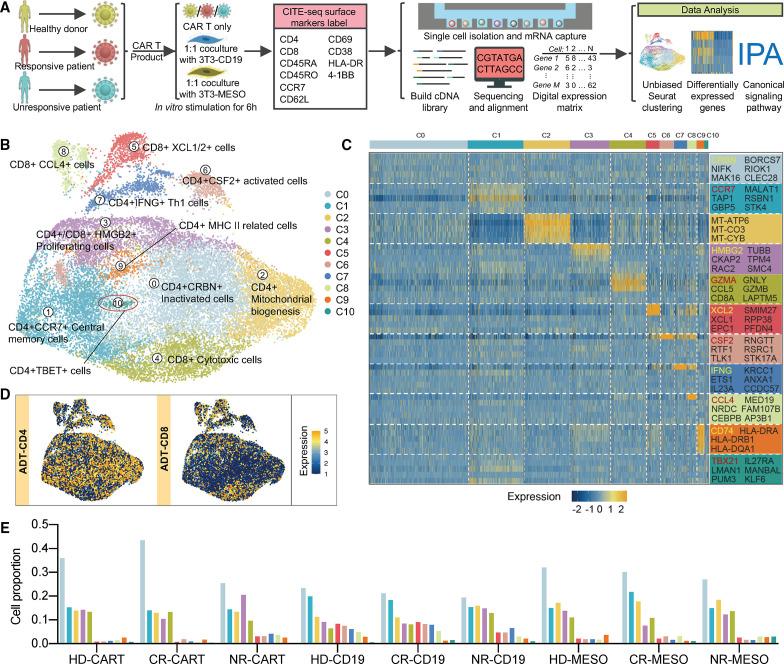
Using single-cell mRNA sequencing in conjunction with CITE-seq, we performed multiomics characterization of CAR T cells generated from healthy donor and patients with acute lymphoblastic leukemia. CAR T cells used in this study were manufactured at the University of Pennsylvania through lentiviral transduction with a CD19-4-1BB-CD3ζ construct. Besides the baseline condition, we engineered NIH-3T3 cells with human CD19 or mesothelin expression to conduct ex vivo antigen-specific or non-antigen stimulation of CAR T cells through 6-hour coculture at a 1:1 ratio.
RESULTS
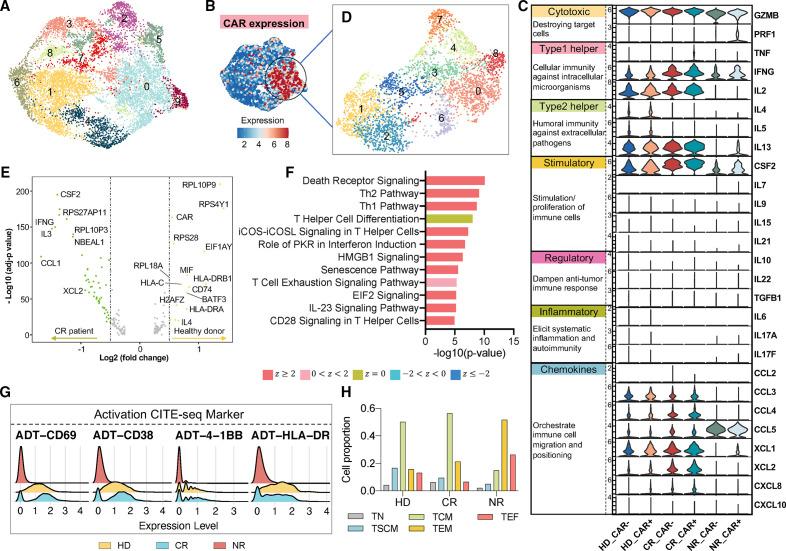
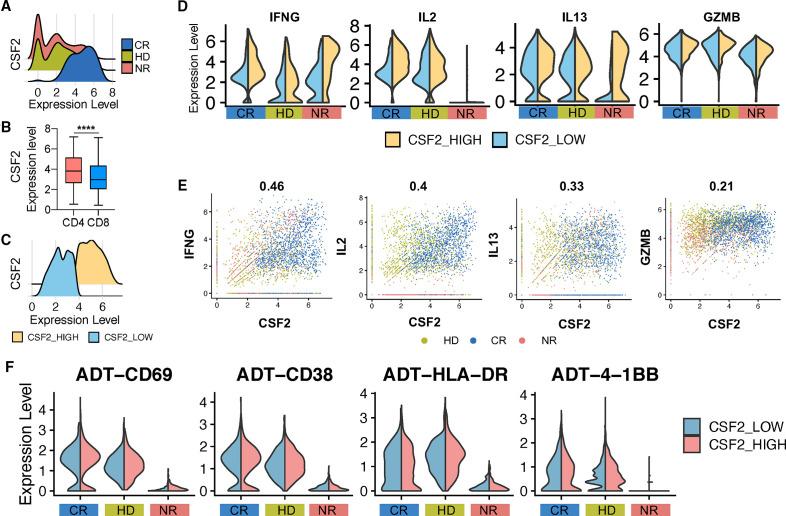
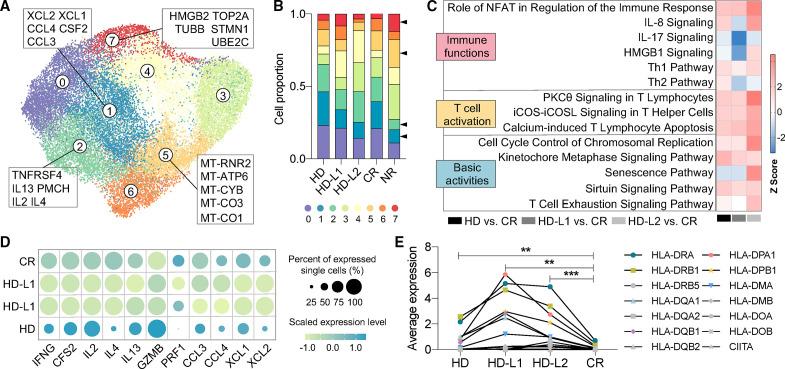
We delineated the global cellular and molecular CAR T landscape and identified that transcriptional CAR tonic signaling was regulated by a mixture of early activation, exhaustion signatures, and cytotoxic activities. On CD19 stimulation, we illuminated the disparities of CAR T cells derived from different origins and found that donor CAR T had more pronounced activation level in correlation with the upregulation of major histocompatibility complex class II genes compared with patient CAR T cells. This finding was independently validated in additional datasets from literature. Furthermore, GM-CSF() expression was found to be associated with functional gene productions, but it induced little impact on the CAR T activation.
CONCLUSIONS
Through integrated multiomics profiling and unbiased canonical pathway analyses, our results unveil heterogeneities in the transcriptional, phenotypic, functional, and metabolic profiles of donor and patient CAR T cells, providing mechanistic basis for ameliorating clinical outcomes and developing next-generation 'off- the-shelf' allogeneic products.
背景
表达嵌合抗原受体(CAR)的自体 T 细胞针对 CD19 分子,改变了难治性白血病和淋巴瘤患者的治疗格局,而供体产生的同种异体 CAR T 正在为癌症治疗的进一步突破铺平道路。然而,这些工程细胞的固有异质性如何介导治疗效果,以及同种异体产品是否与自体疗法的疗效相匹配,目前尚不清楚。
方法
我们使用单细胞 mRNA 测序结合 CITE-seq,对来自健康供体和急性淋巴细胞白血病患者的 CAR T 细胞进行了多组学特征分析。本研究中使用的 CAR T 细胞是通过慢病毒转导带有 CD19-4-1BB-CD3ζ 构建体在宾夕法尼亚大学制造的。除了基线条件外,我们还通过将人 CD19 或间皮素表达工程化到 NIH-3T3 细胞中,通过 6 小时 1:1 比例共培养,进行 CAR T 细胞的体外抗原特异性或非抗原刺激。
结果
我们描绘了全球细胞和分子 CAR T 景观,并确定转录 CAR 紧张信号由早期激活、衰竭特征和细胞毒性活动的混合物调节。在 CD19 刺激下,我们阐明了来自不同来源的 CAR T 细胞之间的差异,并发现与患者 CAR T 细胞相比,供体 CAR T 的激活水平更高,与主要组织相容性复合体 II 基因的上调相关。这一发现在来自文献的其他数据集上得到了独立验证。此外,GM-CSF()表达与功能基因产物的产生有关,但对 CAR T 的激活影响不大。
结论
通过整合多组学分析和无偏通路分析,我们的结果揭示了供体和患者 CAR T 细胞在转录、表型、功能和代谢特征方面的异质性,为改善临床结局和开发下一代“现成”同种异体产品提供了机制基础。


 Zotero 插件