
与 COVID-19 大流行相关的塑料废物:危机还是机遇?
Plastic waste associated with the COVID-19 pandemic: Crisis or opportunity?
机构信息
School of Energy and Chemical Engineering, Xiamen University Malaysia, Jalan Sunsuria, Bandar Sunsuria, 43900 Sepang, Selangor, Malaysia; Department of Chemical and Environmental Engineering, Faculty of Science and Engineering, University of Nottingham Malaysia, Jalan Broga, 43500 Semenyih, Selangor Darul Ehsan, Malaysia.
Department of Chemical and Environmental Engineering, Faculty of Science and Engineering, University of Nottingham Malaysia, Jalan Broga, 43500 Semenyih, Selangor Darul Ehsan, Malaysia.
出版信息
J Hazard Mater. 2021 Sep 5;417:126108. doi: 10.1016/j.jhazmat.2021.126108. Epub 2021 May 13.
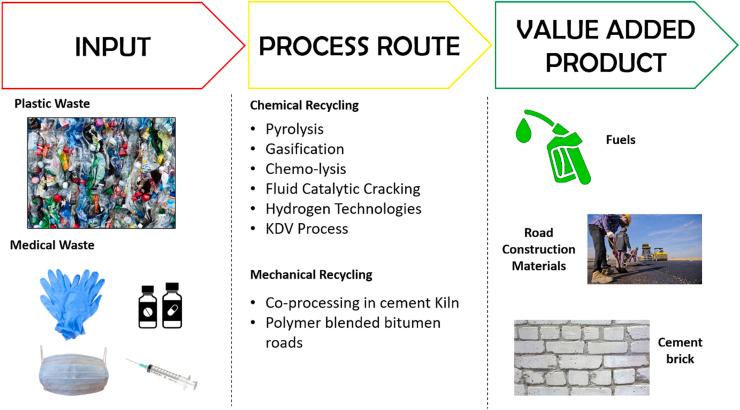
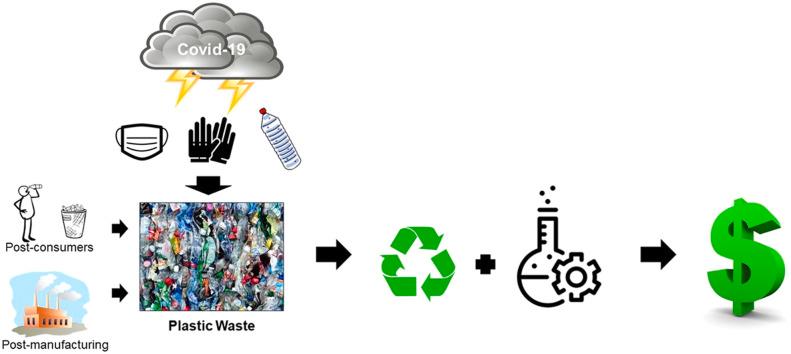
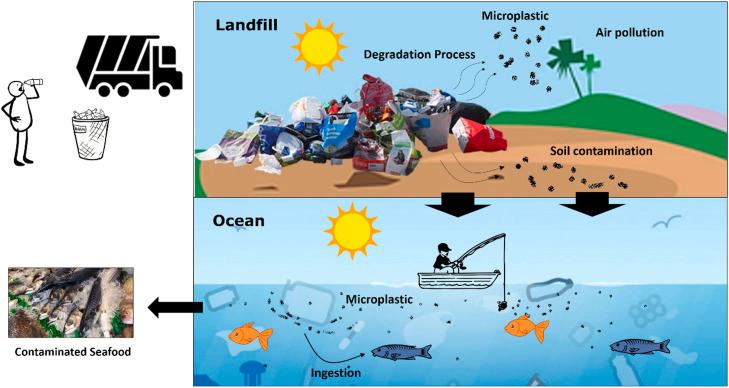
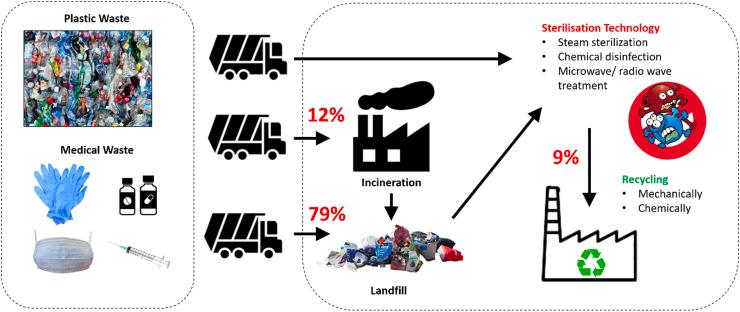
Coronavirus Diseases 2019 (COVID-19) pandemic has a huge impact on the plastic waste management in many countries due to the sudden surge of medical waste which has led to a global waste management crisis. Improper management of plastic waste may lead to various negative impacts on the environment, animals, and human health. However, adopting proper waste management and the right technologies, looking in a different perception of the current crisis would be an opportunity. About 40% of the plastic waste ended up in landfill, 25% incinerated, 16% recycled and the remaining 19% are leaked into the environment. The increase of plastic wastes and demand of plastic markets serve as a good economic indicator for investor and government initiative to invest in technologies that converts plastic waste into value-added product such as fuel and construction materials. This will close the loop of the life cycle of plastic waste by achieving a sustainable circular economy. This review paper will provide insight of the state of plastic waste before and during the COVID-19 pandemic. The treatment pathway of plastic waste such as sterilisation technology, incineration, and alternative technologies available in converting plastic waste into value-added product were reviewed.
2019 年冠状病毒病(COVID-19)大流行对许多国家的塑料废物管理产生了巨大影响,因为医疗废物的突然激增导致了全球废物管理危机。塑料废物管理不当可能会对环境、动物和人类健康造成各种负面影响。然而,采用适当的废物管理和正确的技术,从不同的角度看待当前的危机将是一个机会。大约 40%的塑料废物最终进入垃圾填埋场,25%被焚烧,16%被回收,其余 19%则泄漏到环境中。塑料废物的增加和塑料市场的需求为投资者和政府提供了一个良好的经济指标,促使他们投资于将塑料废物转化为增值产品的技术,例如燃料和建筑材料。这将通过实现可持续的循环经济来封闭塑料废物的生命周期循环。本文综述了 COVID-19 大流行前后塑料废物的状况。综述了塑料废物的处理途径,如消毒技术、焚烧和将塑料废物转化为增值产品的替代技术。
 Zotero 插件