
原发性肝细胞癌手术切除时机对老年患者生存结局的影响及临床模型预测。
Effect of timing of surgical resection of primary hepatocellular carcinoma on survival outcomes in elderly patients and prediction of clinical models.
机构信息
Department of Hepatobiliary Surgery, The First Affiliated Hospital of Guangxi Medical University, Nanning, 530021, Guangxi Province, China.
出版信息
BMC Gastroenterol. 2021 May 21;21(1):230. doi: 10.1186/s12876-021-01815-4.
BACKGROUND
The effect of time delay from diagnosis to surgery on the prognosis of elderly patients with liver cancer is not well known. We investigated the effect of surgical timing on the prognosis of elderly hepatocellular carcinoma patients undergoing surgical resection and constructed a Nomogram model to predict the overall survival of patients.
METHODS
A retrospective analysis was performed on elderly patients with primary liver cancer after hepatectomy from 2012 to 2018. The effect of surgical timing on the prognosis of elderly patients with liver cancer was analyzed using the cut-off times of 18 days, 30 days, and 60 days. Cox was used to analyze the independent influencing factors of overall survival in patients, and a prognostic model was constructed.
RESULTS
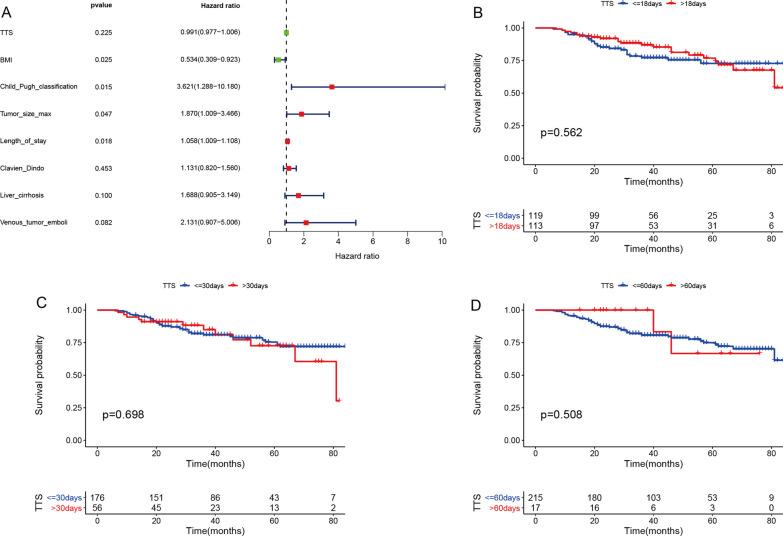
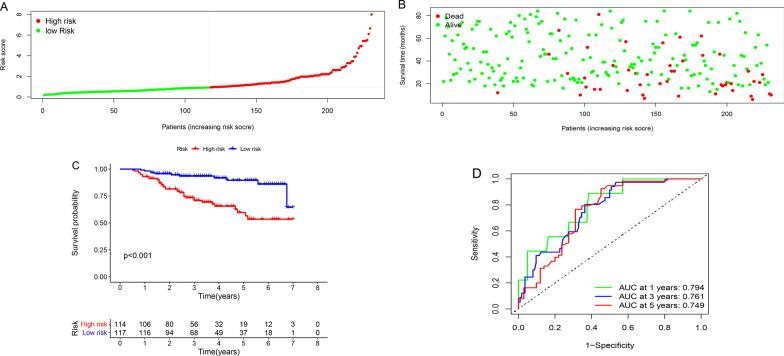
A total of 232 elderly hepatocellular carcinoma patients who underwent hepatectomy were enrolled in this study. The cut-off times of 18, 30, and 60 days were used. The duration of surgery had no significant effect on overall survival. Body Mass Index, Child-Pugh classification, Tumor size Max, and Length of stay were independent influencing factors for overall survival in the elderly Liver cancer patients after surgery. These factors combined with Liver cirrhosis and Venous tumor emboli were incorporated into a Nomogram. The nomogram was validated using the clinical data of the study patients, and exhibited better prediction for 1-year, 3-year, and 5-year overall survival.
CONCLUSIONS
We demonstrated that the operative time has no significant effect on delayed operation in the elderly patients with hepatocellular carcinoma, and a moderate delay may benefit some patients. The constructed Nomogram model is a good predictor of overall survival in elderly patients with hepatectomy.
背景
从诊断到手术的时间延迟对老年肝癌患者预后的影响尚不清楚。我们研究了手术时机对接受手术切除的老年肝细胞癌患者预后的影响,并构建了诺莫图模型来预测患者的总生存率。
方法
对 2012 年至 2018 年间接受肝切除术的老年原发性肝癌患者进行回顾性分析。使用 18 天、30 天和 60 天的截止时间分析手术时机对老年肝癌患者预后的影响。Cox 分析用于分析患者总生存的独立影响因素,并构建预后模型。
结果
本研究共纳入 232 例接受肝切除术的老年肝细胞癌患者。使用 18、30 和 60 天的截止时间。手术持续时间对总生存率没有显著影响。体重指数、Child-Pugh 分级、肿瘤最大径和住院时间是老年肝癌患者手术后总生存的独立影响因素。这些因素与肝硬化和静脉肿瘤栓子结合在一起,纳入了一个诺莫图。该诺莫图使用研究患者的临床数据进行了验证,在预测 1 年、3 年和 5 年总生存率方面表现更好。
结论
我们表明,手术时间对老年肝细胞癌患者的延迟手术没有显著影响,适度的延迟可能对某些患者有益。构建的诺莫图模型是预测老年肝癌患者肝切除术后总生存率的良好指标。


 Zotero 插件