
外源茉莉酸甲酯通过改变渗透调节、抗氧化防御和茉莉酸响应基因的表达提高多年生黑麦草的耐热性。
Exogenous Methyl Jasmonate Improves Heat Tolerance of Perennial Ryegrass Through Alteration of Osmotic Adjustment, Antioxidant Defense, and Expression of Jasmonic Acid-Responsive Genes.
作者信息
Su Yanning, Huang Yizhi, Dong Xintan, Wang Ruijia, Tang Mingyu, Cai Jiabang, Chen Jiayi, Zhang Xinquan, Nie Gang
机构信息
Department of Forage Science, College of Grassland Science and Technology, Sichuan Agricultural University, Chengdu, China.
出版信息
Front Plant Sci. 2021 May 7;12:664519. doi: 10.3389/fpls.2021.664519. eCollection 2021.
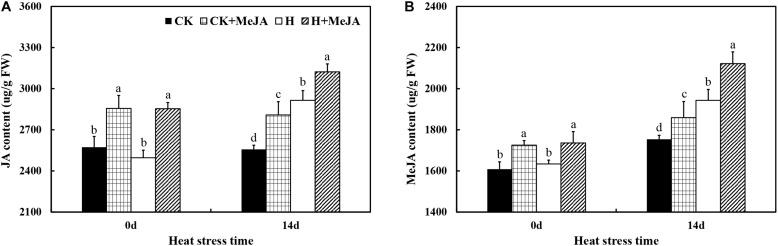
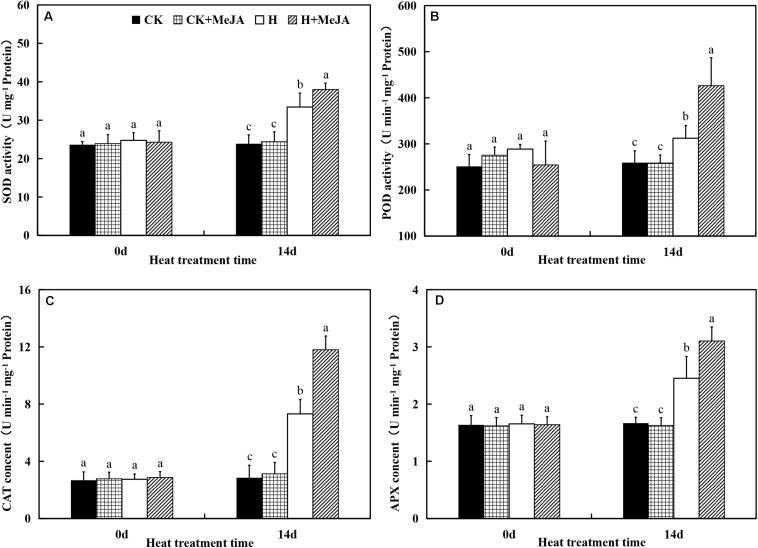
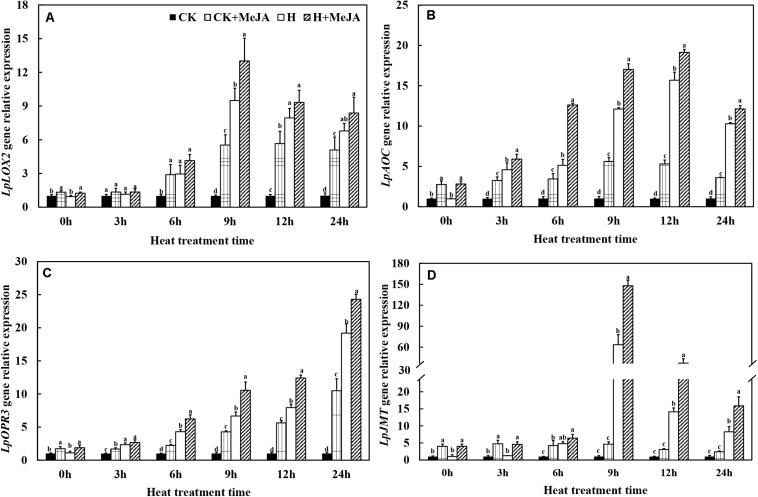
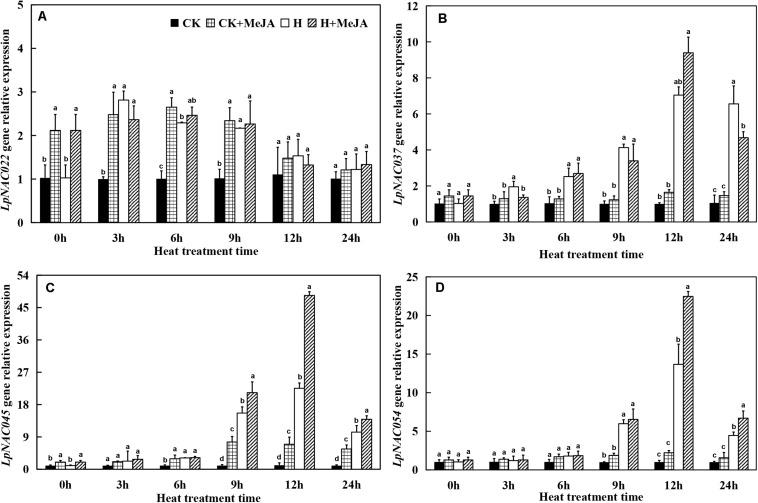
Perennial ryegrass ( L.) is an important cool-season grass species that is widely cultivated in temperate regions worldwide but usually sensitive to heat stress. Jasmonates (JAs) may have a positive effect on plant tolerance under heat stress. In this study, results showed that exogenous methyl jasmonic acid (MeJA) could significantly improve heat tolerance of perennial ryegrass through alteration of osmotic adjustment, antioxidant defense, and the expression of JA-responsive genes. MeJA-induced heat tolerance was involved in the maintenance of better relative water content (RWC), the decline of chlorophyll (Chl) loss for photosynthetic maintenance, as well as maintained lower electrolyte leakage (EL) and malondialdehyde (MDA) content under heat condition, so as to avoid further damage to plants. Besides, results also indicated that exogenous MeJA treatment could increase the activities of superoxide dismutase (SOD), peroxidase (POD), catalase (CAT), and ascorbate peroxidase (APX), thus enhancing the scavenging ability of reactive oxygen species, alleviating the oxidative damage caused by heat stress. Heat stress and exogenous MeJA upregulated transcript levels of related genes (, , , and ) in JA biosynthetic pathway, which also could enhance the accumulation of JA and MeJA content. Furthermore, some NAC transcription factors and heat shock proteins may play a positive role in enhancing resistance of perennial ryegrass with heat stress.
多年生黑麦草(Lolium perenne L.)是一种重要的冷季型草种,在全球温带地区广泛种植,但通常对热胁迫敏感。茉莉酸(JAs)可能对热胁迫下植物的耐受性有积极影响。在本研究中,结果表明,外源茉莉酸甲酯(MeJA)可通过改变渗透调节、抗氧化防御以及茉莉酸响应基因的表达,显著提高多年生黑麦草的耐热性。MeJA诱导的耐热性涉及维持更好的相对含水量(RWC)、减少叶绿素(Chl)损失以维持光合作用,以及在热胁迫条件下保持较低的电解质渗漏(EL)和丙二醛(MDA)含量,从而避免对植物造成进一步损害。此外,结果还表明,外源MeJA处理可提高超氧化物歧化酶(SOD)、过氧化物酶(POD)、过氧化氢酶(CAT)和抗坏血酸过氧化物酶(APX)的活性,从而增强活性氧的清除能力,减轻热胁迫引起的氧化损伤。热胁迫和外源MeJA上调了茉莉酸生物合成途径中相关基因( 、 、 、和 )的转录水平,这也可能增强茉莉酸和MeJA含量的积累。此外,一些NAC转录因子和热休克蛋白可能在增强多年生黑麦草对热胁迫的抗性中发挥积极作用。


 Zotero 插件