
CRISPR/Cas9介导的uPAR基因敲除导致黑色素瘤和结肠癌细胞系中的肿瘤生长抑制、表皮生长因子受体(EGFR)下调以及干性标志物的诱导。
CRISPR/Cas9 uPAR Gene Knockout Results in Tumor Growth Inhibition, EGFR Downregulation and Induction of Stemness Markers in Melanoma and Colon Carcinoma Cell Lines.
作者信息
Biagioni Alessio, Chillà Anastasia, Del Rosso Mario, Fibbi Gabriella, Scavone Francesca, Andreucci Elena, Peppicelli Silvia, Bianchini Francesca, Calorini Lido, Li Santi Anna, Ragno Pia, Margheri Francesca, Laurenzana Anna
机构信息
Department of Experimental and Clinical Biomedical Sciences "Mario Serio", University of Florence, Firenze, Italy.
Department of Chemistry and Biology, University of Salerno, Fisciano, Italy.
出版信息
Front Oncol. 2021 May 14;11:663225. doi: 10.3389/fonc.2021.663225. eCollection 2021.
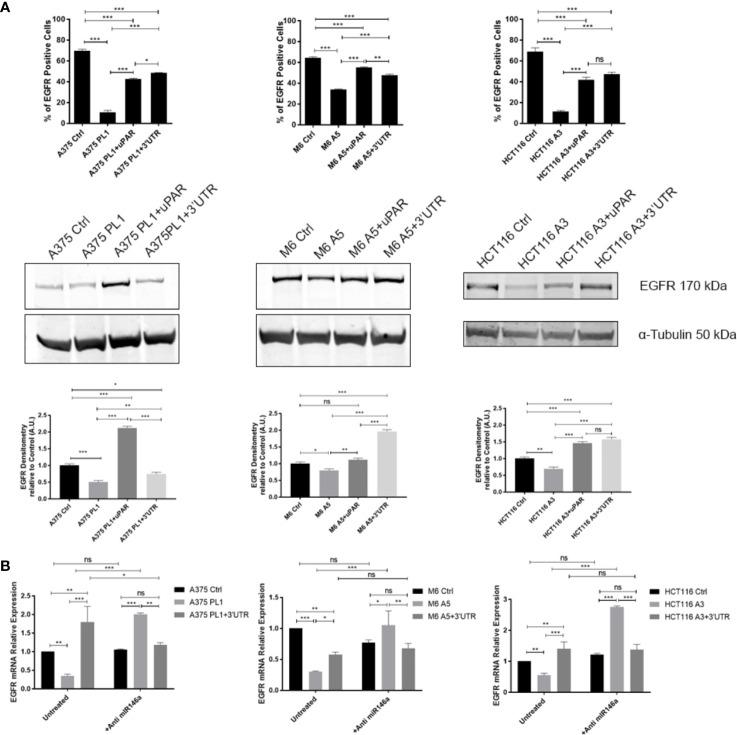
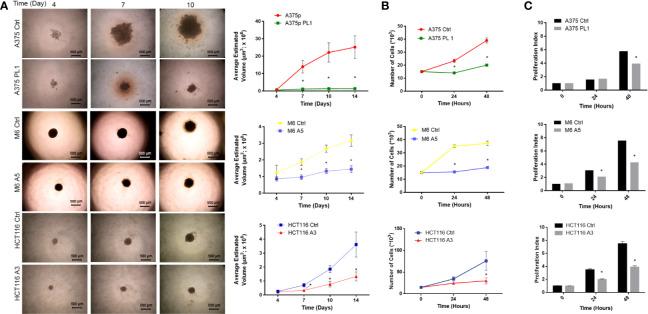
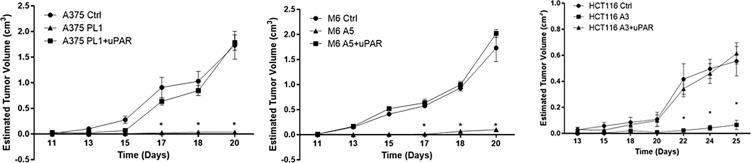
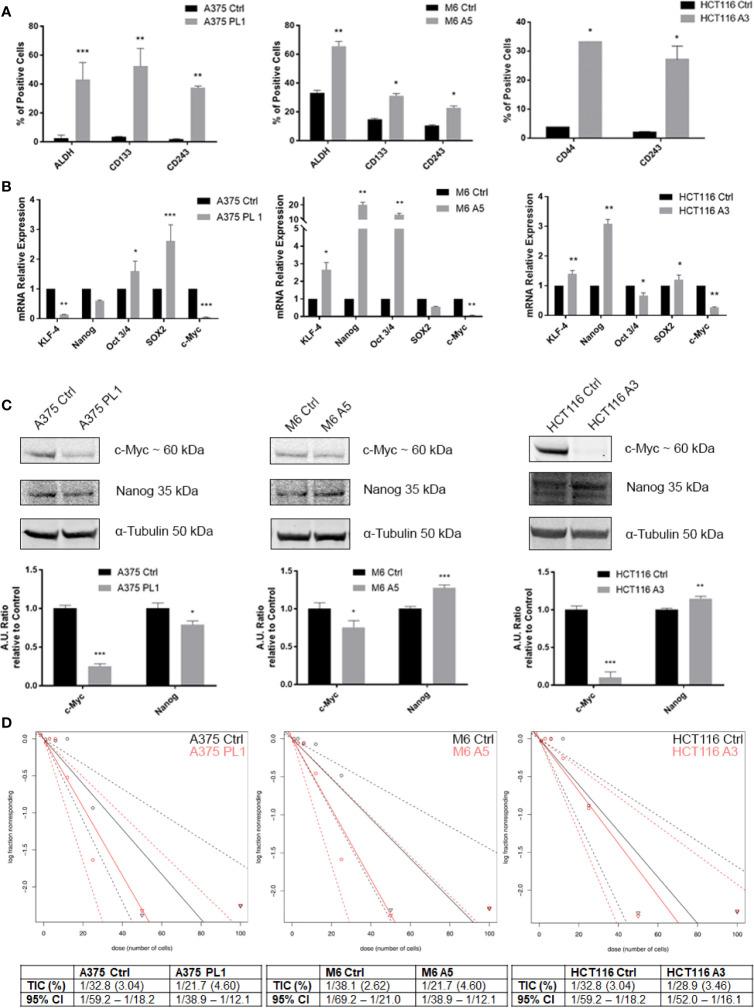
uPAR is a globular protein, tethered to the cell membrane by a GPI-anchor involved in several cancer-related properties and its overexpression commonly correlates with poor prognosis and metastasis. We investigated the consequences of uPAR irreversible loss in human melanoma and colon cancer cell lines, knocking out its expression by CRISPR/Cas9. We analyzed through flow cytometry, western blotting and qPCR, the modulation of the most known cancer stem cells-associated genes and the EGFR while we observed the proliferation rate exploiting 2D and 3D cellular models. We also generated uPAR "rescue" expression cell lines as well as we promoted the expression of only its 3'UTR to demonstrate the involvement of uPAR mRNA in tumor progression. Knocking out PLAUR, uPAR-encoding gene, we observed an inhibited growth ratio unexpectedly coupled with a significant percentage of cells acquiring a stem-like phenotype. experiments demonstrated that uPAR loss completely abrogates tumorigenesis despite the gained stem-like profile. Nonetheless, we proved that the reintroduction of the 3'UTR of PLAUR gene was sufficient to restore the wild-type status validating the hypothesis that such a region may act as a "molecular sponge". In particular miR146a, by binding PLAUR 3' UTR region might be responsible for uPAR-dependent inhibition of EGFR expression.
尿激酶型纤溶酶原激活物受体(uPAR)是一种球状蛋白,通过糖基磷脂酰肌醇(GPI)锚定在细胞膜上,参与多种癌症相关特性,其过表达通常与预后不良和转移相关。我们通过CRISPR/Cas9敲除人黑色素瘤和结肠癌细胞系中uPAR的表达,研究了uPAR不可逆缺失的后果。我们利用二维和三维细胞模型观察增殖率的同时,通过流式细胞术、蛋白质免疫印迹法和定量聚合酶链反应分析了最知名的癌症干细胞相关基因和表皮生长因子受体(EGFR)的调控情况。我们还构建了uPAR“拯救”表达细胞系,并促进仅其3'非翻译区(UTR)的表达,以证明uPAR信使核糖核酸(mRNA)在肿瘤进展中的作用。敲除编码uPAR的基因PLAUR后,我们意外地观察到生长率受到抑制,同时有相当比例的细胞获得了干细胞样表型。实验表明,尽管获得了干细胞样特征,但uPAR的缺失完全消除了肿瘤发生。尽管如此,我们证明重新引入PLAUR基因的3'UTR足以恢复野生型状态,验证了该区域可能作为“分子海绵”的假设。特别是,微小核糖核酸146a(miR146a)通过结合PLAUR 3'UTR区域,可能是uPAR依赖性抑制EGFR表达的原因。

 Zotero 插件