
纳米抗生素:纳米尺度下对抗抗生素耐药性的功能与特性
Nanoantibiotics: Functions and Properties at the Nanoscale to Combat Antibiotic Resistance.
作者信息
Mamun M Mustafa, Sorinolu Adeola Julian, Munir Mariya, Vejerano Eric P
机构信息
Center for Environmental Nanoscience and Risk, Department of Environmental Health Sciences, University of South Carolina, Columbia, SC, United States.
Civil and Environmental Engineering, The William States Lee College of Engineering, University of North Carolina, Charlotte, NC, United States.
出版信息
Front Chem. 2021 May 13;9:687660. doi: 10.3389/fchem.2021.687660. eCollection 2021.
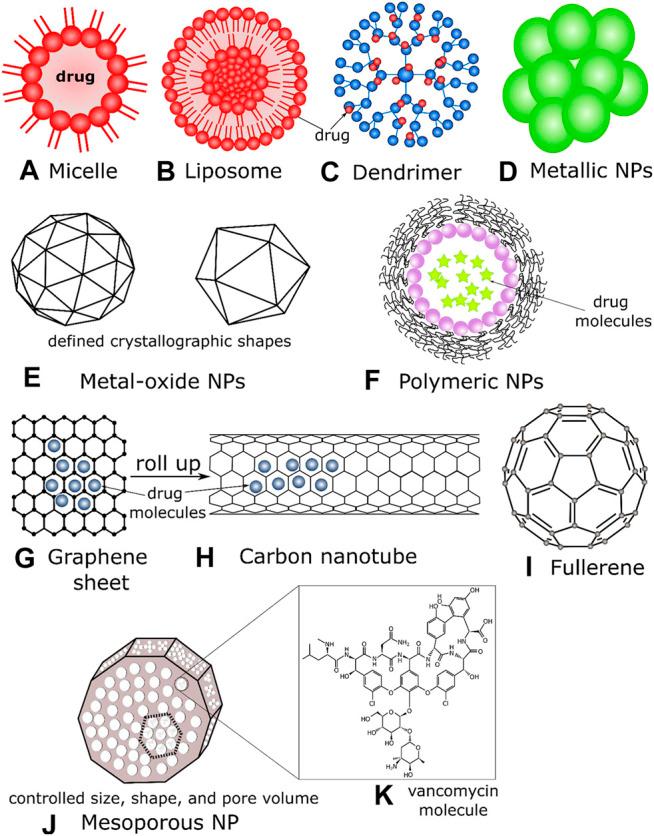
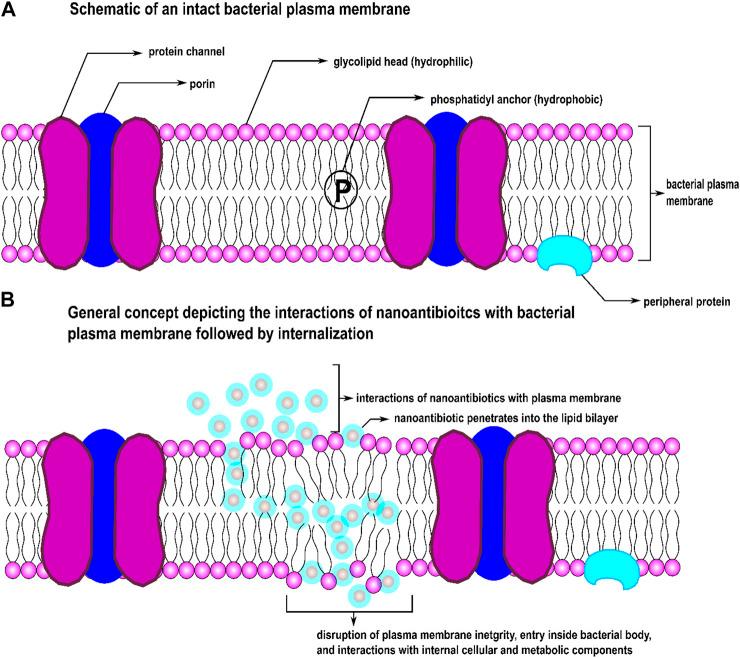
One primary mechanism for bacteria developing resistance is frequent exposure to antibiotics. Nanoantibiotics (nAbts) is one of the strategies being explored to counteract the surge of antibiotic resistant bacteria. nAbts are antibiotic molecules encapsulated with engineered nanoparticles (NPs) or artificially synthesized pure antibiotics with a size range of ≤100 nm in at least one dimension. NPs may restore drug efficacy because of their nanoscale functionalities. As carriers and delivery agents, nAbts can reach target sites inside a bacterium by crossing the cell membrane, interfering with cellular components, and damaging metabolic machinery. Nanoscale systems deliver antibiotics at enormous particle number concentrations. The unique size-, shape-, and composition-related properties of nAbts pose multiple simultaneous assaults on bacteria. Resistance of bacteria toward diverse nanoscale conjugates is considerably slower because NPs generate non-biological adverse effects. NPs physically break down bacteria and interfere with critical molecules used in bacterial processes. Genetic mutations from abiotic assault exerted by nAbts are less probable. This paper discusses how to exploit the fundamental physical and chemical properties of NPs to restore the efficacy of conventional antibiotics. We first described the concept of nAbts and explained their importance. We then summarized the critical physicochemical properties of nAbts that can be utilized in manufacturing and designing various nAbts types. nAbts epitomize a potential Trojan horse strategy to circumvent antibiotic resistance mechanisms. The availability of diverse types and multiple targets of nAbts is increasing due to advances in nanotechnology. Studying nanoscale functions and properties may provide an understanding in preventing future outbreaks caused by antibiotic resistance and in developing successful nAbts.
细菌产生耐药性的一个主要机制是频繁接触抗生素。纳米抗生素(nAbts)是正在探索的应对抗生素耐药菌激增的策略之一。nAbts是包裹在工程纳米颗粒(NPs)中的抗生素分子,或至少在一个维度上尺寸范围≤100nm的人工合成纯抗生素。由于其纳米级功能,NPs可能会恢复药物疗效。作为载体和递送剂,nAbts可以通过穿过细胞膜、干扰细胞成分和破坏代谢机制到达细菌内部的靶位点。纳米级系统以极高的粒子数浓度递送抗生素。nAbts独特的尺寸、形状和组成相关特性对细菌同时造成多种攻击。细菌对各种纳米级缀合物的耐药性发展得相当缓慢,因为NPs会产生非生物不良反应。NPs从物理上分解细菌并干扰细菌过程中使用的关键分子。由nAbts施加的非生物攻击导致基因突变的可能性较小。本文讨论了如何利用NPs的基本物理和化学性质来恢复传统抗生素的疗效。我们首先描述了nAbts的概念并解释了它们的重要性。然后我们总结了nAbts的关键物理化学性质,这些性质可用于制造和设计各种类型的nAbts。nAbts体现了一种潜在的特洛伊木马策略,以规避抗生素耐药机制。由于纳米技术的进步,nAbts的多样类型和多个靶点的可用性正在增加。研究纳米级功能和特性可能有助于理解如何预防未来由抗生素耐药性引起的疫情爆发以及开发成功的nAbts。
 Zotero 插件