
恢复期血清和疫苗诱导的抗体对全球 SARS-CoV-2 变体刺突在很大程度上保持中和效价。
Convalescent-Phase Sera and Vaccine-Elicited Antibodies Largely Maintain Neutralizing Titer against Global SARS-CoV-2 Variant Spikes.
机构信息
Department of Microbiology, NYU Grossman School of Medicine, New York, New York, USA.
NYU Langone Vaccine Center, NYU Grossman School of Medicine, New York, New York, USA.
出版信息
mBio. 2021 Jun 29;12(3):e0069621. doi: 10.1128/mBio.00696-21. Epub 2021 Jun 1.
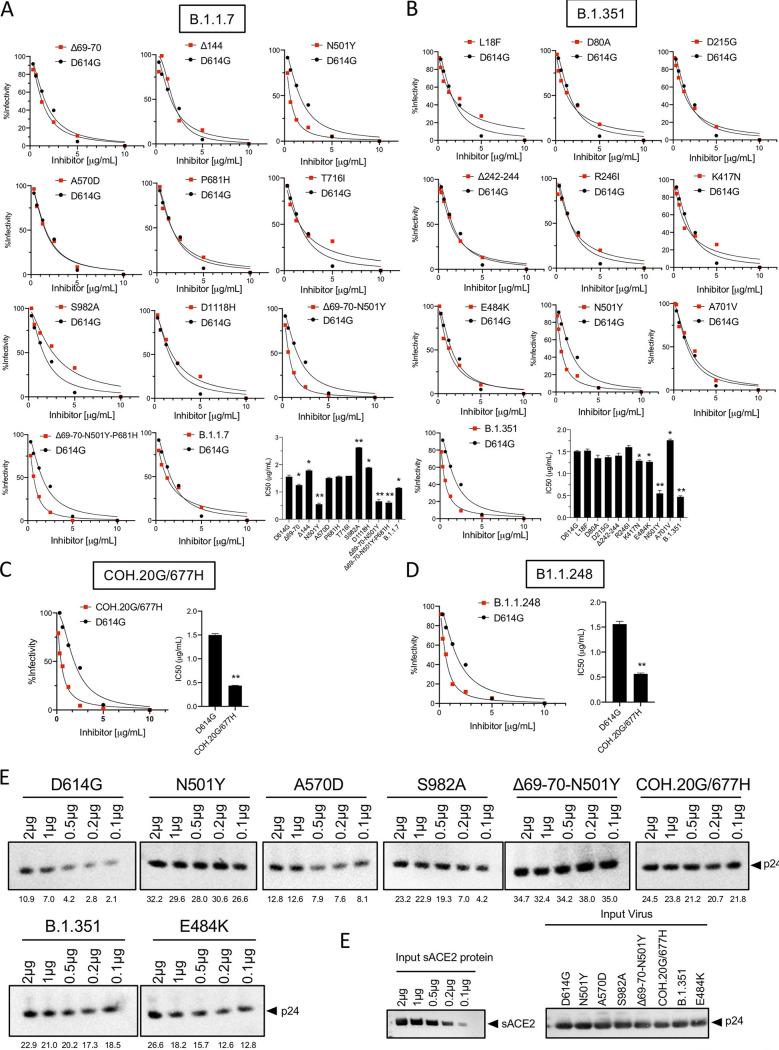
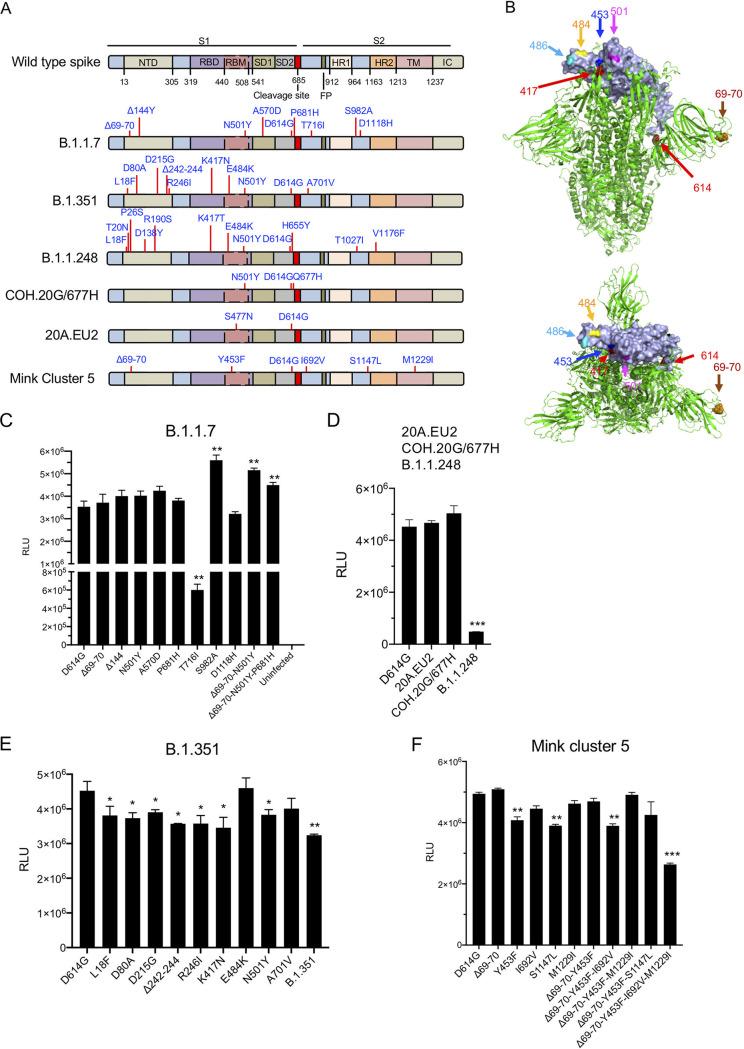
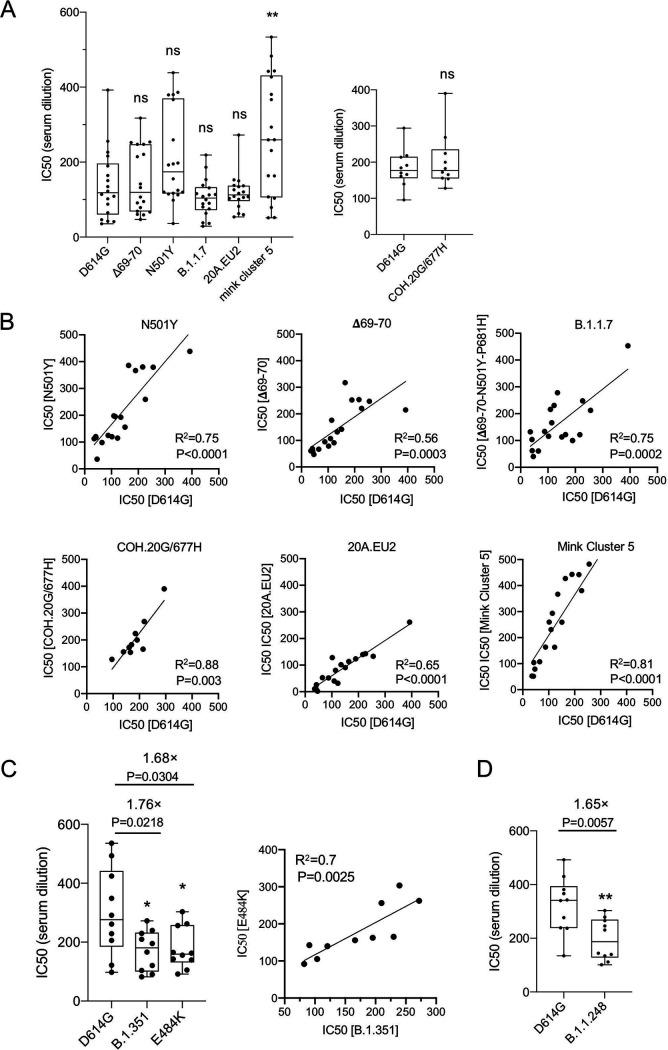
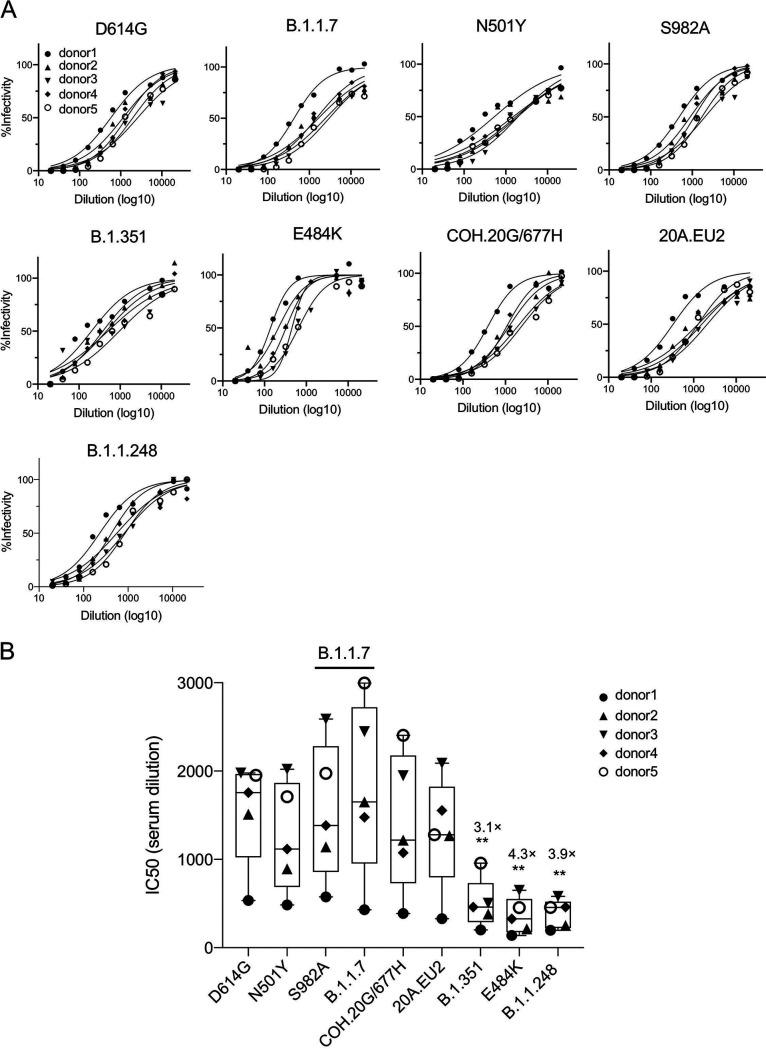
The increasing prevalence of severe acute respiratory syndrome coronavirus 2 (SARS-CoV-2) variants with spike protein mutations raises concerns that antibodies elicited by natural infection or vaccination and therapeutic monoclonal antibodies will become less effective. We show that convalescent-phase sera neutralize pseudotyped viruses with the B.1.1.7, B.1.351, B.1.1.248, COH.20G/677H, 20A.EU2, and mink cluster 5 spike proteins with only a minor loss in titer. Similarly, antibodies elicited by Pfizer BNT162b2 vaccination neutralized B.1.351 and B.1.1.248 with only a 3-fold decrease in titer, an effect attributable to E484K. Analysis of the Regeneron monoclonal antibodies REGN10933 and REGN10987 showed that REGN10933 has lost neutralizing activity against the B.1.351 and B.1.1.248 pseudotyped viruses, and the cocktail is 9- to 15-fold decreased in titer. These findings suggest that antibodies elicited by natural infection and by the Pfizer vaccine will maintain protection against the B.1.1.7, B.1.351, and B.1.1.248 variants but that monoclonal antibody therapy may be less effective for patients infected with B.1.351 or B.1.1.248 SARS-CoV-2. The rapid evolution of SARS-CoV-2 variants has raised concerns with regard to their potential to escape from vaccine-elicited antibodies and anti-spike protein monoclonal antibodies. We report here on an analysis of sera from recovered patients and vaccinated individuals and on neutralization by Regeneron therapeutic monoclonal antibodies. Overall, the variants were neutralized nearly as well as the wild-type pseudotyped virus. The B.1.351 variant was somewhat resistant to vaccine-elicited antibodies but was still readily neutralized. One of the two Regeneron therapeutic monoclonal antibodies seems to have lost most of its activity against the B.1.351 variant, raising concerns that the combination therapy might be less effective for some patients. The findings should alleviate concerns that vaccines will become ineffective but suggest the importance of continued surveillance for potential new variants.
严重急性呼吸综合征冠状病毒 2(SARS-CoV-2)变体的刺突蛋白突变的流行率不断上升,令人担忧的是,自然感染或接种疫苗产生的抗体和治疗性单克隆抗体的有效性将降低。我们表明,恢复期血清可中和具有 B.1.1.7、B.1.351、B.1.1.248、COH.20G/677H、20A.EU2 和水貂簇 5 刺突蛋白的假型病毒,只是滴度略有下降。同样,辉瑞公司 BNT162b2 疫苗接种产生的抗体对 B.1.351 和 B.1.1.248 的中和活性仅降低了 3 倍,这归因于 E484K。对再生元单克隆抗体 REGN10933 和 REGN10987 的分析表明,REGN10933 对 B.1.351 和 B.1.1.248 假型病毒的中和活性已丧失,鸡尾酒的滴度降低了 9-15 倍。这些发现表明,自然感染和辉瑞疫苗产生的抗体将保持对 B.1.1.7、B.1.351 和 B.1.1.248 变体的保护作用,但对于感染 B.1.351 或 B.1.1.248 SARS-CoV-2 的患者,单克隆抗体治疗可能效果不佳。SARS-CoV-2 变体的快速进化引起了人们对其逃避疫苗诱导的抗体和抗刺突蛋白单克隆抗体的潜在能力的担忧。我们在此报告了对恢复期患者和接种个体的血清以及再生元治疗性单克隆抗体的中和作用的分析。总体而言,变体与野生型假型病毒一样被中和。B.1.351 变体对疫苗诱导的抗体有些抵抗力,但仍容易被中和。再生元的两种治疗性单克隆抗体之一似乎对 B.1.351 变体失去了大部分活性,这引发了对某些患者联合治疗可能效果不佳的担忧。这些发现应该减轻人们对疫苗会失效的担忧,但也表明需要继续监测潜在的新变体。

 Zotero 插件