
他拉唑帕利及其衍生物作为PARP-1靶向剂的放射性合成与评价
Radiosynthesis and Evaluation of Talazoparib and Its Derivatives as PARP-1-Targeting Agents.
作者信息
Zhou Dong, Chen Huaping, Mpoy Cedric, Afrin Sadia, Rogers Buck E, Garbow Joel R, Katzenellenbogen John A, Xu Jinbin
机构信息
Department of Radiology, School of Medicine, Washington University in Saint Louis, Saint Louis, MO 63110, USA.
Department of Radiation Oncology, School of Medicine, Washington University in Saint Louis, Saint Louis, MO 63110, USA.
出版信息
Biomedicines. 2021 May 18;9(5):565. doi: 10.3390/biomedicines9050565.
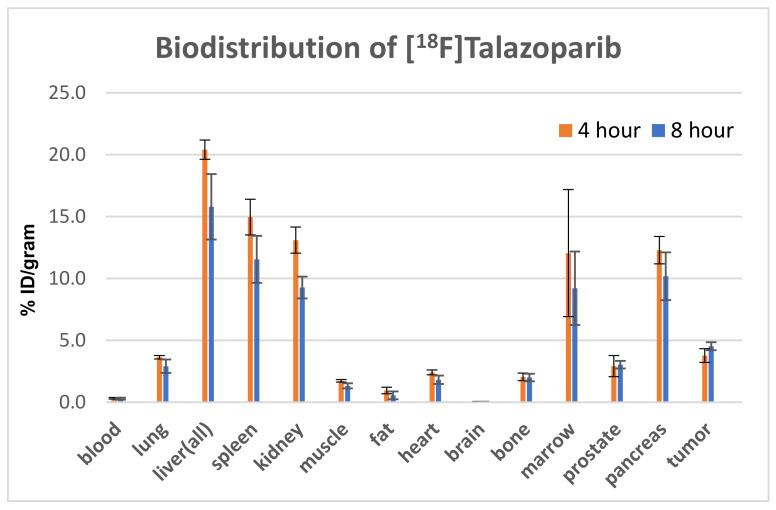
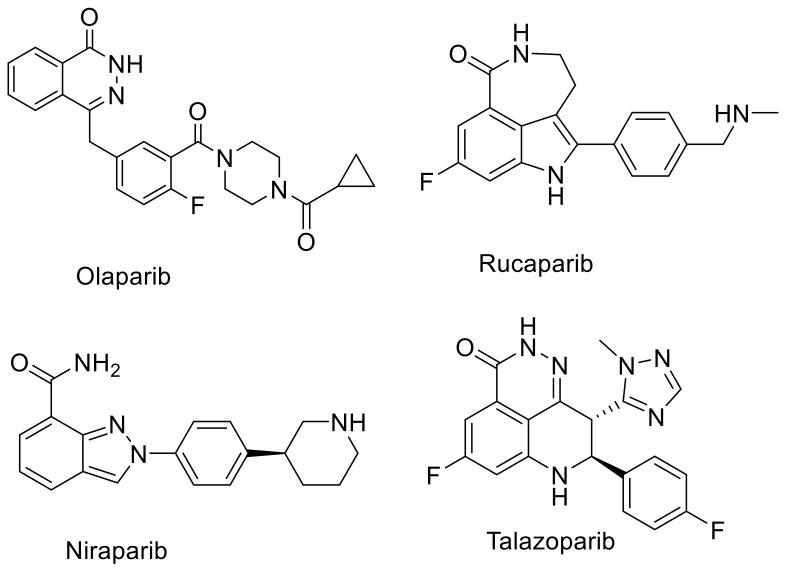
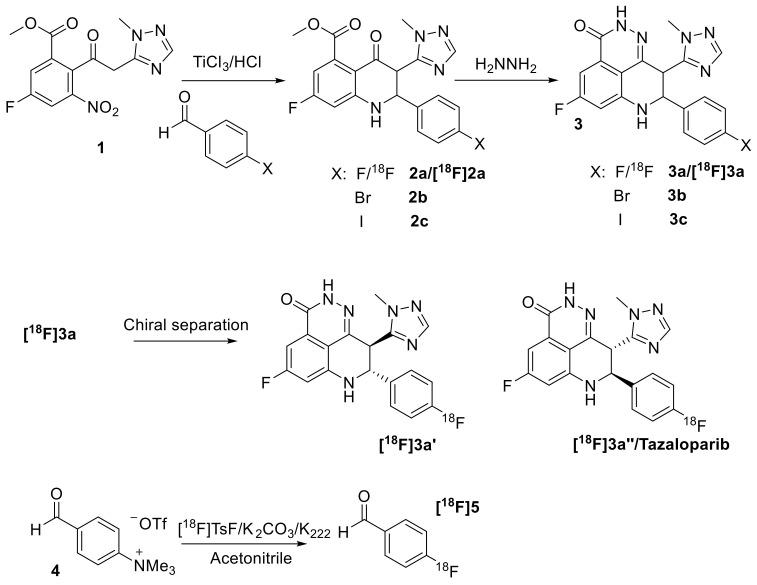
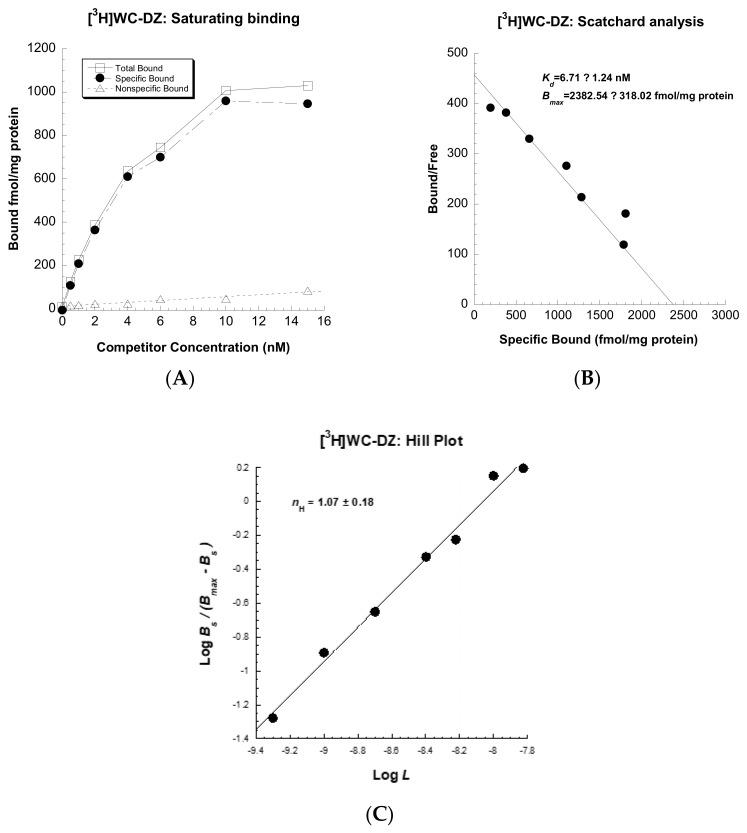
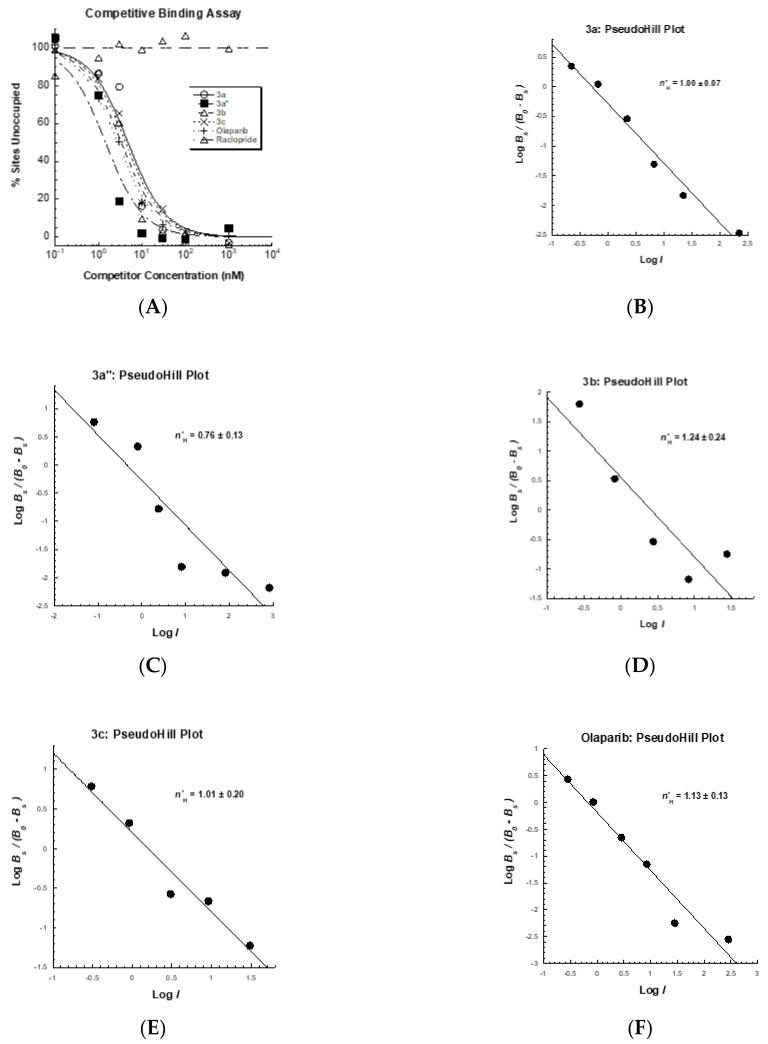
Poly (ADP-ribose) polymerase-1 (PARP-1) is a critical enzyme in the DNA repair process and the target of several FDA-approved inhibitors. Several of these inhibitors have been radiolabeled for non-invasive imaging of PARP-1 expression or targeted radiotherapy of PARP-1 expressing tumors. In particular, derivatives of olaparib and rucaparib, which have reduced trapping potency by PARP-1 compared to talazoparib, have been radiolabeled for these purposes. Here, we report the first radiosynthesis of [F]talazoparib and its in vitro and in vivo evaluation. Talazoparib () and its bromo- or iodo-derivatives were synthesized as racemic mixtures (, and ), and these compounds exhibit high affinity to PARP-1 ( for talazoparib (): 0.65 ± 0.07 nM; : 2.37 ± 0.56 nM; : 1.92 ± 0.41 nM; : 1.73 ± 0.43 nM; known PARP-1 inhibitor Olaparib: 1.87 ± 0.10 nM; non-PARP-1 compound Raclopride: >20,000 nM) in a competitive binding assay using a tritium-labeled PARP-1 radioligand [H]WC-DZ for screening. [F]Talazoparib () was radiosynthesized via a multiple-step procedure with good radiochemical and chiral purities (98%) and high molar activity (28 GBq/μmol). The preliminary biodistribution studies in the murine PC-3 tumor model showed that [F]talazoparib had a good level of tumor uptake that persisted for over 8 h (3.78 ± 0.55 %ID/gram at 4 h and 4.52 ± 0.32 %ID/gram at 8 h). These studies show the potential for the bromo- and iodo- derivatives for PARP-1 targeted radiotherapy studies using therapeutic radionuclides.
聚(ADP - 核糖)聚合酶 -1(PARP -1)是DNA修复过程中的关键酶,也是几种美国食品药品监督管理局(FDA)批准的抑制剂的作用靶点。其中几种抑制剂已被放射性标记,用于PARP -1表达的非侵入性成像或PARP -1表达肿瘤的靶向放疗。特别是,与他拉唑帕尼相比,奥拉帕尼和芦卡帕尼的衍生物被PARP -1捕获的能力降低,已被放射性标记用于这些目的。在此,我们报告了[F]他拉唑帕尼的首次放射性合成及其体外和体内评估。他拉唑帕尼()及其溴代或碘代衍生物被合成为外消旋混合物(、和),并且这些化合物在使用氚标记的PARP -1放射性配体[H]WC - DZ进行筛选的竞争性结合试验中对PARP -1表现出高亲和力(他拉唑帕尼()的:0.65±0.07 nM;:2.37±0.56 nM;:1.92±0.41 nM;:1.73±0.43 nM;已知的PARP -1抑制剂奥拉帕尼:1.87±0.10 nM;非PARP -1化合物雷氯必利:>20,000 nM)。[F]他拉唑帕尼()通过多步程序进行放射性合成,具有良好的放射化学纯度和手性纯度(98%)以及高摩尔活度(28 GBq/μmol)。在小鼠PC -3肿瘤模型中的初步生物分布研究表明,[F]他拉唑帕尼具有良好的肿瘤摄取水平,并且在超过8小时内持续存在(4小时时为3.78±0.55 %ID/克,8小时时为4.52±0.32 %ID/克)。这些研究表明溴代和碘代衍生物在使用治疗性放射性核素进行PARP -1靶向放疗研究方面具有潜力。
 Zotero 插件