
单细胞 RNA 测序揭示人类纤维化皮肤疾病中成纤维细胞的异质性和间充质成纤维细胞的增加。
Single-cell RNA-seq reveals fibroblast heterogeneity and increased mesenchymal fibroblasts in human fibrotic skin diseases.
机构信息
Dermatology Hospital, Southern Medical University, Guangzhou, China.
Department of Bioinformatics, School of Basic Medical Sciences, Southern Medical University, Guangzhou, China.
出版信息
Nat Commun. 2021 Jun 17;12(1):3709. doi: 10.1038/s41467-021-24110-y.
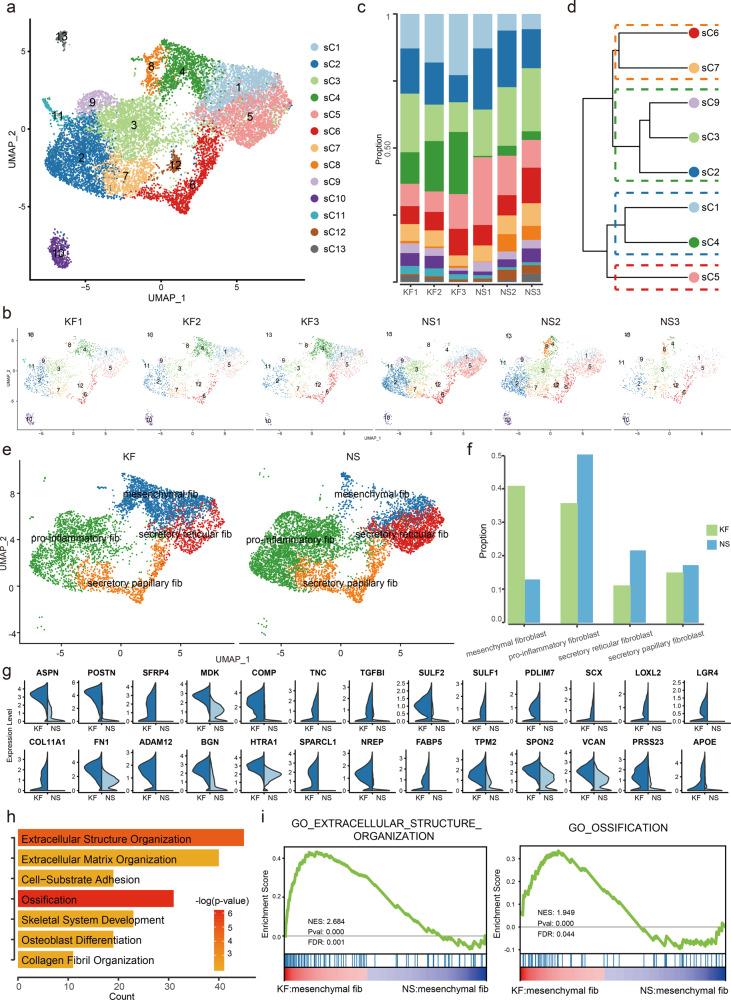
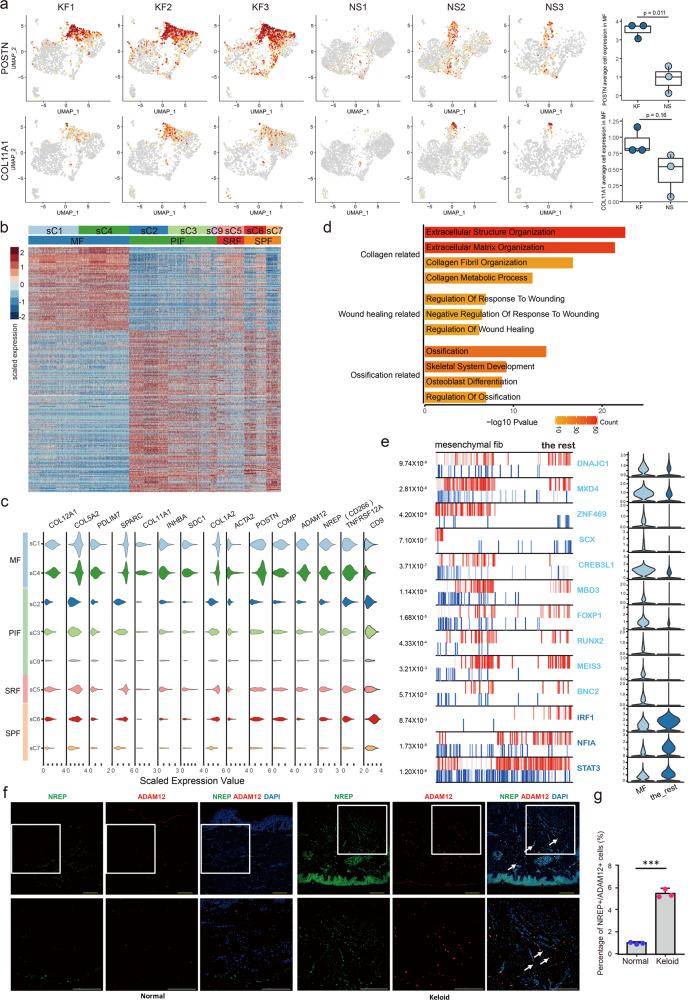
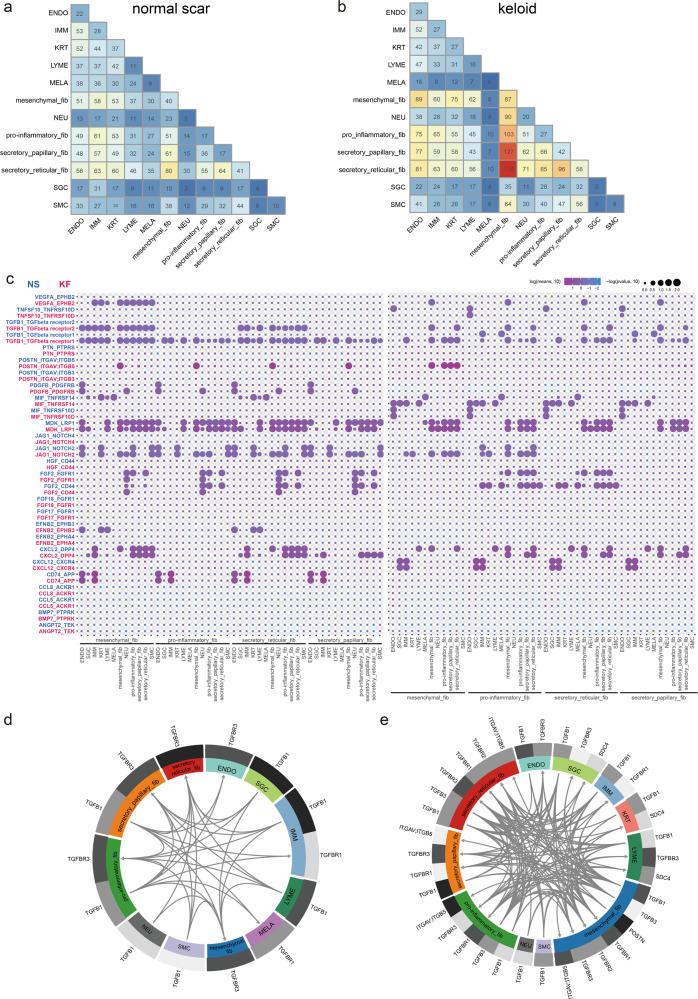
Fibrotic skin disease represents a major global healthcare burden, characterized by fibroblast hyperproliferation and excessive accumulation of extracellular matrix. Fibroblasts are found to be heterogeneous in multiple fibrotic diseases, but fibroblast heterogeneity in fibrotic skin diseases is not well characterized. In this study, we explore fibroblast heterogeneity in keloid, a paradigm of fibrotic skin diseases, by using single-cell RNA-seq. Our results indicate that keloid fibroblasts can be divided into 4 subpopulations: secretory-papillary, secretory-reticular, mesenchymal and pro-inflammatory. Interestingly, the percentage of mesenchymal fibroblast subpopulation is significantly increased in keloid compared to normal scar. Functional studies indicate that mesenchymal fibroblasts are crucial for collagen overexpression in keloid. Increased mesenchymal fibroblast subpopulation is also found in another fibrotic skin disease, scleroderma, suggesting this is a broad mechanism for skin fibrosis. These findings will help us better understand skin fibrotic pathogenesis, and provide potential targets for fibrotic disease therapies.
纤维化皮肤疾病是全球医疗保健的一个主要负担,其特征是成纤维细胞过度增殖和细胞外基质的过度积累。在多种纤维化疾病中发现成纤维细胞存在异质性,但纤维化皮肤疾病中的成纤维细胞异质性尚未得到很好的描述。在这项研究中,我们通过单细胞 RNA 测序来探索瘢痕疙瘩(纤维化皮肤疾病的范例)中成纤维细胞的异质性。我们的结果表明,瘢痕疙瘩成纤维细胞可以分为 4 个亚群:分泌-乳突状、分泌-网状、间充质和促炎。有趣的是,与正常瘢痕相比,瘢痕疙瘩中的间充质成纤维细胞亚群的比例显著增加。功能研究表明,间充质成纤维细胞对于瘢痕疙瘩中胶原的过度表达至关重要。在另一种纤维化皮肤疾病硬皮病中也发现了间充质成纤维细胞亚群的增加,这表明这是皮肤纤维化的一个广泛机制。这些发现将帮助我们更好地理解皮肤纤维化的发病机制,并为纤维化疾病的治疗提供潜在的靶点。




 Zotero 插件