
洛伐他汀通过细胞骨架相关蛋白的失调抑制三阴性乳腺癌干细胞的上皮-间质转化和转移。
Lovastatin Inhibits EMT and Metastasis of Triple-Negative Breast Cancer Stem Cells Through Dysregulation of Cytoskeleton-Associated Proteins.
作者信息
Zheng Chanjuan, Yan Shichao, Lu Lu, Yao Hui, He Guangchun, Chen Sisi, Li Ying, Peng Xiaojun, Cheng Zhongyi, Wu Mi, Zhang Qiuting, Li Guifei, Fu Shujun, Deng Xiyun
机构信息
Key Laboratory of Model Animals and Stem Cell Biology in Hunan Province, Departments of Pathology and Pathophysiology, Hunan Normal University School of Medicine, Changsha, China.
Key Laboratory of Translational Cancer Stem Cell Research, Hunan Normal University, Changsha, China.
出版信息
Front Oncol. 2021 Jun 4;11:656687. doi: 10.3389/fonc.2021.656687. eCollection 2021.
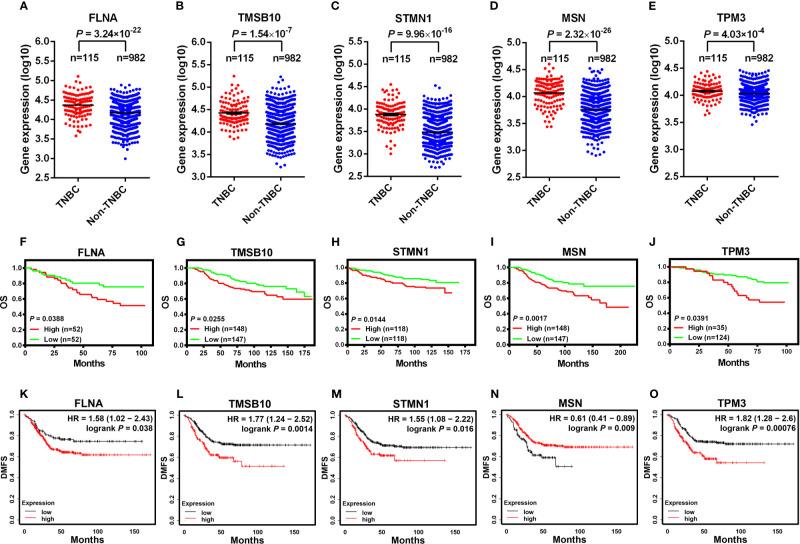
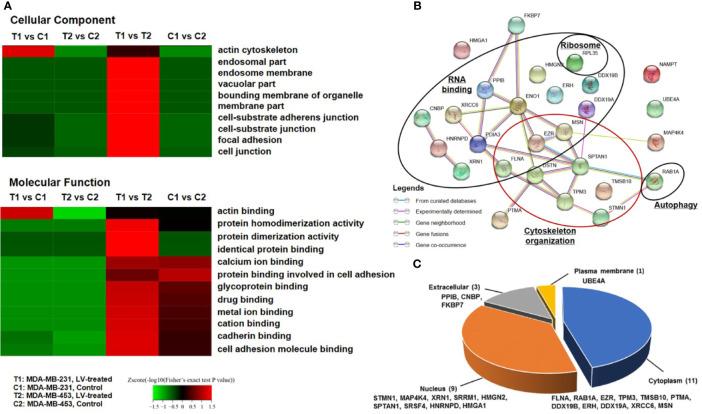
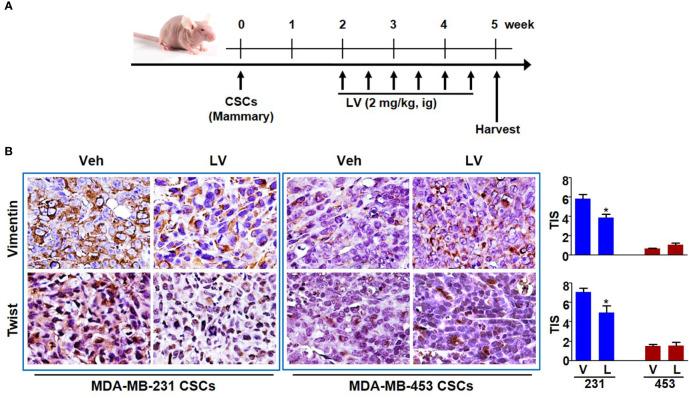
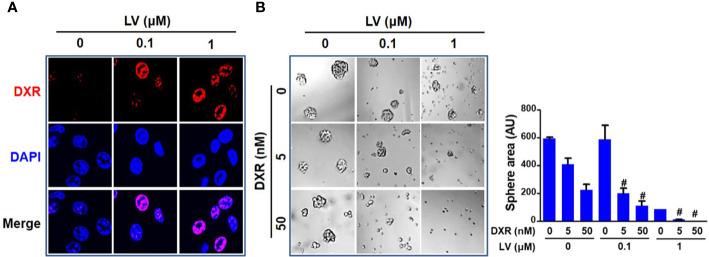
Triple-negative breast cancer (TNBC) is more aggressive and has poorer prognosis compared to other subtypes of breast cancer. Epithelial-to-mesenchymal transition (EMT) is a process in which epithelial cells transform into mesenchymal-like cells capable of migration, invasion, and metastasis. Recently, we have demonstrated that lovastatin, a 3-hydroxy-3-methylglutaryl-coenzyme A reductase inhibitor and a lipid-lowering drug, could inhibit stemness properties of cancer stem cells (CSCs) derived from TNBC cell and . This study is aimed at investigating whether lovastatin inhibits TNBC CSCs by inhibiting EMT and suppressing metastasis and the mechanism involved. In the present study, we found that lovastatin dysregulated lysine succinylation of cytoskeleton-associated proteins in CSCs derived from TNBC MDA-MB-231 cell. Lovastatin inhibited EMT as demonstrated by down-regulation of the protein levels of Vimentin and Twist in MDA-MB-231 CSCs and and by reversal of TGF-β1-induced morphological change in MCF10A cells. Lovastatin also inhibited the migration of MDA-MB-231 CSCs. The disruption of cytoskeleton in TNBC CSCs by lovastatin was demonstrated by the reduction of the number of pseudopodia and the relocation of F-actin cytoskeleton. Combination of lovastatin with doxorubicin synergistically inhibited liver metastasis of MDA-MB-231 CSCs. Bioinformatics analysis revealed that higher expression levels of cytoskeleton-associated genes were characteristic of TNBC and predicted survival outcomes in breast cancer patients. These data suggested that lovastatin could inhibit the EMT and metastasis of TNBC CSCs and through dysregulation of cytoskeleton-associated proteins.
三阴性乳腺癌(TNBC)比其他亚型的乳腺癌更具侵袭性,预后更差。上皮-间质转化(EMT)是一个上皮细胞转化为具有迁移、侵袭和转移能力的间充质样细胞的过程。最近,我们已经证明,洛伐他汀,一种3-羟基-3-甲基戊二酰辅酶A还原酶抑制剂和降脂药物,可以抑制源自TNBC细胞的癌症干细胞(CSCs)的干性特性。本研究旨在调查洛伐他汀是否通过抑制EMT和抑制转移来抑制TNBC CSCs以及其中涉及的机制。在本研究中,我们发现洛伐他汀使源自TNBC MDA-MB-231细胞的CSCs中细胞骨架相关蛋白的赖氨酸琥珀酰化失调。洛伐他汀抑制EMT,这表现为MDA-MB-231 CSCs中波形蛋白和Twist蛋白水平的下调,以及MCF10A细胞中TGF-β1诱导的形态变化的逆转。洛伐他汀还抑制MDA-MB-231 CSCs的迁移。洛伐他汀对TNBC CSCs细胞骨架的破坏表现为伪足数量的减少和F-肌动蛋白细胞骨架的重新定位。洛伐他汀与阿霉素联合使用可协同抑制MDA-MB-231 CSCs的肝转移。生物信息学分析显示,细胞骨架相关基因的高表达水平是TNBC的特征,并可预测乳腺癌患者的生存结果。这些数据表明,洛伐他汀可以通过细胞骨架相关蛋白的失调来抑制TNBC CSCs的EMT和转移。



 Zotero 插件