
新型冠状病毒肺炎相关神经系统表现:目前的认识及新冠大流行期间的潜在神经学挑战。
Emerging COVID-19 Neurological Manifestations: Present Outlook and Potential Neurological Challenges in COVID-19 Pandemic.
机构信息
Advanced Pharmacognosy Research Laboratory, Department of Pharmaceutical Technology, Jadavpur University, Kolkata, 700032, India.
National Institute of Technology, Warangal, 506004, Telangana, India.
出版信息
Mol Neurobiol. 2021 Sep;58(9):4694-4715. doi: 10.1007/s12035-021-02450-6. Epub 2021 Jun 24.
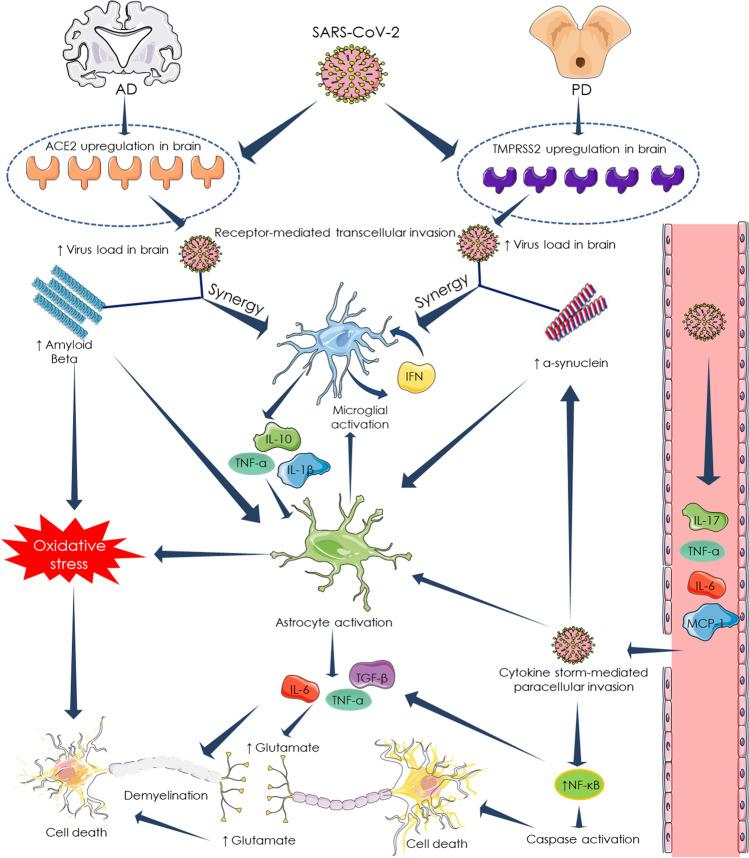
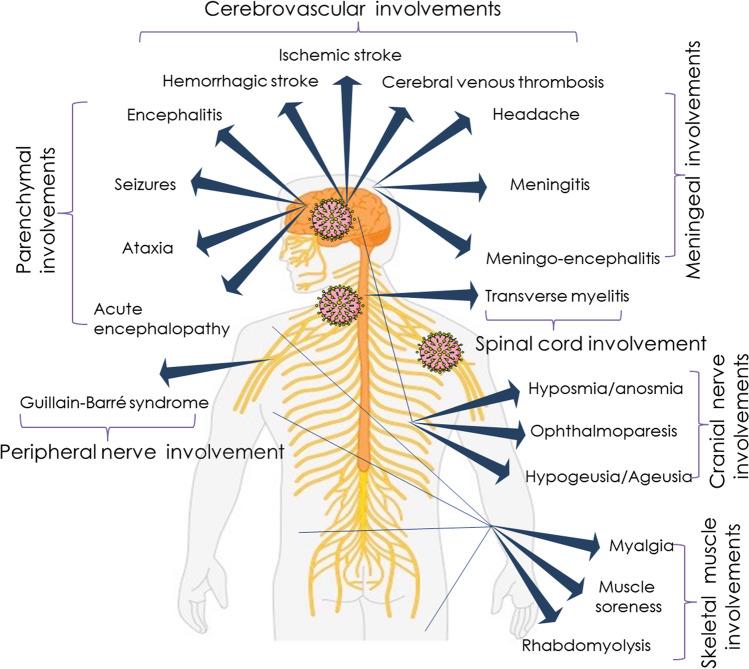
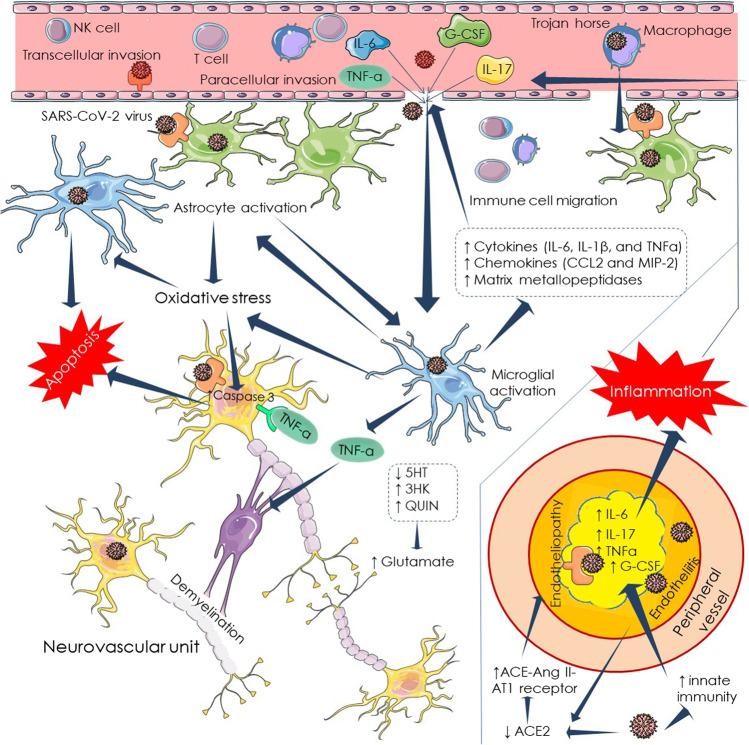
The unremitting coronavirus disease 2019 (COVID-19) pandemic caused by the novel severe acute respiratory syndrome coronavirus 2 (SARS-CoV-2) marked a year-long phase of public health adversaries and has severely compromised healthcare globally. Early evidence of COVID-19 noted its impact on the pulmonary and cardiovascular functions, while multiple studies in recent time shed light on its substantial neurological complications, though a comprehensive understanding of the cause(s), the mechanism(s), and their neuropathological outcomes is scarce. In the present review, we conferred evidence of neurological complications in COVID-19 patients and shed light on the SARS-CoV-2 infection routes including the hematogenous, direct/neuronal, lymphatic tissue or cerebrospinal fluid, or infiltration through infected immune cells, while the underlying mechanism of SARS-CoV-2 invasion to the central nervous system (CNS) was also discussed. In an up-to-date manner, we further reviewed the impact of COVID-19 in developing diverse neurologic manifestations associated with CNS, peripheral nervous system (PNS), skeletal muscle, and also pre-existing neurological diseases, including Alzheimer's disease, Parkinson's disease, multiple sclerosis, epilepsy, and myasthenia gravis. Furthermore, we discussed the involvement of key factors including age, sex, comorbidity, and disease severity in exacerbating the neurologic manifestations in COVID-19 patients. An outlook of present therapeutic strategies and state of existing challenges in COVID-19 management was also accessed. Conclusively, the present report provides a comprehensive review of COVID-19-related neurological complications and emphasizes the need for their early clinical management in the ongoing COVID-19 pandemic.
由新型严重急性呼吸系统综合症冠状病毒 2 型(SARS-CoV-2)引起的持续不断的 2019 年冠状病毒病(COVID-19)大流行标志着公共卫生对手长达一年的阶段,并严重损害了全球的医疗保健。早期的 COVID-19 证据表明其对肺部和心血管功能的影响,而最近的多项研究揭示了其大量的神经并发症,尽管对其原因、机制及其神经病理学结果的全面了解仍然缺乏。在本综述中,我们提供了 COVID-19 患者的神经并发症的证据,并探讨了 SARS-CoV-2 的感染途径,包括血液、直接/神经元、淋巴组织或脑脊液,或通过感染的免疫细胞渗透,同时还讨论了 SARS-CoV-2 侵犯中枢神经系统(CNS)的潜在机制。我们以最新的方式进一步综述了 COVID-19 对与 CNS、周围神经系统(PNS)、骨骼肌相关的多种神经表现以及包括阿尔茨海默病、帕金森病、多发性硬化症、癫痫和重症肌无力在内的先前存在的神经疾病的影响。此外,我们还讨论了包括年龄、性别、合并症和疾病严重程度在内的关键因素在加剧 COVID-19 患者神经表现中的作用。还评估了 COVID-19 管理中现有治疗策略和挑战的现状。总之,本报告全面综述了 COVID-19 相关的神经并发症,并强调了在当前 COVID-19 大流行中需要对其进行早期临床管理。

 Zotero 插件