
预防、诊断和管理牛奶过敏的策略及未来机遇。
Strategies and Future Opportunities for the Prevention, Diagnosis, and Management of Cow Milk Allergy.
机构信息
Pediatric Allergist Private Practice, Angeles Lomas Hospital Huixquilucan Mexican State, Mexico City, Mexico.
Department of Paediatrics, KK Women's and Children's Hospital, Singapore, Singapore.
出版信息
Front Immunol. 2021 Jun 10;12:608372. doi: 10.3389/fimmu.2021.608372. eCollection 2021.
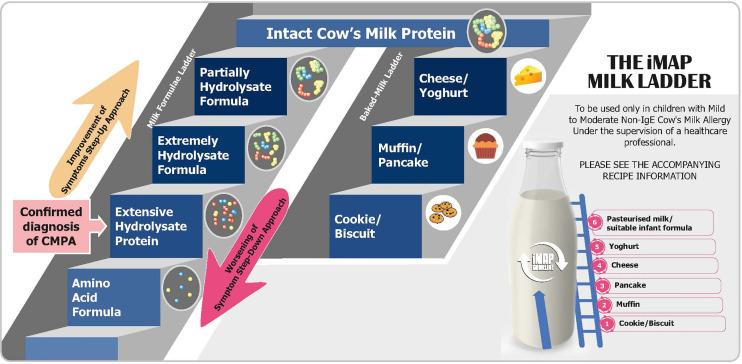
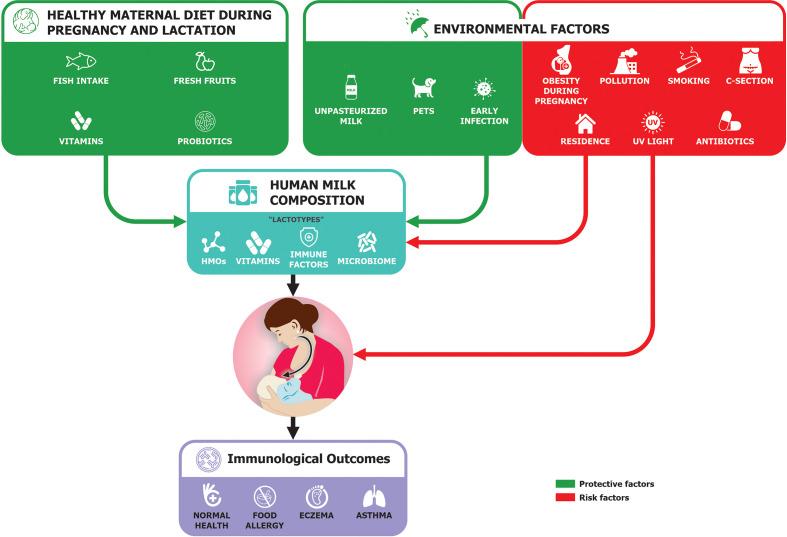
The prevalence of food allergy has increased over the last 20-30 years, including cow milk allergy (CMA) which is one of the most common causes of infant food allergy. International allergy experts met in 2019 to discuss broad topics in allergy prevention and management of CMA including current challenges and future opportunities. The highlights of the meeting combined with recently published developments are presented here. Primary prevention of CMA should start from pre-pregnancy with a focus on a healthy lifestyle and food diversity to ensure adequate transfer of inhibitory IgG- allergen immune complexes across the placenta especially in mothers with a history of allergic diseases and planned c-section delivery. For non-breastfed infants, there is controversy about the preventive role of partially hydrolyzed formulae (pHF) despite some evidence of health economic benefits among those with a family history of allergy. Clinical management of CMA consists of secondary prevention with a focus on the development of early oral tolerance. The use of extensive Hydrolysate Formulae (eHF) is the nutrition of choice for the majority of non-breastfed infants with CMA; potentially with pre-, probiotics and LCPUFA to support early oral tolerance induction. Future opportunities are, among others, pre- and probiotics supplementation for mothers and high-risk infants for the primary prevention of CMA. A controlled prospective study implementing a step-down milk formulae ladder with various degrees of hydrolysate is proposed for food challenges and early development of oral tolerance. This provides a more precise gradation of milk protein exposure than those currently recommended.
过去 20-30 年来,食物过敏的患病率有所增加,包括牛奶过敏(CMA),它是婴儿食物过敏的最常见原因之一。国际过敏专家于 2019 年聚会,讨论过敏预防和 CMA 管理的广泛主题,包括当前的挑战和未来的机遇。会议的重点内容结合最近发表的研究进展,现介绍如下。CMA 的一级预防应从怀孕前开始,重点是健康的生活方式和食物多样化,以确保母体产生的抑制性 IgG-过敏原免疫复合物充分转移到胎盘,尤其是对于有过敏疾病史和计划剖腹产的孕妇。对于非母乳喂养的婴儿,部分水解配方(pHF)的预防作用存在争议,尽管有研究表明其具有一定的健康经济效益,尤其是对于有过敏家族史的婴儿。CMA 的临床管理包括二级预防,重点是早期口服耐受的发展。对于大多数患有 CMA 的非母乳喂养婴儿,广泛水解配方(eHF)是首选营养;对于有过敏家族史的婴儿,潜在的选择包括使用益生菌和长链多不饱和脂肪酸(LCPUFA)来支持早期口服耐受诱导。未来的机遇包括针对 CMA 的一级预防,为母亲和高风险婴儿补充益生菌和益生元。建议对食物过敏挑战和早期口服耐受的发展实施一种含不同水解程度的逐步降阶配方奶粉阶梯治疗方案,这比目前推荐的方案能更精确地分级暴露于牛奶蛋白。

 Zotero 插件