
采用药代动力学/药效学建模评估利福昔明在诱导性乳腺炎小鼠模型中的临床剂量
PK/PD Modeling to Assess Rifaximin Clinical Dosage in a Mouse Model of Induced Mastitis.
作者信息
Wang Honglei, Chen Chen, Chen Xiaojie, Zhang Jingju, Liu Yiming, Li Xiubo
机构信息
National Feed Drug Reference Laboratories, Feed Research Institute, Chinese Academy of Agricultural Sciences, Beijing, China.
出版信息
Front Vet Sci. 2021 Jun 14;8:651369. doi: 10.3389/fvets.2021.651369. eCollection 2021.
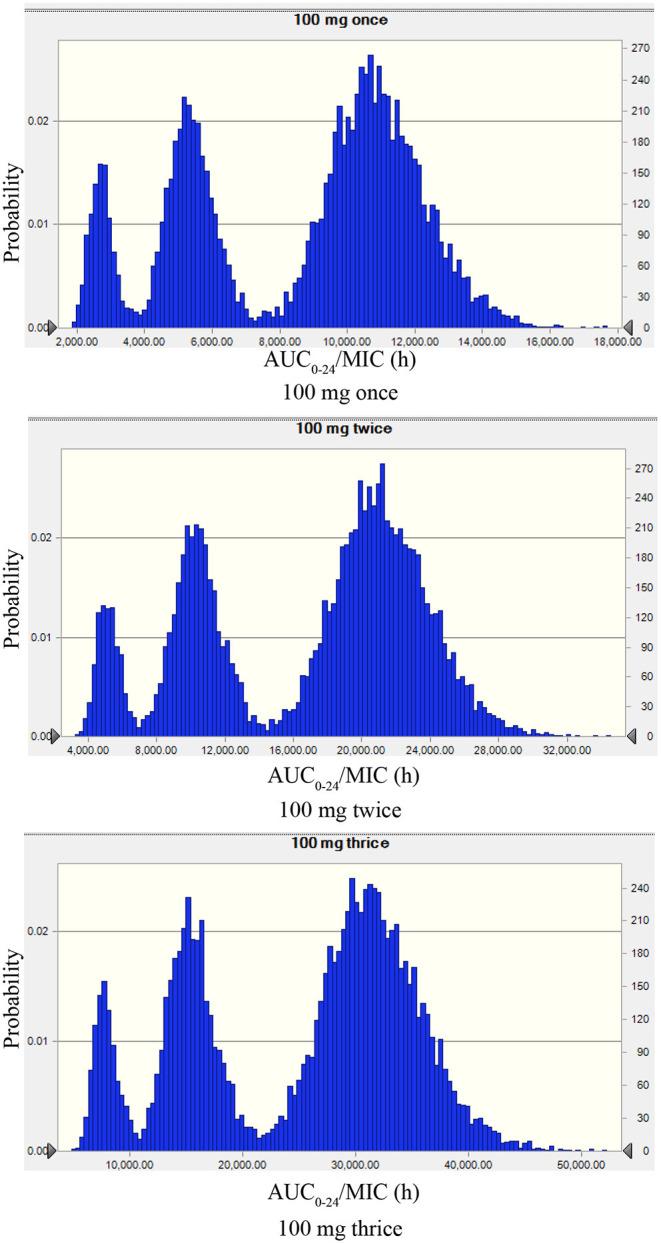
() is a common pathogen that causes mastitis, an infection of the milk-secreting tissue of the udder, in dairy cows, and presents a huge economic problem for the dairy industry worldwide. Thus, control and treatment of mastitis in dairy cows is vital in order to reduce the costs associated with the disease. The main purpose of the current work was to examine the current dosage of rifaximin for the treatment mastitis in cows caused by using pharmacokinetic/pharmacodynamic integration in a mouse mastitis model. The mouse mastitis model was established via injection of Newbould 305 (400 CFU/gland) into the mouse mammary gland. A single dose of 50, 100, 200, or 400 μg/gland, administered via intramammary infusion, was used to study the pharmacokinetics of rifaximin. The pharmacokinetic parameters were analyzed by non-compartment and non-linear mixed-effect models using Phoenix software (version 8.1; Pharsight, USA). pharmacodynamics was used to examine 18 therapeutic regimens covering various doses ranging from 25 to 800 μg/gland and three dosing intervals of 8, 12, and 24 h per 24 h experiment cycle. The antibacterial effect of rifaximin was elevated with higher concentrations of rifaximin or shorter intervals of administration. The percentage of time that drug concentrations exceeded the MIC during a dose interval (%T > MIC) was generally 100% for rifaximin and was not better than AUC/MIC in the sigmoid model of inhibitory effect. The optimal antibacterial effect was 2logCFU/gland when the magnitude of AUC/MIC reached 14,281.63 h. A total of 14,281.63 h of AUC/MIC was defined as a target value in the Monte Carlo simulation. The clinically recommended dosage regimen of 100 mg/gland every 8 h in 1 day achieved an 82.97% cure rate for the treatment of bovine mastitis caused by infection.
()是一种常见病原体,可导致奶牛患乳腺炎,即乳腺分泌乳汁组织的感染,给全球乳制品行业带来巨大经济问题。因此,控制和治疗奶牛乳腺炎对于降低与该疾病相关的成本至关重要。当前工作的主要目的是在小鼠乳腺炎模型中利用药代动力学/药效学整合来研究目前用于治疗由 引起的奶牛乳腺炎的利福昔明剂量。通过将纽博尔德305(400 CFU/腺体)注射到小鼠乳腺中来建立小鼠乳腺炎模型。通过乳腺内输注给予单剂量50、100、200或400 μg/腺体,用于研究利福昔明的药代动力学。使用Phoenix软件(版本8.1;美国Pharsight公司)通过非房室和非线性混合效应模型分析药代动力学参数。药效学用于研究18种治疗方案,涵盖每24小时实验周期中25至800 μg/腺体的各种剂量以及8、12和24小时的三个给药间隔。利福昔明的抗菌效果随着利福昔明浓度的升高或给药间隔的缩短而增强。在剂量间隔期间药物浓度超过最低抑菌浓度(%T > MIC)的时间百分比对于利福昔明通常为100%,并且在抑制作用的S型模型中并不优于AUC/MIC。当AUC/MIC的幅度达到14281.63小时时,最佳抗菌效果为2logCFU/腺体。在蒙特卡洛模拟中,总共14281.63小时的AUC/MIC被定义为目标值。临床上推荐的每天每8小时100 mg/腺体的给药方案在治疗由 感染引起的牛乳腺炎时治愈率达到82.97%。


 Zotero 插件