
异槲皮苷通过抑制 HMEC-1 细胞中 ERK1/2 和 CREB 的磷酸化诱导细胞停滞来抑制 PGE2 介导的血管生成。
Isookanin Inhibits PGE-Mediated Angiogenesis by Inducing Cell Arrest through Inhibiting the Phosphorylation of ERK1/2 and CREB in HMEC-1 Cells.
机构信息
Biospectrum Life Science Institute, Yongin 16827, Korea.
Department of Global Innovative Drug, Graduate School, College of Pharmacy, Chung-Ang University, Heukseok-dong, Dongjak-gu, Seoul 156756, Korea.
出版信息
Int J Mol Sci. 2021 Jun 16;22(12):6466. doi: 10.3390/ijms22126466.
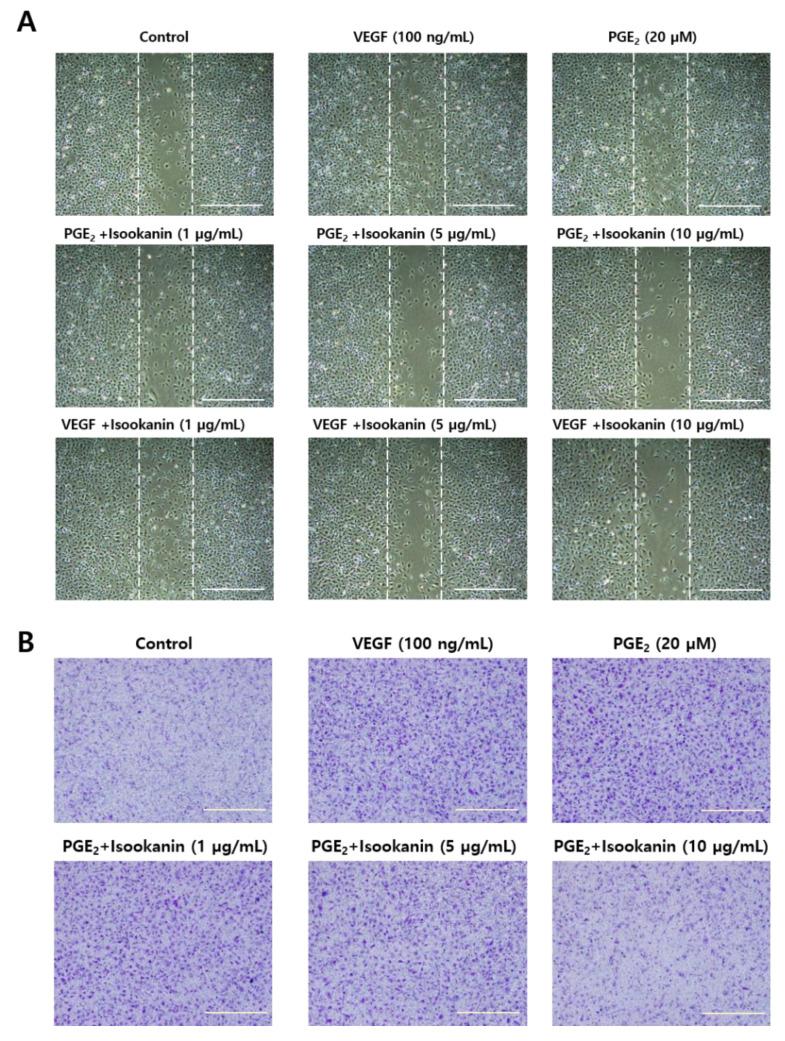
Inflammation is increasingly recognized as a critical mediator of angiogenesis, and unregulated angiogenic responses often involve human diseases. The importance of regulating angiogenesis in inflammatory diseases has been demonstrated through some successful cases of anti-angiogenesis therapies in related diseases, including arthritis, but it has been reported that some synthetic types of antiangiogenic drugs have potential side effects. In recent years, the importance of finding alternative strategies for regulating angiogenesis has begun to attract the attention of researchers. Therefore, identification of natural ingredients used to prevent or treat angiogenesis-related diseases will play a greater role. Isookanin is a phenolic flavonoid presented in extract, and it has been reported that isookanin possesses some biological properties, including antioxidative and anti-inflammatory effects, anti-diabetic properties, and an ability to inhibit α-amylase. However, its antiangiogenic effects and mechanism thereof have not been studied yet. In this study, our results indicate that isookanin has an effective inhibitory effect on the angiogenic properties of microvascular endothelial cells. Isookanin shows inhibitory effects in multiple stages of PGE-induced angiogenesis, including the growth, proliferation, migration, and tube formation of microvascular endothelial cells. In addition, isookanin induces cell cycle arrest in S phase, which is also the reason for subsequent inhibition of cell proliferation. The mechanism of inhibiting angiogenesis by isookanin is related to the inhibition of PGE-mediated ERK1/2 and CREB phosphorylation. These findings make isookanin a potential candidate for the treatment of angiogenesis-related diseases.
炎症越来越被认为是血管生成的关键介质,而不受调节的血管生成反应通常涉及人类疾病。在相关疾病中,抗血管生成疗法在一些成功案例中已经证明了调节血管生成的重要性,包括关节炎,但据报道,一些合成类型的抗血管生成药物可能有潜在的副作用。近年来,寻找调节血管生成的替代策略的重要性开始引起研究人员的关注。因此,寻找用于预防或治疗与血管生成相关的疾病的天然成分将发挥更大的作用。异荭草素是一种存在于 提取物中的酚类黄酮,据报道,异荭草素具有一些生物特性,包括抗氧化和抗炎作用、抗糖尿病特性以及抑制α-淀粉酶的能力。然而,其抗血管生成作用及其机制尚未得到研究。在这项研究中,我们的结果表明,异荭草素对微血管内皮细胞的血管生成特性具有有效的抑制作用。异荭草素在 PGE 诱导的血管生成的多个阶段表现出抑制作用,包括微血管内皮细胞的生长、增殖、迁移和管形成。此外,异荭草素诱导细胞周期在 S 期停滞,这也是随后抑制细胞增殖的原因。异荭草素抑制血管生成的机制与抑制 PGE 介导的 ERK1/2 和 CREB 磷酸化有关。这些发现使异荭草素成为治疗与血管生成相关的疾病的潜在候选药物。




 Zotero 插件