
基于高通量测序的口腔鳞状细胞癌中SUMO化修饰调节因子的表达及预后分析
Expression and Prognosis Analysis of SUMOylation Regulators in Oral Squamous Cell Carcinoma Based on High-Throughput Sequencing.
作者信息
Meng Yutong, Li Xiaozhi
机构信息
Department of Stomatology, Shengjing Hospital of China Medical University, Shenyang, China.
Department of Neurosurgery, Shengjing Hospital of China Medical University, Shenyang, China.
出版信息
Front Genet. 2021 Jun 29;12:671392. doi: 10.3389/fgene.2021.671392. eCollection 2021.
INTRODUCTION
Oral squamous cell carcinoma (OSCC) originates from oral mucosal epithelial cells, accounting for more than 90% of oral cancers. The relationship between the expression and prognostic role of SUMOylation regulators in OSCC is rarely studied.
MATERIALS AND METHODS
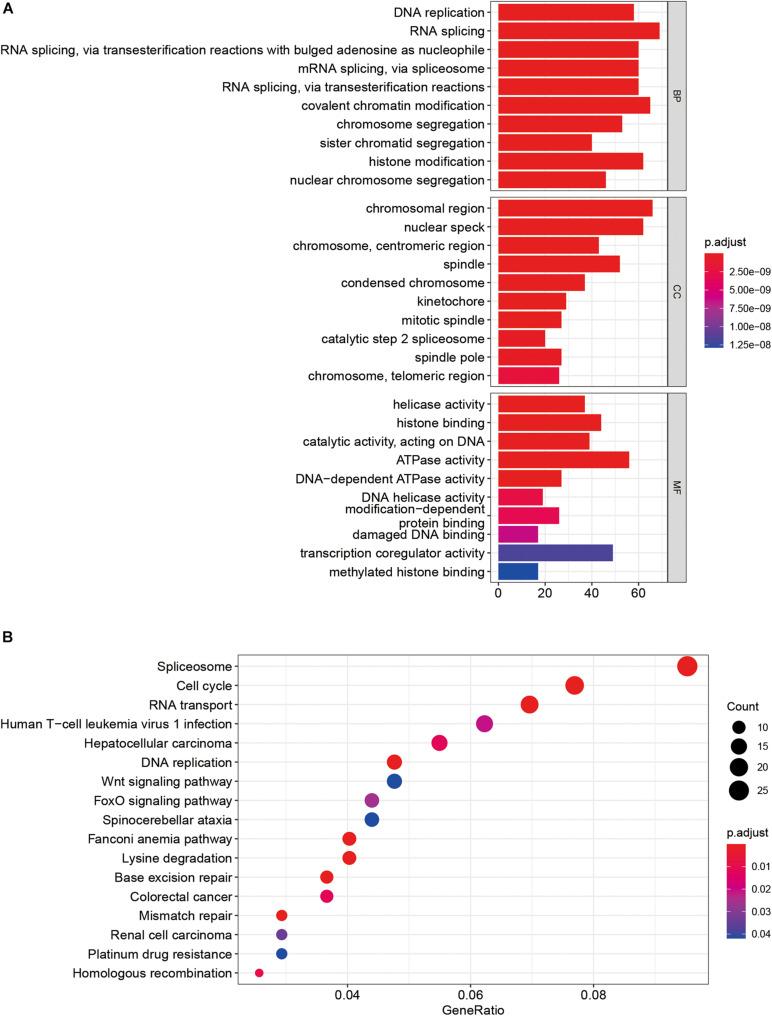
The expression and survival data of OSCC were derived from TCGA and GEO databases. Wilcoxon test was used to determine the differential expression of the SUMOylation regulators. A prognostic model based on SUMOylation regulator-related genes was constructed by Cox regression. Gene set enrichment analysis was applied to predict the potential biological functions that the genes might be involved in.
RESULTS
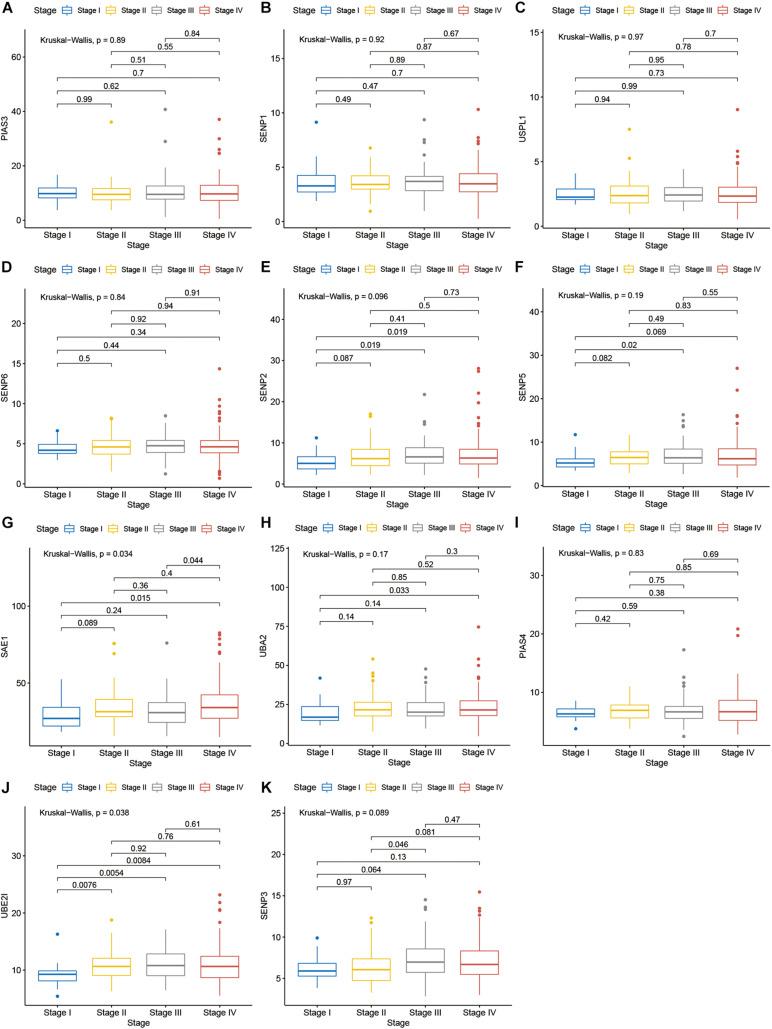
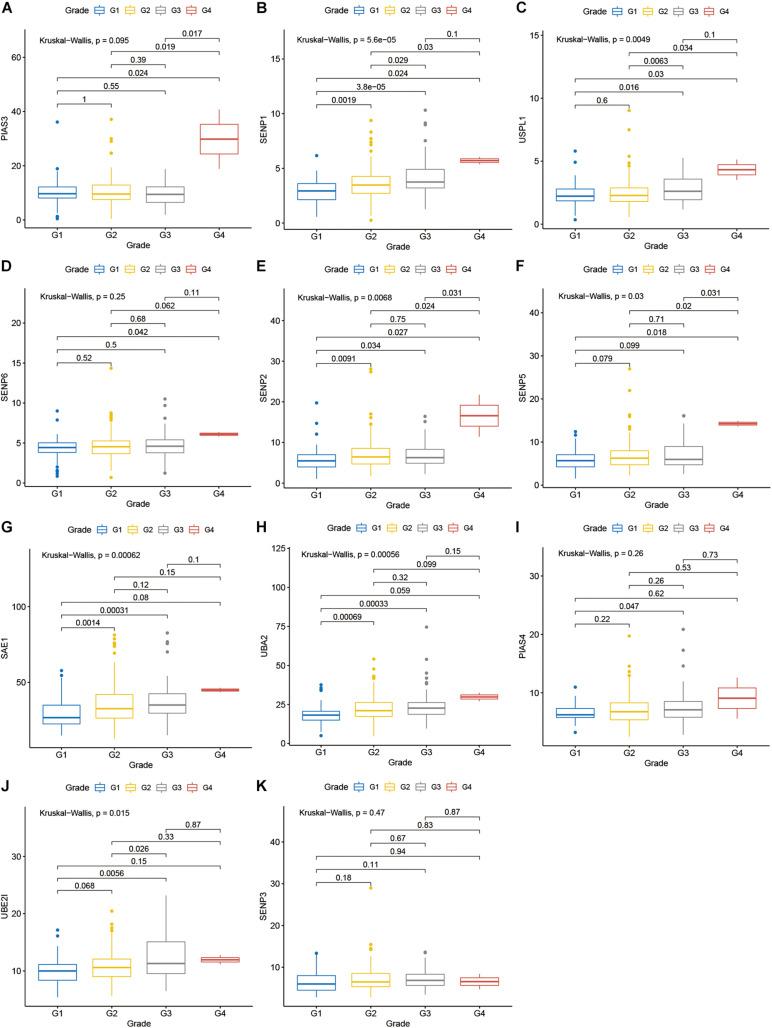
RANBP2 and SENP6 had the highest SNV frequency. Eleven genes including PIAS3, RANBP2, USPL1, SENP6, SENP2, SENP5, SAE1, UBA2, PIAS4, UBE2I, and SENP3 were highly expressed in OSCC. The prognostic model based on nine SUMOylation-regulated genes (TRIM37, UFM1, FUBP1, CCNT1, FXR1, HMG20A, RANBP3, SPATA5, and DDX23) had a strong ability to predict the prognosis of OSCC.
CONCLUSION
This study might provide targets for prognostic evaluation and targeted therapy of patients with OSCC.
引言
口腔鳞状细胞癌(OSCC)起源于口腔黏膜上皮细胞,占口腔癌的90%以上。SUMO化调节剂在OSCC中的表达与预后作用之间的关系鲜有研究。
材料与方法
OSCC的表达及生存数据来自TCGA和GEO数据库。采用Wilcoxon检验确定SUMO化调节剂的差异表达。通过Cox回归构建基于SUMO化调节剂相关基因的预后模型。应用基因集富集分析预测基因可能参与的潜在生物学功能。
结果
RANBP2和SENP6的单核苷酸变异(SNV)频率最高。PIAS3、RANBP2、USPL1、SENP6、SENP2、SENP5、SAE1、UBA2、PIAS4、UBE2I和SENP3这11个基因在OSCC中高表达。基于9个SUMO化调节基因(TRIM37、UFM1、FUBP1、CCNT1、FXR1、HMG20A、RANBP3、SPATA5和DDX23)的预后模型对OSCC患者的预后具有较强的预测能力。
结论
本研究可能为OSCC患者的预后评估和靶向治疗提供靶点。



 Zotero 插件