
头孢他啶/阿维巴坦治疗呼吸道感染的真实世界证据的系统文献综述
Systematic Literature Review of Real-world Evidence of Ceftolozane/Tazobactam for the Treatment of Respiratory Infections.
作者信息
Puzniak Laura, Dillon Ryan, Palmer Thomas, Collings Hannah, Enstone Ashley
机构信息
Merck & Co., Inc., 2000 Galloping Hill Road, Kenilworth, NJ, 07033, USA.
Adelphi Values PROVE, Adelphi Mill, Bollington, Cheshire, England, UK.
出版信息
Infect Dis Ther. 2021 Sep;10(3):1227-1252. doi: 10.1007/s40121-021-00491-x. Epub 2021 Jul 18.
INTRODUCTION
Gram-negative nosocomial pneumonia (NP), including hospital-acquired bacterial pneumonia (HABP), ventilated HABP (vHABP), and ventilator-associated bacterial pneumonia (VABP), is a significant cause of morbidity and mortality. Common pathogens, including Enterobacterales and Pseudomonas aeruginosa, are prevalent in healthcare settings and have few effective treatment options due to high rates of antibacterial resistance. Resistant pathogens are associated with significantly worse outcomes, relative to patients with susceptible infections. Ceftolozane/tazobactam (C/T) has established efficacy in clinical trials of patients with NP. This review aims to collate data on C/T use for HABP/vHABP/VABP infections in real-world clinical practice.
METHODS
This systematic literature review searched online biomedical databases for real-world studies of C/T used to treat Gram-negative respiratory tract infections (RTIs) between January 2009 and June 2020.
RESULTS
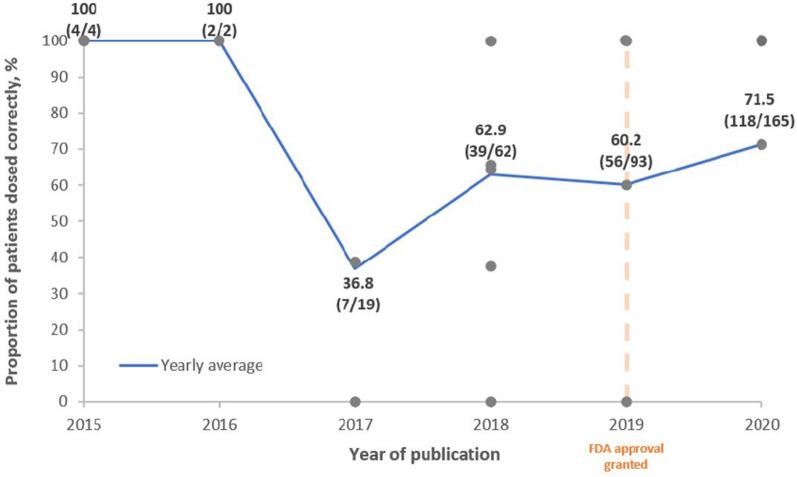
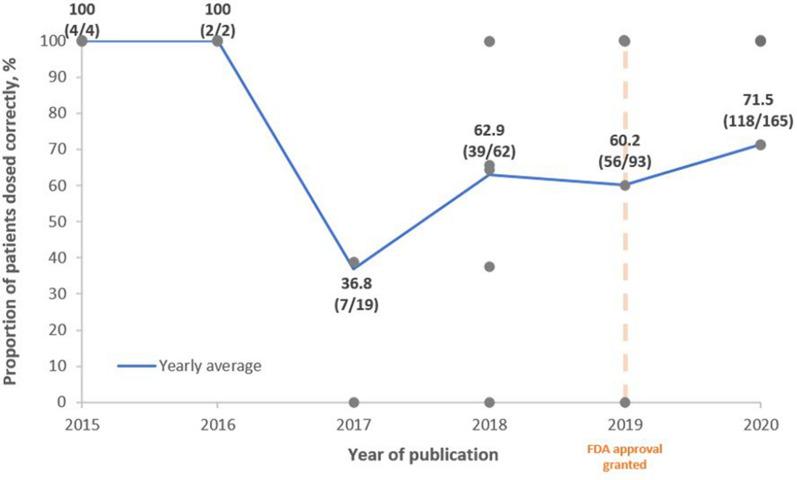
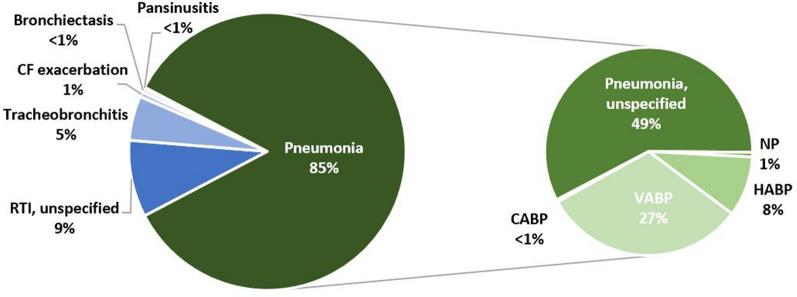
Thirty-three studies comprising 658 patients were identified. Pneumonia was the most common infection treated with C/T (85%), with a smaller number of unspecified RTIs (9%) and tracheobronchitis (5%) reported. The majority of patients had respiratory infections caused by P. aeruginosa (92.8%), of which 88.1% were multidrug-resistant. Examination of these studies demonstrated an increase in the percentage of patients receiving the recommended dose of C/T for respiratory infections (3 g q8h or renal impairment-adjusted) over time (36.8% of patients in 2017 to 71.5% in 2020). Clinical success rates ranged from 51.4 to 100%, with 10 studies (55.6% of studies reporting clinical success) reporting clinical success rates of > 70%; microbiological success rates ranged from 57.0 to 100.0%, with three studies (60.0% of studies reporting microbiological success) reporting microbiological success rates of > 70%. Thirty-day mortality ranged from 0.0 to 33.0%, with nine studies (90% of studies reporting mortality) reporting 30-day mortality of < 30%.
CONCLUSIONS
The studies identified in this review demonstrate that C/T shows similar outcomes as those seen in clinical trials, despite the higher frequency of multidrug-resistant pathogens, and comorbidities that may have been excluded from the trials.
引言
革兰氏阴性医院获得性肺炎(NP),包括医院获得性细菌性肺炎(HABP)、通气相关性HABP(vHABP)和呼吸机相关性细菌性肺炎(VABP),是发病和死亡的重要原因。常见病原体,包括肠杆菌科细菌和铜绿假单胞菌,在医疗机构中普遍存在,由于抗菌药物耐药率高,有效的治疗选择很少。与敏感感染患者相比,耐药病原体与显著更差的预后相关。头孢洛扎/他唑巴坦(C/T)在NP患者的临床试验中已证实具有疗效。本综述旨在整理关于C/T在实际临床实践中用于治疗HABP/vHABP/VABP感染的数据。
方法
本系统文献综述在在线生物医学数据库中检索了2009年1月至2020年6月期间使用C/T治疗革兰氏阴性呼吸道感染(RTIs)的真实世界研究。
结果
共纳入33项研究,涉及658例患者。肺炎是接受C/T治疗的最常见感染(85%),报告的未明确的RTIs较少(9%),气管支气管炎(5%)。大多数患者患有由铜绿假单胞菌引起的呼吸道感染(92.8%),其中88.1%为多重耐药菌。对这些研究的审查表明,随着时间的推移,接受推荐剂量的C/T治疗呼吸道感染(3g q8h或根据肾功能损害调整)的患者百分比有所增加(2017年为36.8%,2020年为71.5%)。临床成功率在51.4%至100%之间,10项研究(报告临床成功的研究中的55.6%)报告临床成功率>70%;微生物学成功率在57.0%至100.0%之间,3项研究(报告微生物学成功的研究中的60.0%)报告微生物学成功率>70%。30天死亡率在0.0%至33.0%之间,9项研究(报告死亡率的研究中的90%)报告30天死亡率<30%。
结论
本综述中确定的研究表明,尽管多重耐药病原体的频率较高,且可能已将合并症排除在试验之外,但C/T显示出与临床试验中相似的结果。
 Zotero 插件