
一种新型铁死亡相关的 12 基因标志物可预测透明细胞肾细胞癌的临床预后并揭示其免疫相关性。
A novel ferroptosis-related 12-gene signature predicts clinical prognosis and reveals immune relevancy in clear cell renal cell carcinoma.
机构信息
Department of Urology, The First Affiliated Hospital of Shantou University Medical College, Shantou, People's Republic of China, 515041.
Shantou University Medical College, Shantou, People's Republic of China.
出版信息
BMC Cancer. 2021 Jul 19;21(1):831. doi: 10.1186/s12885-021-08559-0.
BACKGROUND
Clear cell renal cell carcinoma (ccRCC) is still highly aggressive and lethal even with various therapeutic approaches. As the kidney is an iron metabolism-related organ, exploring and assessing the clinical value of ferroptosis, an iron-dependent regulated cell death, is practical and important.
METHODS
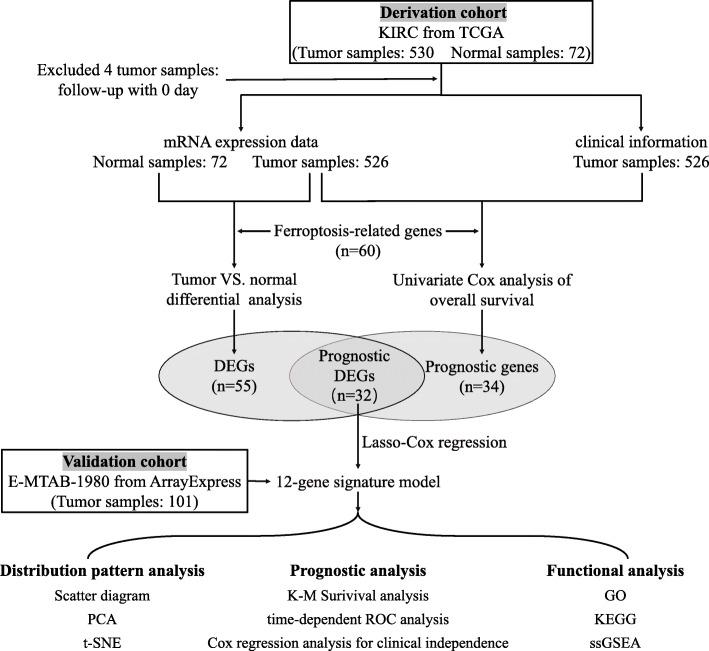
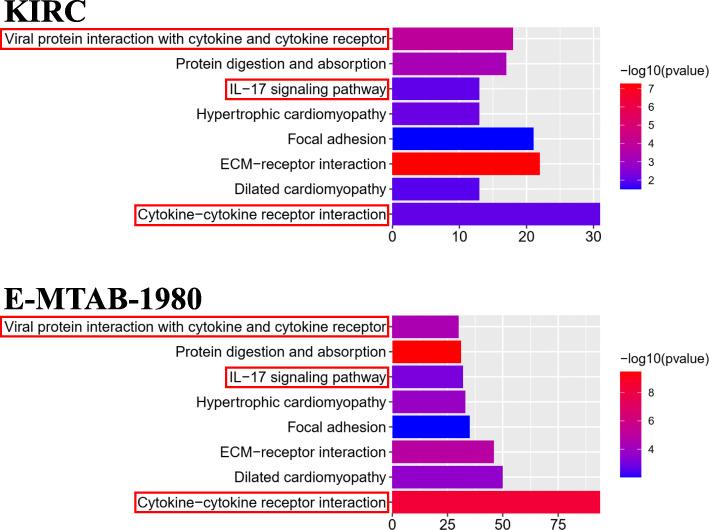
Prognostic ferroptosis-related differentially expressed genes (DEGs) were identified from the KIRC cohort in the cancer genome atlas (TCGA) database, from which a prognostic signature was established using Lasso-penalized Cox regression analysis. Each patient in the KIRC cohort and the E-MTAB-1980 cohort (from the ArrayExpress database) was assigned a calculated signature-correlated risk score and categorized to be either in the high- or low-risk group divided by the median risk score in the KIRC cohort. Then, the independent prognostic value of the signature was further assessed by Kaplan-Meier (K-M) survival, time-dependent receiver operating characteristic (ROC) and Cox regression analyses based on overall survival (OS) in both cohorts. Finally, risk-related DEGs were identified in both cohorts and subjected to enrichment analyses for Gene Ontology (GO), Kyoto Encyclopedia of Genes and Genomes (KEGG) and immune infiltration.
RESULTS
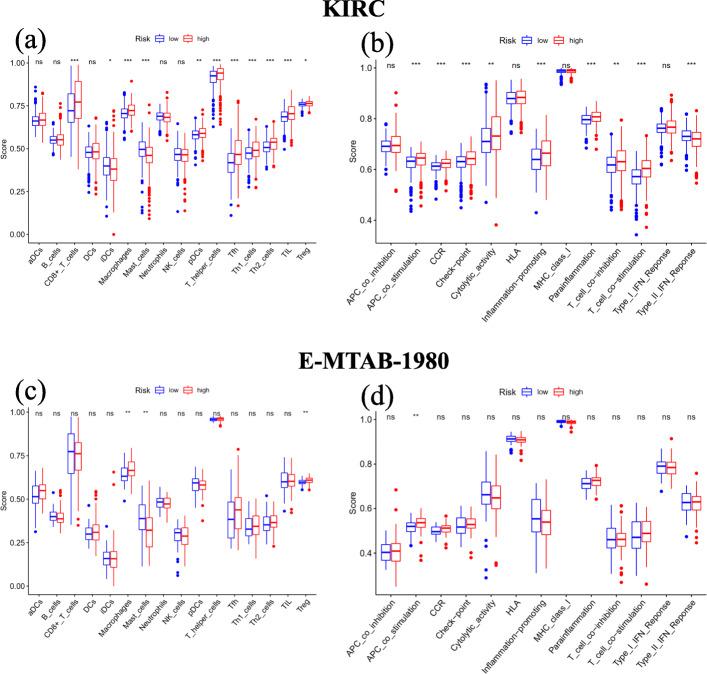
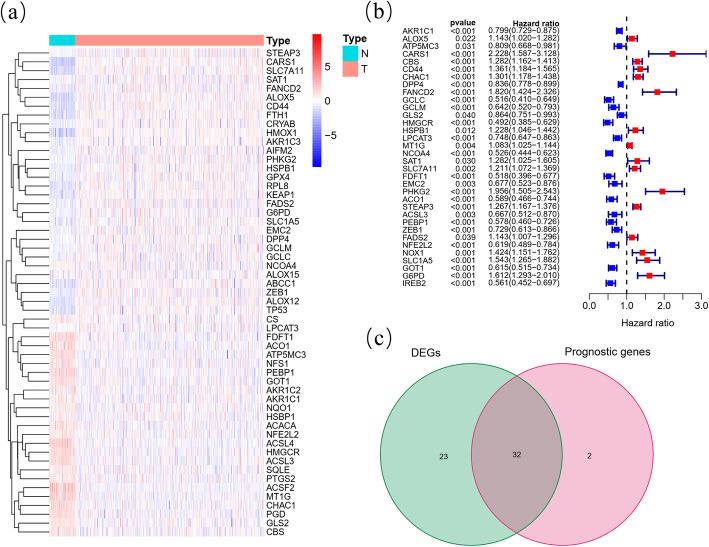
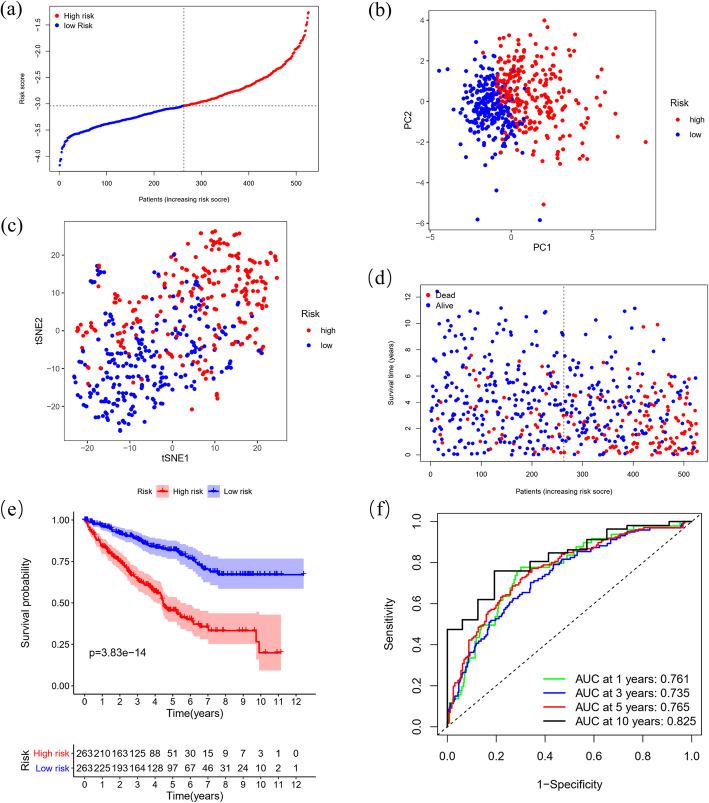
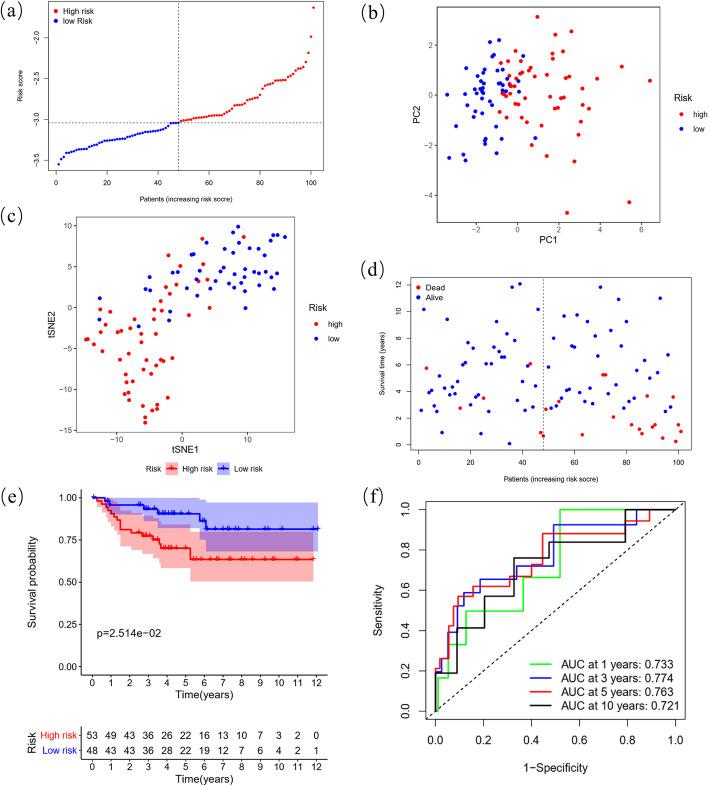
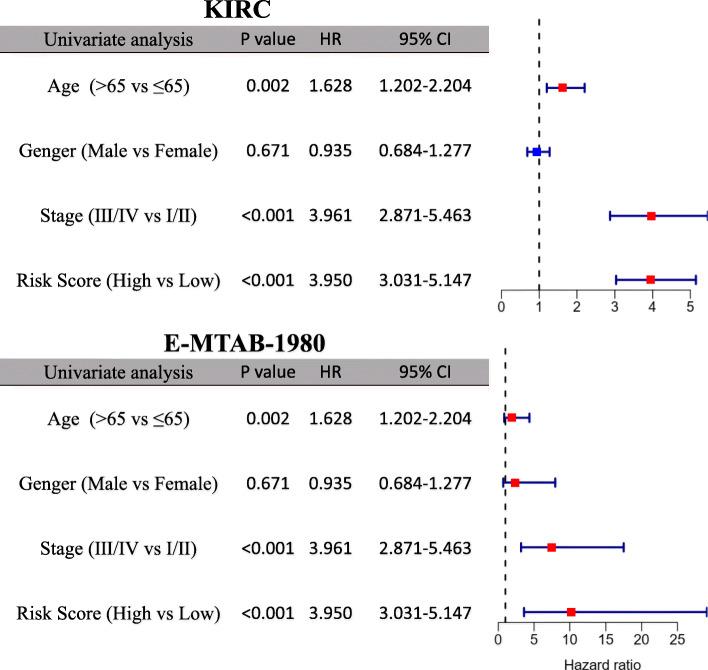
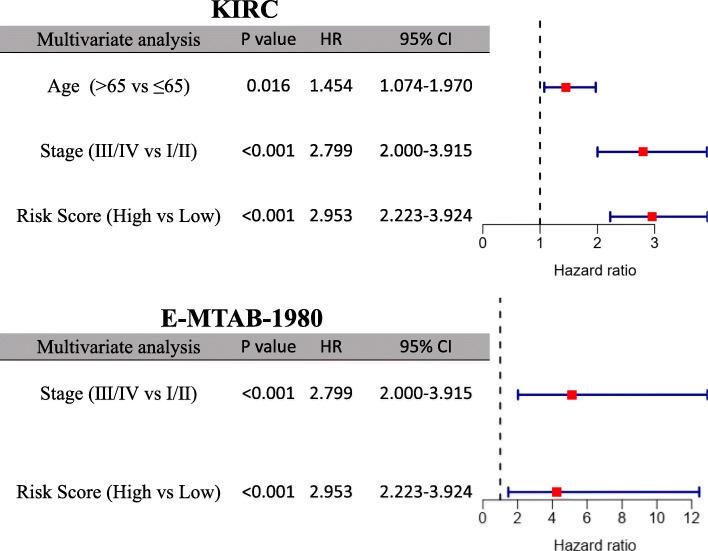
Among 60 ferroptosis-related genes, 32 prognostic DEGs were identified, from which we constructed a prognostic 12-gene signature with CARS1, HMGCR, CHAC1, GOT1, CD44, STEAP3, AKR1C1, CBS, DPP4, FANCD2, SLC1A5 and NCOA4. Patients in both cohorts were divided into high- and low-risk groups, which were visually distributed in two sets and had positive-risk-related mortality. The K-M survival and the ROC curves validated that the signature has prognostic value with P < 0.05 and area under the curve > 0.7 in both cohorts, respectively. Multivariate Cox regression further confirmed the risk score as an independent prognostic predictor for OS. Commonly enriched terms in GO and KEGG not only showed a high iron correlation but also, interestingly, immune relevance of 3 immune cells (macrophages, mast cells and regulatory T cells) and 1 immune-related function (antigen processing cell co-stimulation).
CONCLUSION
We established a novel 12 ferroptosis-related-gene signature that was proven to be an independent prognostic predictor for OS and inferred to be related to tumour immunity in ccRCC; however, the underlying mechanism is still poorly characterized and needs further exploration.
背景
即使采用了各种治疗方法,透明细胞肾细胞癌(ccRCC)仍然具有高度侵袭性和致命性。由于肾脏是一个与铁代谢相关的器官,因此探索和评估铁依赖性调节细胞死亡——铁死亡的临床价值是切实可行且重要的。
方法
从癌症基因组图谱(TCGA)数据库的 KIRC 队列中确定与预后相关的铁死亡差异表达基因(DEG),并使用 Lasso 惩罚 Cox 回归分析建立预后特征。KIRC 队列和 E-MTAB-1980 队列(来自 ArrayExpress 数据库)中的每位患者均被分配一个计算得出的特征相关风险评分,并根据 KIRC 队列中的中位数风险评分分为高风险组或低风险组。然后,通过 K-M 生存分析、时间依赖性 ROC 和基于总生存期(OS)的 Cox 回归分析,进一步评估特征在两个队列中的独立预后价值。最后,在两个队列中确定与风险相关的 DEG,并对其进行基因本体论(GO)、京都基因与基因组百科全书(KEGG)和免疫浸润的富集分析。
结果
在 60 个铁死亡相关基因中,鉴定出 32 个与预后相关的 DEG,我们据此构建了一个由 12 个基因组成的预后特征,其中包括 CARS1、HMGCR、CHAC1、GOT1、CD44、STEAP3、AKR1C1、CBS、DPP4、FANCD2、SLC1A5 和 NCOA4。两个队列的患者均被分为高风险组和低风险组,这两组患者在两组中呈视觉分布,且与高风险相关的死亡率呈正相关。K-M 生存分析和 ROC 曲线验证了该特征具有预后价值,在两个队列中 P 值均小于 0.05,曲线下面积均大于 0.7。多因素 Cox 回归进一步证实,风险评分是 OS 的独立预后预测因子。GO 和 KEGG 中常见的富集条目不仅显示出与铁的高度相关性,而且有趣的是,与 3 种免疫细胞(巨噬细胞、肥大细胞和调节性 T 细胞)和 1 种免疫相关功能(抗原加工细胞共刺激)相关。
结论
我们建立了一个新的 12 个铁死亡相关基因特征,该特征被证明是 OS 的独立预后预测因子,并推测与 ccRCC 中的肿瘤免疫有关;然而,其潜在机制仍知之甚少,需要进一步探索。

 Zotero 插件