
用于药物安全性研究的肝心芯片模型
Liver-Heart on chip models for drug safety.
作者信息
Ferrari Erika, Rasponi Marco
机构信息
Department of Electronics, Information and Bioengineering, Politecnico di Milano, 20133 Milano, Italy.
出版信息
APL Bioeng. 2021 Jul 14;5(3):031505. doi: 10.1063/5.0048986. eCollection 2021 Sep.
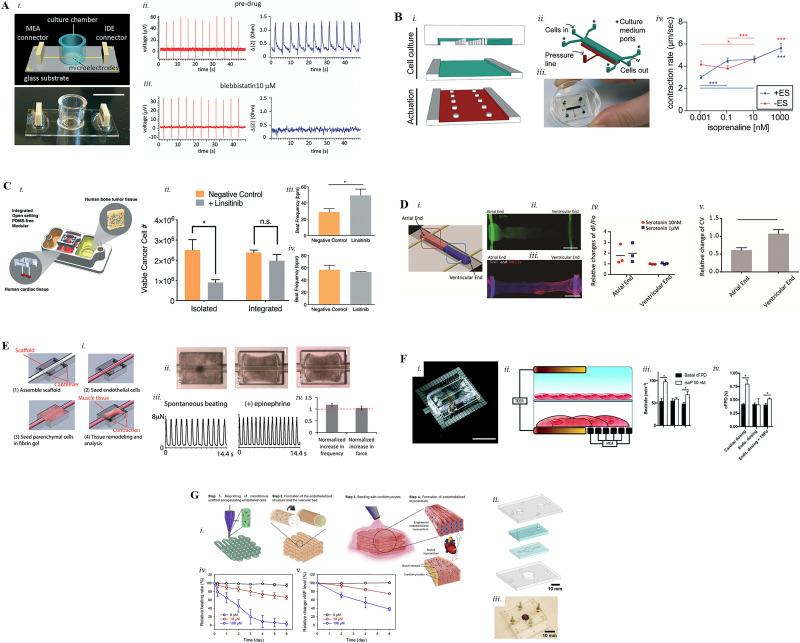
Current pre-clinical models to evaluate drug safety during the drug development process (DDP) mainly rely on traditional two-dimensional cell cultures, considered too simplistic and often ineffective, or animal experimentations, which are costly, time-consuming, and not truly representative of human responses. Their clinical translation thus remains limited, eventually causing attrition and leading to high rates of failure during clinical trials. These drawbacks can be overcome by the recently developed Organs-on-Chip (OoC) technology. OoC are sophisticated systems capable of recapitulating pivotal architecture and functionalities of human organs. OoC are receiving increasing attention from the stakeholders of the DDP, particularly concerning drug screening and safety applications. When a drug is administered in the human body, it is metabolized by the liver and the resulting compound may cause unpredicted toxicity on off-target organs such as the heart. In this sense, several liver and heart models have been widely adopted to assess the toxicity of new or recalled drugs. Recent advances in OoC technology are making available platforms encompassing multiple organs fluidically connected to efficiently assess and predict the systemic effects of compounds. Such Multi-Organs-on-Chip (MOoC) platforms represent a disruptive solution to study drug-related effects, which results particularly useful to predict liver metabolism on off-target organs to ultimately improve drug safety testing in the pre-clinical phases of the DDP. In this review, we focus on recently developed liver and heart on chip systems for drug toxicity testing. In addition, MOoC platforms encompassing connected liver and heart tissues have been further reviewed and discussed.
目前,在药物研发过程(DDP)中评估药物安全性的临床前模型主要依赖传统的二维细胞培养(这种方法被认为过于简单,且常常无效),或者动物实验(动物实验成本高、耗时久,且不能真正代表人体反应)。因此,它们在临床中的转化仍然有限,最终导致临床试验中的损耗和高失败率。最近开发的芯片器官(OoC)技术可以克服这些缺点。OoC是复杂的系统,能够重现人体器官的关键结构和功能。OoC正越来越受到DDP利益相关者的关注,特别是在药物筛选和安全性应用方面。当一种药物在人体中给药时,它会被肝脏代谢,产生的化合物可能会对心脏等非靶器官造成不可预测的毒性。从这个意义上说,几种肝脏和心脏模型已被广泛用于评估新药或召回药物的毒性。OoC技术的最新进展使得包含多个流体连接器官的平台得以出现,从而能够有效地评估和预测化合物的全身效应。这种多芯片器官(MOoC)平台是研究药物相关效应的突破性解决方案,对于预测非靶器官上的肝脏代谢尤其有用,最终可改善DDP临床前阶段的药物安全性测试。在这篇综述中,我们重点关注最近开发的用于药物毒性测试的肝脏和心脏芯片系统。此外,还对包含相连肝脏和心脏组织的MOoC平台进行了进一步的综述和讨论。


 Zotero 插件