
采用多重反转录-聚合酶链反应系统的 TP53 特征诊断系统可预测乳腺癌患者的预后。
TP53 signature diagnostic system using multiplex reverse transcription-polymerase chain reaction system enables prediction of prognosis of breast cancer patients.
机构信息
Department of Medical Oncology, Tohoku University Hospital, 1-1, Seiryomachi, Aoba-ku, 4-1 Seiryo-machi, Aobaku, Sendai, 980-8575, Japan.
Department of Clinical Oncology, Tohoku University Graduate School of Medicine, 4-1, Seiryomachi, Aoba-ku, Sendai, Japan.
出版信息
Breast Cancer. 2021 Nov;28(6):1225-1234. doi: 10.1007/s12282-021-01250-z. Epub 2021 Jul 24.
BACKGROUND
TP53 status based on TP53 signature, a gene expression profile to determine the presence or absence of TP53 mutation, is an independent prognostic factor of breast cancer. The purpose of this study was to develop a simple diagnostic system for TP53 signature status.
METHODS
We developed a multiplex reverse transcription-polymerase chain reaction system to determine TP53 status. Based on this system, prospectively collected 189 patients with stage I and II breast cancer were determined to have TP53 mutant signature or TP53 wild-type signature. The prognostic significance of the TP53 signature by the diagnostic system was analyzed.
RESULTS
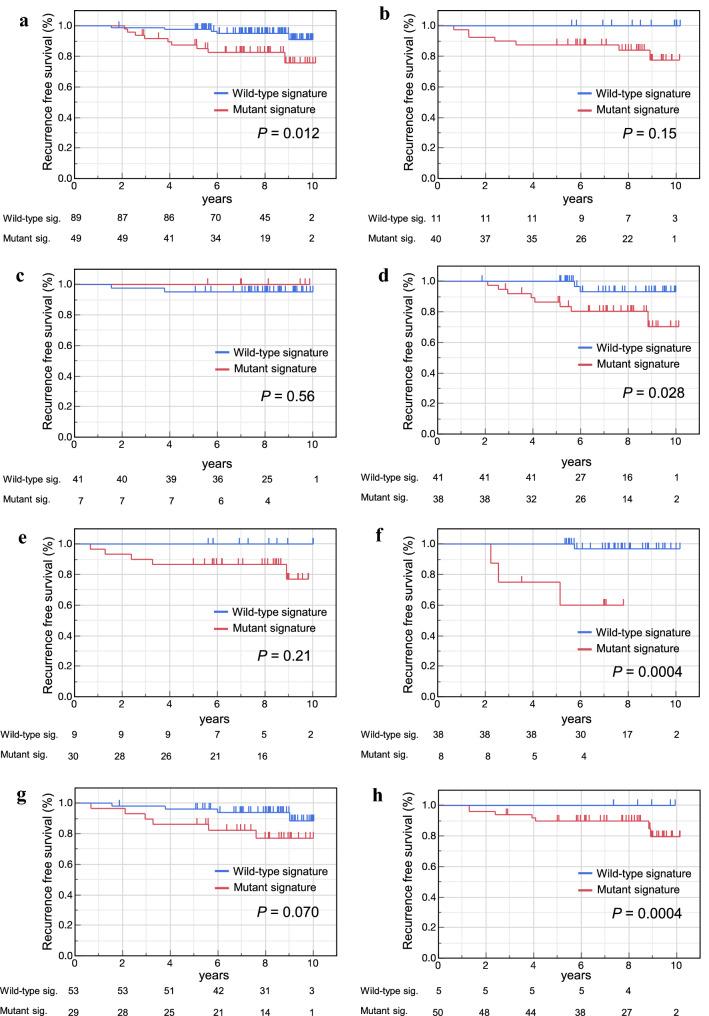
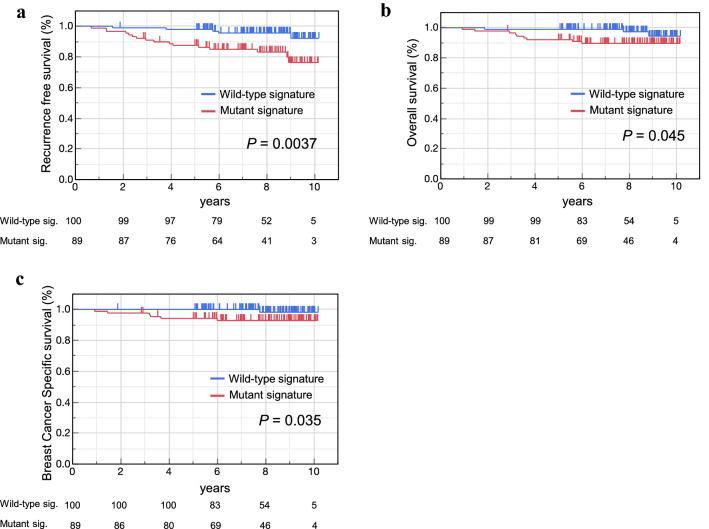
The diagnostic accuracy of TP53 status and reproducibility of this diagnosis system was confirmed. Using the diagnostic system, 89 patients were classified as TP53 mutant signature and the remaining 100 cases were classified as TP53 wild-type signature. Recurrence-free survival (RFS) among patients with TP53 mutant signature was significantly shorter than that among those with TP53 wild-type signature. On univariate and multivariate analyses, the TP53 signature status was an independent predictor of RFS. RFS among patients with TP53 mutant signature was significantly shorter than that among those with TP53 wild-type signature in a cohort of estrogen receptor-positive breast cancer. Although a difference was not significant, no recurrent cases was observed in TP53 wild-type signature group in triple negative breast cancer.
CONCLUSION
This simple and precise diagnostic system to determine TP53 signature status may help in prognostic assessment, therapeutic decision-making, and treatment optimization in patients with breast cancer.
背景
基于 TP53 特征的 TP53 状态(通过基因表达谱确定 TP53 突变的存在或缺失)是乳腺癌的一个独立预后因素。本研究旨在开发一种用于确定 TP53 特征状态的简单诊断系统。
方法
我们开发了一种多重逆转录-聚合酶链反应系统来确定 TP53 状态。基于该系统,前瞻性地收集了 189 例 I 期和 II 期乳腺癌患者,确定其是否存在 TP53 突变特征或 TP53 野生型特征。分析该诊断系统中 TP53 特征的预后意义。
结果
该诊断系统的 TP53 状态诊断准确性和可重复性得到了证实。使用该诊断系统,89 例患者被归类为 TP53 突变特征,其余 100 例患者被归类为 TP53 野生型特征。TP53 突变特征患者的无复发生存率(RFS)明显短于 TP53 野生型特征患者。单因素和多因素分析均表明,TP53 特征状态是 RFS 的独立预测因子。在雌激素受体阳性乳腺癌患者中,TP53 突变特征患者的 RFS 明显短于 TP53 野生型特征患者。尽管差异无统计学意义,但在三阴性乳腺癌中,TP53 野生型特征组未观察到复发病例。
结论
这种用于确定 TP53 特征状态的简单而精确的诊断系统可能有助于对乳腺癌患者进行预后评估、治疗决策和治疗优化。


 Zotero 插件