
乳腺癌耐药机制:免疫治疗的挑战。
Breast cancer resistance mechanisms: challenges to immunotherapy.
机构信息
Department of Medicine, Vanderbilt University Medical Center, Nashville, TN, USA.
Department of Medicine, Breast Cancer Research Program, Vanderbilt University Medical Center, Nashville, TN, USA.
出版信息
Breast Cancer Res Treat. 2021 Nov;190(1):5-17. doi: 10.1007/s10549-021-06337-x. Epub 2021 Jul 28.
PURPOSE
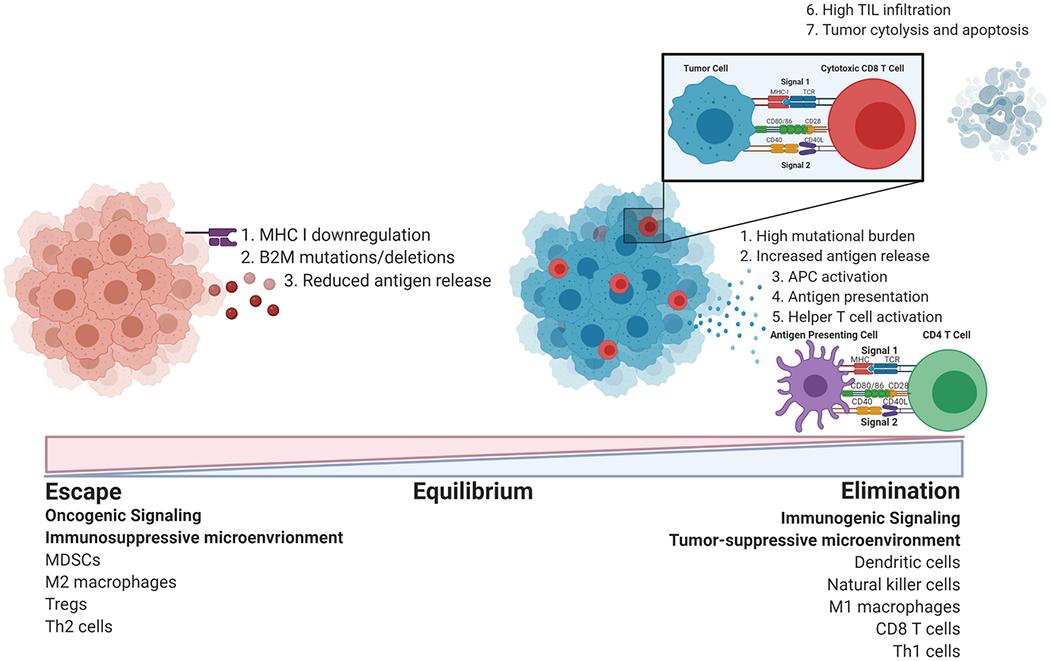
The clinical implementation of immunotherapy has profoundly transformed cancer treatment. Targeting the immune system to mount anti-tumor responses can elicit a systemically durable response. Employing immune checkpoint blockade (ICB) has suppressed tumor growth and vastly improved patient overall and progression-free survival in several cancer types, most notably melanoma and non-small cell lung carcinoma. Despite widescale clinical success, ICB response is heterogeneously efficacious across tumor types. Many cancers, including breast cancer, are frequently refractory to ICB. In this review, we will discuss the challenges facing immunotherapy success and address the underlying mechanisms responsible for primary and acquired breast cancer resistance to immunotherapy.
FINDINGS
Even in initially ICB-responsive tumors, many acquire resistance due to tumor-specific alterations, loss of tumor-specific antigens, and extrinsic mechanisms that reshape the immune landscape within the tumor microenvironment (TME). The tumor immune interaction circumvents the benefits of immunotherapy; tumors rewire the tumor-suppressive functions of activated immune cells within their stroma to propagate tumor growth and progression.
CONCLUSIONS
The breast cancer immune TME is complex and the mechanisms driving resistance to ICB are multifaceted. Continued study in both preclinical models and clinical trials should help elucidate these mechanisms so they can be targeted to benefit more breast cancer patients.
目的
免疫疗法的临床应用极大地改变了癌症治疗。靶向免疫系统以引发抗肿瘤反应,可以产生全身性持久的反应。免疫检查点阻断(ICB)的应用抑制了肿瘤生长,并显著提高了多种癌症(尤其是黑色素瘤和非小细胞肺癌)患者的总生存率和无进展生存率。尽管取得了广泛的临床成功,但 ICB 的反应在肿瘤类型之间存在很大的疗效差异。许多癌症,包括乳腺癌,经常对 ICB 产生耐药性。在这篇综述中,我们将讨论免疫治疗成功所面临的挑战,并探讨导致原发性和获得性乳腺癌对免疫治疗耐药的潜在机制。
发现
即使在最初对 ICB 有反应的肿瘤中,由于肿瘤特异性改变、肿瘤特异性抗原丢失以及重塑肿瘤微环境(TME)内免疫景观的外在机制,许多肿瘤都会产生耐药性。肿瘤免疫相互作用规避了免疫治疗的益处;肿瘤重新布线其基质中激活免疫细胞的肿瘤抑制功能,以促进肿瘤生长和进展。
结论
乳腺癌免疫 TME 复杂,导致对 ICB 耐药的机制多种多样。在临床前模型和临床试验中的进一步研究应有助于阐明这些机制,以便靶向这些机制使更多的乳腺癌患者受益。
 Zotero 插件