
非小细胞肺癌患者中 PD-L1 结合肽 PET 放射性示踪剂的首次人体评估。
First-in-Humans Evaluation of a PD-L1-Binding Peptide PET Radiotracer in Non-Small Cell Lung Cancer Patients.
机构信息
Key Laboratory of Carcinogenesis and Translational Research (Ministry of Education/Beijing), Department of Nuclear Medicine, NMPA Key Laboratory for Research and Evaluation of Radiopharmaceuticals (National Medical Products Administration), Peking University Cancer Hospital & Institute, Beijing, China.
Key Laboratory of Carcinogenesis and Translational Research (Ministry of Education/Beijing), Department I of Thoracic Oncology, Peking University Cancer Hospital & Institute, Beijing, China; and.
出版信息
J Nucl Med. 2022 Apr;63(4):536-542. doi: 10.2967/jnumed.121.262045. Epub 2021 Jul 29.
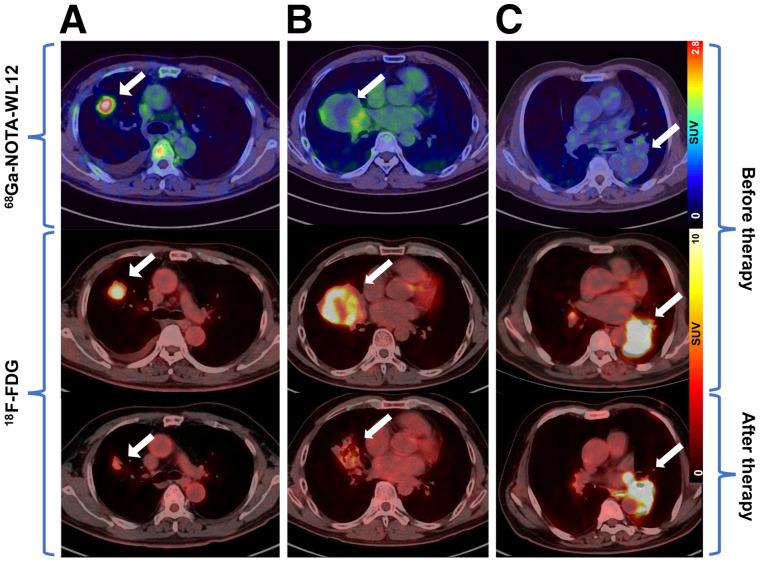
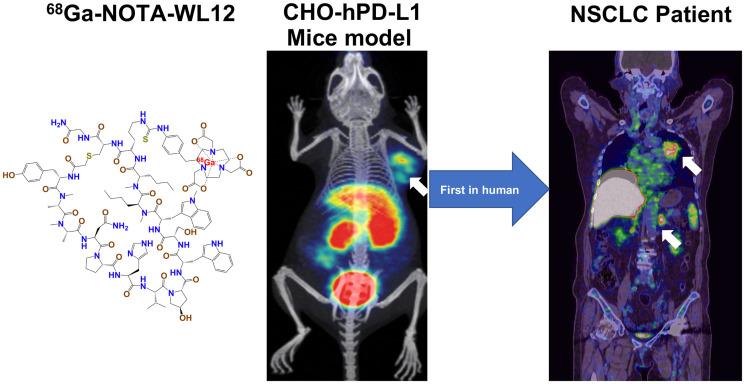
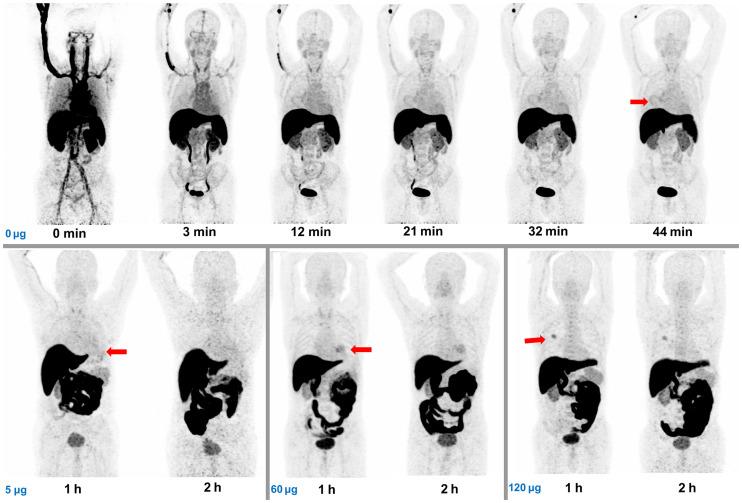
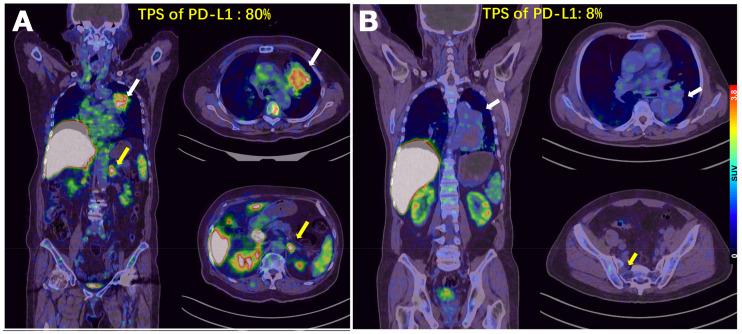
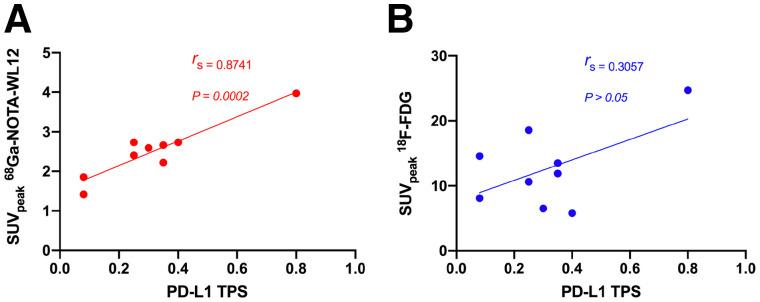
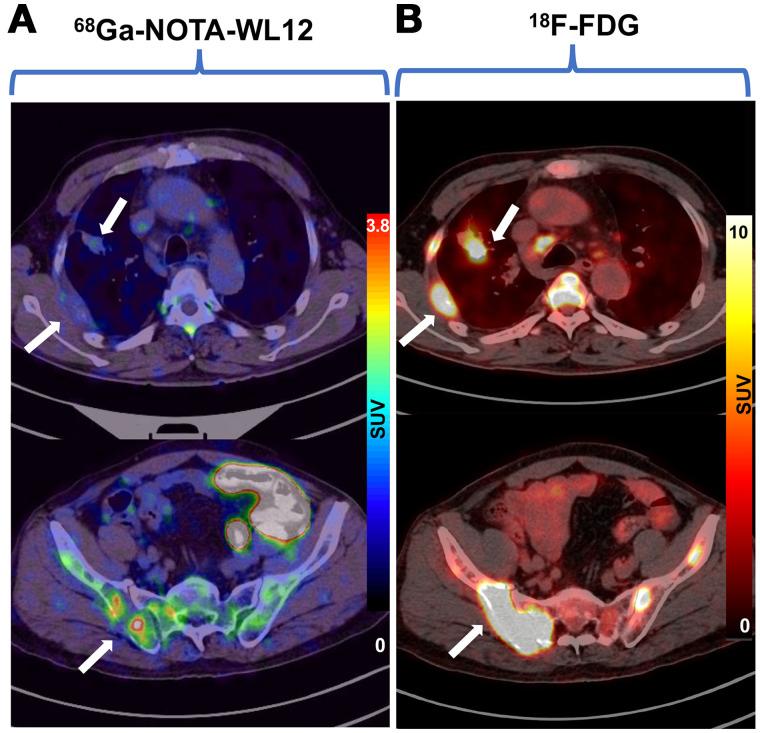
Ga-NOTA-WL12 is a peptide-based PET imaging agent. We conducted a first-in-human study of Ga-NOTA-WL12 for PET to study the in vivo biodistribution, metabolism, radiation dosimetry, safety, and potential for quantifying programmed death ligand-1 (PD-L1) expression levels in patients with advanced non-small cell lung cancer (NSCLC). In vitro assessment of the PD-L1 expression and cellular uptake of Ga-NOTA-WL12 was performed, followed by in vivo evaluation of Ga-NOTA-WL12 uptake in mouse models with tumors. Nine patients with NSCLC with lesions expressing PD-L1 were enrolled and monitored for adverse events during the study. Ga-NOTA-WL12 and paired F-FDG PET/CT imaging were performed. Uptake (SUV, SUL [SUV], and kBq/mL) values of tumors and normal organs were obtained. Radiopharmaceutical biodistribution, radiation dosimetry, and the relationship of tumor uptake to PD-L1 expression were evaluated. Follow-up F-FDG PET/CT was performed in patients who had undergone treatment with a combination of pembrolizumab with chemotherapy. Ga-NOTA-WL12 exhibited PD-L1-specific uptake in vitro and in PD-L1-positive tumors in vivo. Ga-NOTA-WL12 PET imaging proved safe with acceptable radiation dosimetry. Physiologic tracer uptake was mainly visible in the liver, spleen, small intestine, and kidney. Tumors were clearly visible, particularly in the lungs, with a tumor-to-lung ratio of 4.45 ± 1.89 at 1 h. One hour was a suitable time point for image acquisition because no significant differences were noted in tumor-to-background ratios between 1 and 2 h. A strong, positive correlation was found between tumor uptake (SUV) and PD-L1 immunohistochemistry results ( = 0.9349; = 0.002). Ga-NOTA-WL12 and F-FDG PET studies suggest that PD-L1 PET before therapy may indicate the therapeutic efficacy of pembrolizumab plus chemotherapy combination treatment. Our first-in-human findings demonstrate the safety and feasibility of Ga-NOTA-WL12 for noninvasive, in vivo detection of tumor PD-L1 expression levels, indicating potential benefits for clinical PD-L1 therapy.
Ga-NOTA-WL12 是一种基于肽的 PET 成像剂。我们进行了 Ga-NOTA-WL12 的首次人体 PET 研究,以研究其在晚期非小细胞肺癌 (NSCLC) 患者体内的生物分布、代谢、辐射剂量学、安全性以及定量检测程序性死亡配体-1 (PD-L1) 表达水平的潜力。进行了 Ga-NOTA-WL12 的 PD-L1 表达和细胞摄取的体外评估,随后在具有肿瘤的小鼠模型中进行了 Ga-NOTA-WL12 摄取的体内评估。入组了 9 名 NSCLC 患者,这些患者的病变表达 PD-L1,并在研究期间监测不良事件。进行了 Ga-NOTA-WL12 和配对的 F-FDG PET/CT 成像。获得了肿瘤和正常器官的摄取 (SUV、SUL [SUV] 和 kBq/mL) 值。评估了放射性药物的生物分布、辐射剂量学以及肿瘤摄取与 PD-L1 表达的关系。对接受帕博利珠单抗联合化疗治疗的患者进行了后续的 F-FDG PET/CT 检查。Ga-NOTA-WL12 在体外和体内 PD-L1 阳性肿瘤中表现出 PD-L1 特异性摄取。Ga-NOTA-WL12 PET 成像安全可靠,辐射剂量学可接受。生理示踪剂摄取主要见于肝脏、脾脏、小肠和肾脏。肿瘤清晰可见,尤其是在肺部,1 小时时的肿瘤与肺部比值为 4.45 ± 1.89。1 小时是采集图像的合适时间点,因为 1 小时和 2 小时之间肿瘤与背景的比值没有显著差异。还发现肿瘤摄取 (SUV) 与 PD-L1 免疫组化结果之间存在很强的正相关关系 ( = 0.9349; = 0.002)。Ga-NOTA-WL12 和 F-FDG PET 研究表明,治疗前的 PD-L1 PET 可能预示着帕博利珠单抗联合化疗联合治疗的疗效。我们的首次人体研究结果证明了 Ga-NOTA-WL12 用于非侵入性、体内检测肿瘤 PD-L1 表达水平的安全性和可行性,这表明其对临床 PD-L1 治疗具有潜在益处。


 Zotero 插件