
刺猬信号通路破坏、性腺发育不全与生殖障碍:与内分泌干扰化学物质有关联吗?
Hedgehog signal disruption, gonadal dysgenesis and reproductive disorders: Is there a link to endocrine disrupting chemicals?
作者信息
Johansson Hanna K L, Svingen Terje
机构信息
Division of Diet, Disease Prevention and Toxicology, National Food Institute, Technical University of Denmark, Kgs. Lyngby, DK-2800, Denmark.
出版信息
Curr Res Toxicol. 2020 Oct 24;1:116-123. doi: 10.1016/j.crtox.2020.10.001. eCollection 2020 Jun 10.
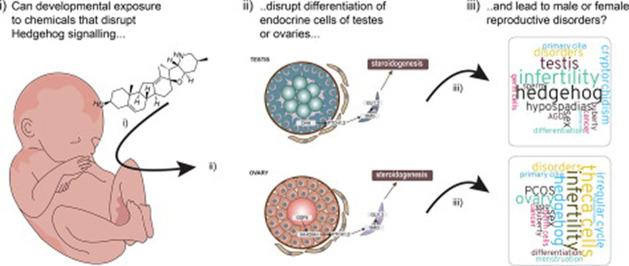
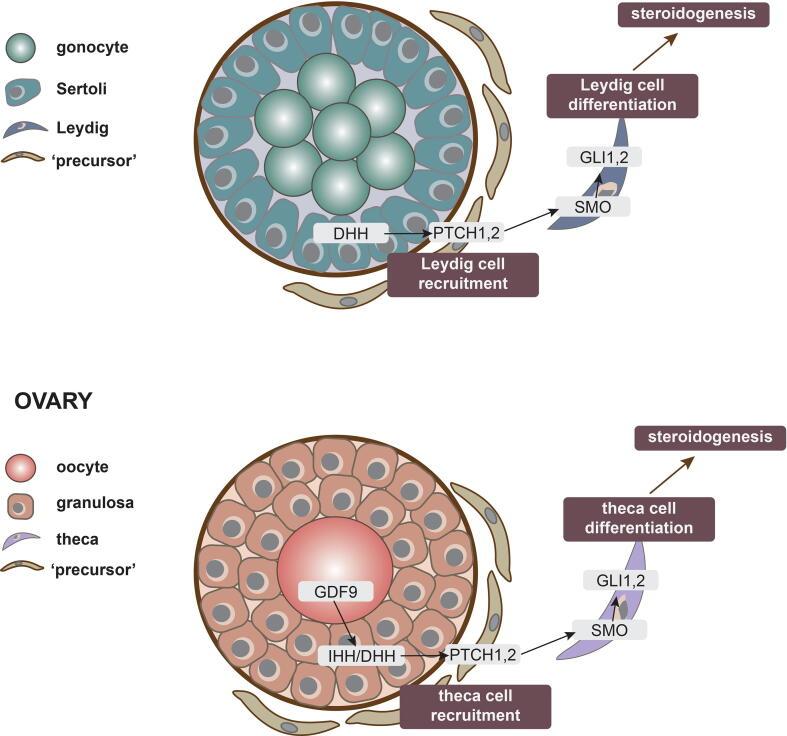
Developmental exposure to chemicals that can disrupt sex hormone signaling may cause a broad spectrum of reproductive disorders. This is because reproductive development is tightly regulated by steroid sex hormones. Consequently, non-animal screening methods currently used to test chemicals for potential endocrine disrupting activities typically include steroidogenesis and nuclear receptor assays. In many cases there is a correlation between and data examining endocrine disruption, for example between blocked androgen receptor activity and feminized male genitals. However, there are many examples where there is poor, or no, correlation between data and effect outcomes in rodent studies, for various reasons. One possible, and less studied, reason for discordance between and data is that the mechanisms causing the effects are not covered by those typically tested for . This knowledge gap must be addressed if we are to elaborate robust testing strategies that do not rely on animal experimentation. In this review, we highlight the Hedgehog (HH) signaling pathway as a target for environmental chemicals and its potential implications for reproductive disorders originating from early life exposure. A central proposition is that, by disrupting HH signal transduction during critical stages of mammalian development, the endocrine cells of the testes or ovaries fail to develop normally, which ultimately will lead to disrupted sex hormone synthesis and sexual development in both sexes. If this is the case, then such mechanism must also be included in future test strategies aimed at eliminating chemicals that may cause reproductive disorders in humans.
发育期接触可干扰性激素信号的化学物质可能会导致一系列广泛的生殖紊乱。这是因为生殖发育受到类固醇性激素的严格调控。因此,目前用于测试化学物质潜在内分泌干扰活性的非动物筛选方法通常包括类固醇生成和核受体检测。在许多情况下,检测内分泌干扰的[此处原文缺失相关内容]数据之间存在相关性,例如雄激素受体活性受阻与雄性生殖器雌性化之间的相关性。然而,由于各种原因,在啮齿动物研究中,[此处原文缺失相关内容]数据与效应结果之间存在许多相关性较差或无相关性的例子。[此处原文缺失相关内容]数据与效应结果不一致的一个可能且较少研究的原因是,导致效应的机制未被通常用于检测[此处原文缺失相关内容]的检测方法所涵盖。如果我们要制定不依赖动物实验的可靠测试策略,就必须解决这一知识空白。在本综述中,我们强调刺猬(HH)信号通路作为环境化学物质的一个靶点及其对源于生命早期暴露的生殖紊乱的潜在影响。一个核心观点是,在哺乳动物发育的关键阶段通过干扰HH信号转导,睾丸或卵巢的内分泌细胞无法正常发育,这最终将导致两性性激素合成和性发育紊乱。如果是这样,那么这种机制也必须纳入未来旨在消除可能导致人类生殖紊乱的化学物质的测试策略中。

 Zotero 插件