
用于深蹲辅助的下肢外骨骼的强化学习与控制
Reinforcement Learning and Control of a Lower Extremity Exoskeleton for Squat Assistance.
作者信息
Luo Shuzhen, Androwis Ghaith, Adamovich Sergei, Su Hao, Nunez Erick, Zhou Xianlian
机构信息
Department of Biomedical Engineering, New Jersey Institute of Technology, Newark, NJ, United States.
Kessler Foundation, West Orange, Newark, NJ, United States.
出版信息
Front Robot AI. 2021 Jul 19;8:702845. doi: 10.3389/frobt.2021.702845. eCollection 2021.
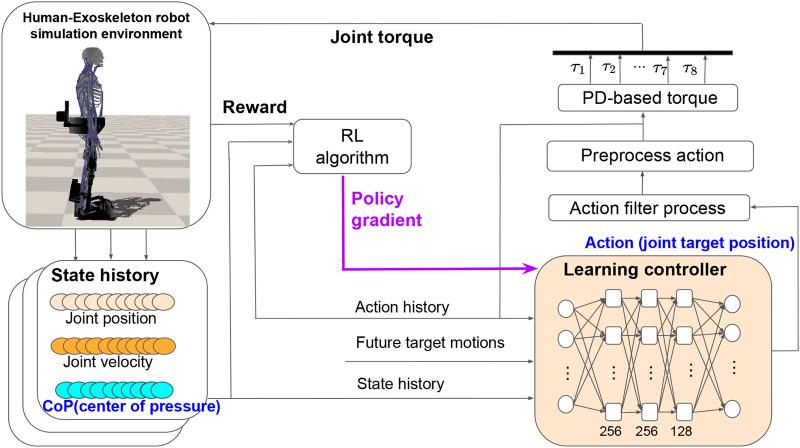
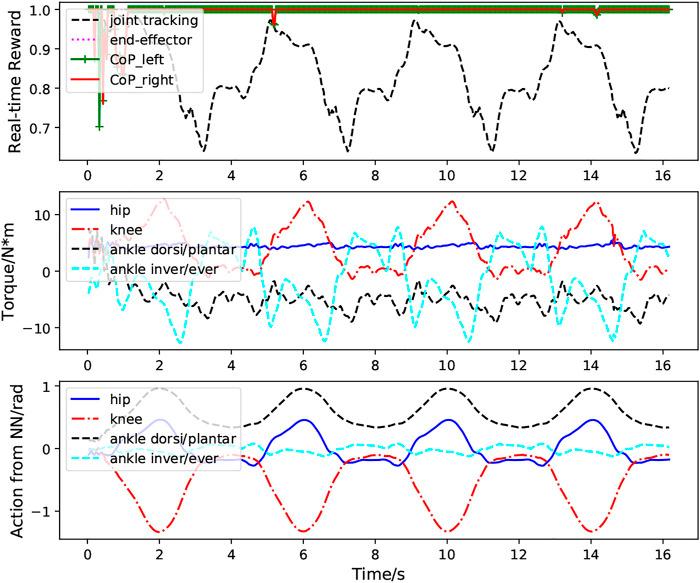
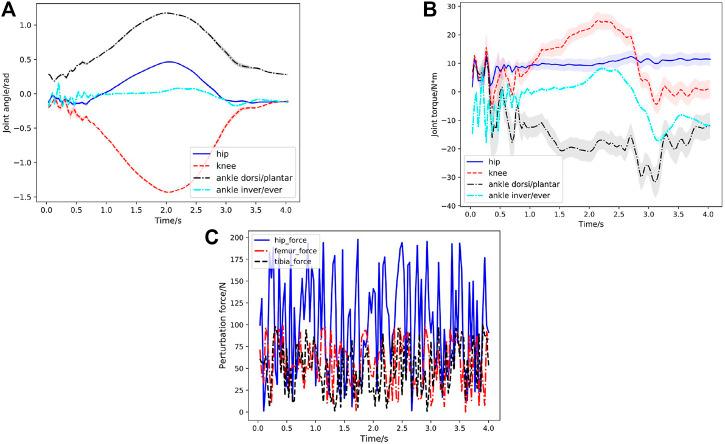
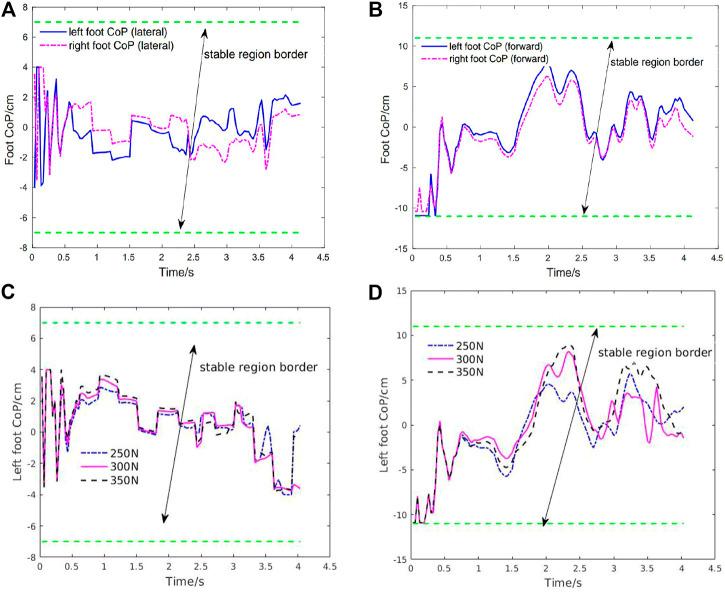
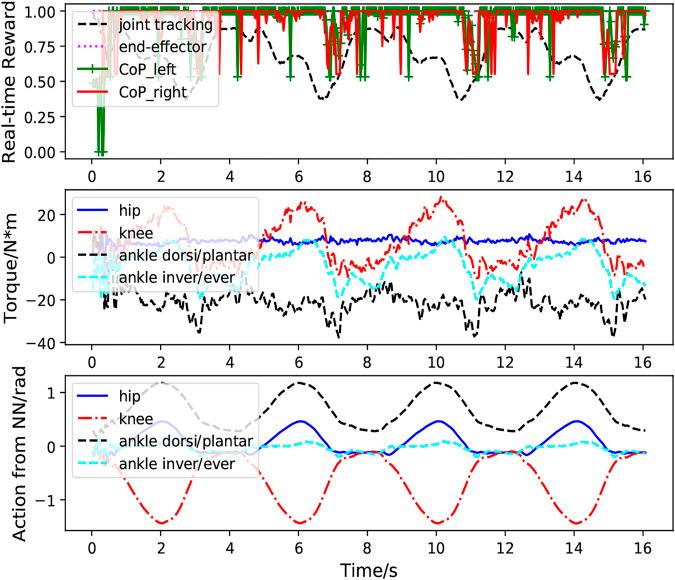
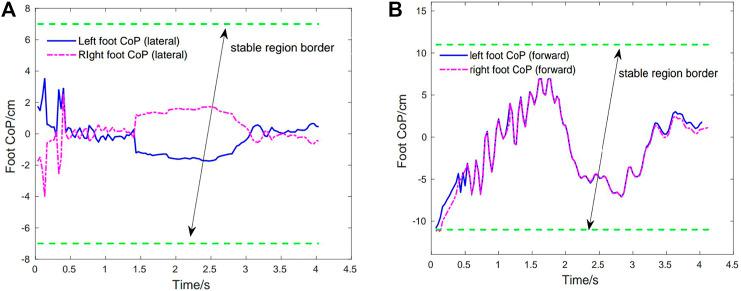
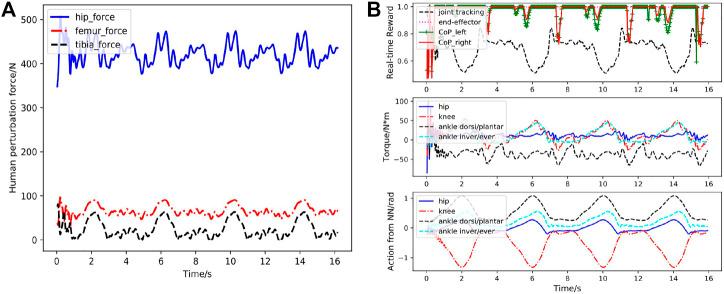
A significant challenge for the control of a robotic lower extremity rehabilitation exoskeleton is to ensure stability and robustness during programmed tasks or motions, which is crucial for the safety of the mobility-impaired user. Due to various levels of the user's disability, the human-exoskeleton interaction forces and external perturbations are unpredictable and could vary substantially and cause conventional motion controllers to behave unreliably or the robot to fall down. In this work, we propose a new, reinforcement learning-based, motion controller for a lower extremity rehabilitation exoskeleton, aiming to perform collaborative squatting exercises with efficiency, stability, and strong robustness. Unlike most existing rehabilitation exoskeletons, our exoskeleton has ankle actuation on both sagittal and front planes and is equipped with multiple foot force sensors to estimate center of pressure (CoP), an important indicator of system balance. This proposed motion controller takes advantage of the CoP information by incorporating it in the state input of the control policy network and adding it to the reward during the learning to maintain a well balanced system state during motions. In addition, we use dynamics randomization and adversary force perturbations including large human interaction forces during the training to further improve control robustness. To evaluate the effectiveness of the learning controller, we conduct numerical experiments with different settings to demonstrate its remarkable ability on controlling the exoskeleton to repetitively perform well balanced and robust squatting motions under strong perturbations and realistic human interaction forces.
控制机器人下肢康复外骨骼面临的一个重大挑战是在编程任务或运动过程中确保稳定性和鲁棒性,这对于行动不便的用户的安全至关重要。由于用户残疾程度各不相同,人机外骨骼相互作用力和外部干扰是不可预测的,可能会有很大变化,导致传统运动控制器表现不可靠或机器人摔倒。在这项工作中,我们为下肢康复外骨骼提出了一种基于强化学习的新型运动控制器,旨在高效、稳定且具有强大鲁棒性地执行协作深蹲练习。与大多数现有的康复外骨骼不同,我们的外骨骼在矢状面和额状面都有踝关节驱动,并配备了多个足部力传感器来估计压力中心(CoP),这是系统平衡的一个重要指标。所提出的这种运动控制器通过将CoP信息纳入控制策略网络的状态输入并在学习过程中将其添加到奖励中,来利用CoP信息,以便在运动过程中维持良好的平衡系统状态。此外,我们在训练期间使用动力学随机化和对抗力干扰,包括较大的人机相互作用力,以进一步提高控制鲁棒性。为了评估学习控制器的有效性,我们进行了不同设置的数值实验,以证明其在强干扰和现实人机相互作用力下控制外骨骼重复执行良好平衡且鲁棒的深蹲运动的卓越能力。



 Zotero 插件