
中东地区产后抑郁症的患病率及危险因素:系统评价和荟萃分析。
Prevalence and risk factors of postpartum depression in the Middle East: a systematic review and meta-analysis.
机构信息
Department of Maternal and Child Health, Xiangya School of Public Health, Central South University, 110 Xiangya Road, Changsha, 410078, China.
Department of Maternal and Child Health, Faculty of Nursing, Hama University, Hama, Syria.
出版信息
BMC Pregnancy Childbirth. 2021 Aug 6;21(1):542. doi: 10.1186/s12884-021-04016-9.
BACKGROUND
Postpartum depression (PPD) is a common social health problem that affects not only the mother and newborn, but extends to other family members as well as various aspects of their lives. This systematic review and meta-analysis aims to identify the prevalence and risk factors of postpartum among the women in Middle East countries.
METHODS
We searched published articles from Web of Science, EMBASE, PubMed and Cochrane electronic databases to establish study articles. Articles regarding postpartum depression prevalence and associated factors among women in the Middle East were included in this systematic review and meta-analysis. A random-effect model was used for estimation of pooled postpartum depression prevalence with a 95% confidence interval (CI) and forest plot. Presence of heterogeneity was checked by Cochran's (Q) test, and funnel plots and Egger's statistical tests were used to assess publication bias.
RESULTS
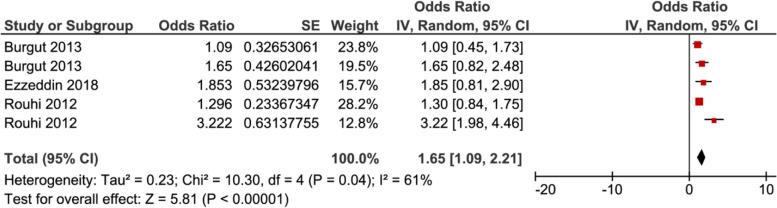
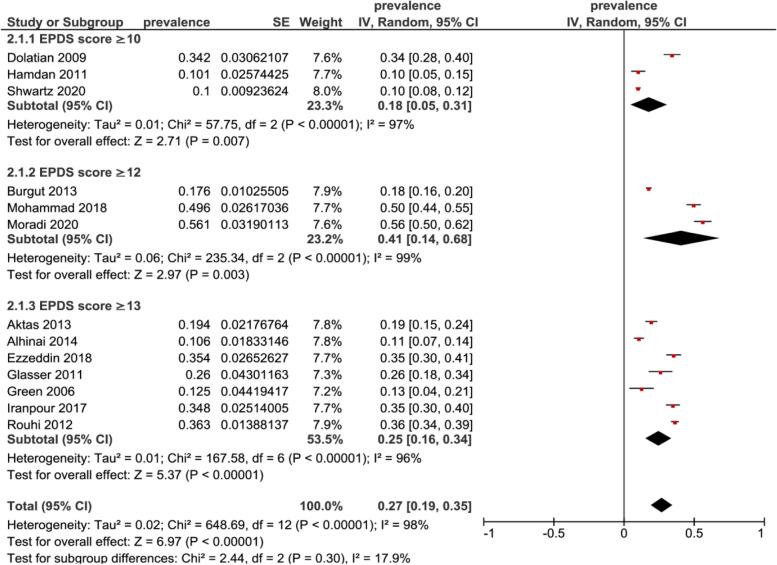
A total of 15 studies were included in this systematic review. The studies were conducted in different countries of the Middle East between 2006 and 2020, nine of the included studies were cross-sectional studies and six were cohort studies. The overall pooled estimate of the prevalence of postpartum depression in the Middle East mothers was very high 27% (95% CI 0.19-0.35). The common risk factors reported based on our review were poor economic, pregnancy associated complications, low education, unplanned pregnancy, housewife, inadequate social support from family members and the feeding by formula. Poor economic and complication during pregnancy presented a significant relationship regarding postpartum depression in meta-analysis.
CONCLUSIONS
The prevalence of postpartum depression in the Middle East was higher than other regions of the world. In response to this, we recommend an increase of routine screening for depression during postpartum in this area. Furthermore, it might be necessary to integrate mental health with maternal health care in clinical practice during the postpartum.
背景
产后抑郁症(PPD)是一种常见的社会健康问题,不仅影响母亲和新生儿,还会影响其他家庭成员以及他们生活的各个方面。本系统评价和荟萃分析旨在确定中东国家妇女产后抑郁症的患病率和风险因素。
方法
我们检索了 Web of Science、EMBASE、PubMed 和 Cochrane 电子数据库中发表的文章,以建立研究文章。本系统评价和荟萃分析纳入了关于中东妇女产后抑郁症患病率及相关因素的文章。使用随机效应模型估计汇总产后抑郁症患病率,置信区间(CI)为 95%,森林图。通过 Cochran's(Q)检验检查异质性的存在,并使用漏斗图和 Egger's 统计检验评估发表偏倚。
结果
本系统评价共纳入 15 项研究。这些研究是在 2006 年至 2020 年间在中东不同国家进行的,其中 9 项研究为横断面研究,6 项研究为队列研究。中东母亲产后抑郁症的总体汇总患病率非常高,为 27%(95%CI 0.19-0.35)。根据我们的综述,报告的常见风险因素包括经济贫困、与妊娠相关的并发症、低教育程度、意外怀孕、家庭主妇、家庭成员提供的社会支持不足以及配方奶喂养。经济贫困和妊娠期间的并发症与产后抑郁症的meta 分析存在显著关系。
结论
中东地区产后抑郁症的患病率高于世界其他地区。对此,我们建议在该地区增加产后常规抑郁筛查。此外,在产后,可能有必要将心理健康与产妇保健相结合纳入临床实践。




 Zotero 插件