
莫努匹拉韦诱导的严重急性呼吸综合征冠状病毒2(SARS-CoV-2)诱变机制。
Mechanism of molnupiravir-induced SARS-CoV-2 mutagenesis.
作者信息
Kabinger Florian, Stiller Carina, Schmitzová Jana, Dienemann Christian, Kokic Goran, Hillen Hauke S, Höbartner Claudia, Cramer Patrick
机构信息
Max Planck Institute for Biophysical Chemistry, Department of Molecular Biology, Göttingen, Germany.
Universität Würzburg, Lehrstuhl für Organische Chemie I, Würzburg, Germany.
出版信息
Nat Struct Mol Biol. 2021 Sep;28(9):740-746. doi: 10.1038/s41594-021-00651-0. Epub 2021 Aug 11.
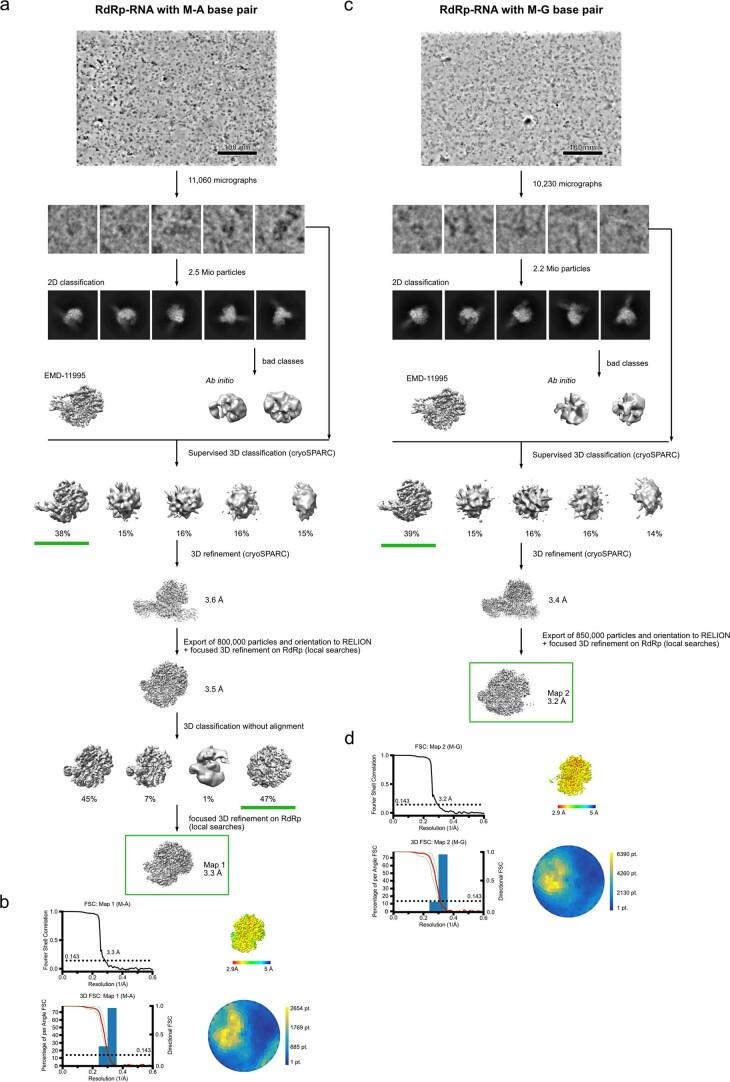
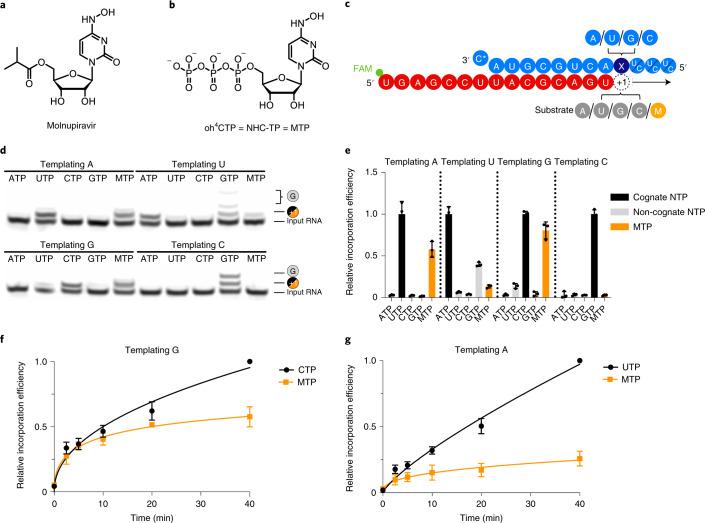
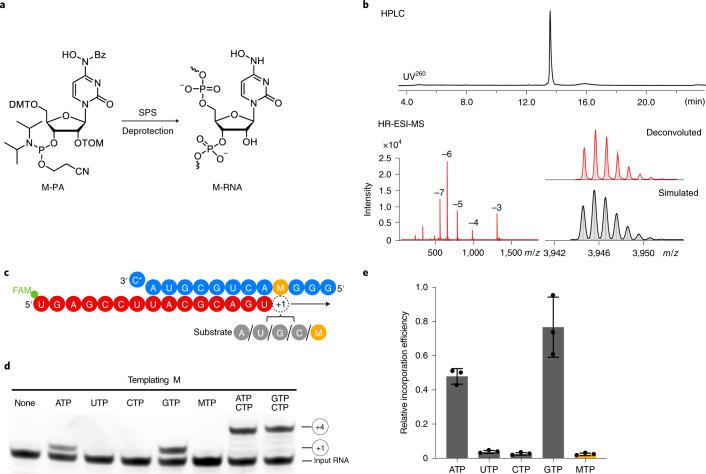
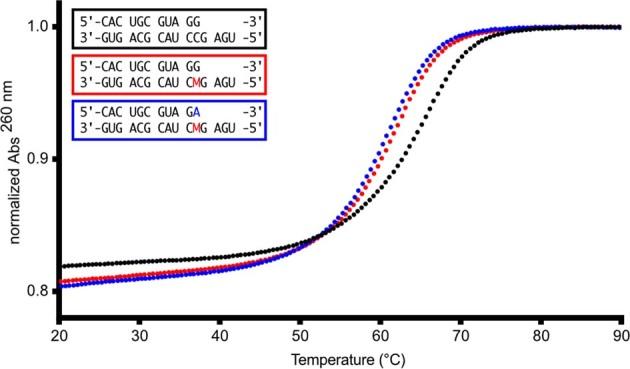
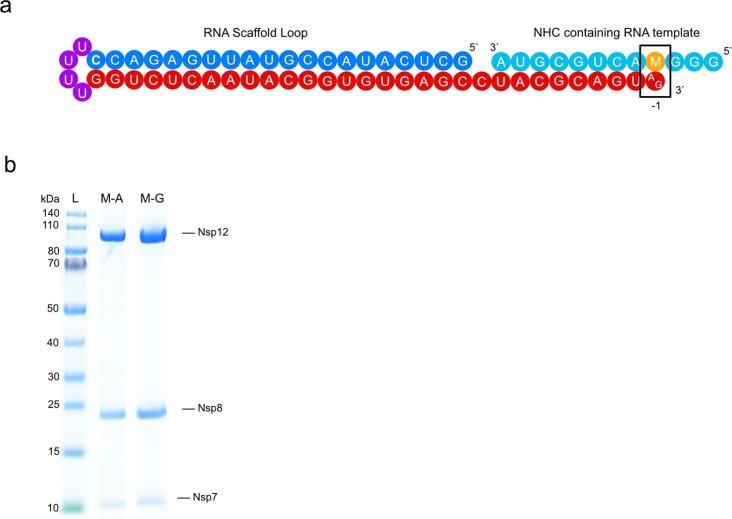
Molnupiravir is an orally available antiviral drug candidate currently in phase III trials for the treatment of patients with COVID-19. Molnupiravir increases the frequency of viral RNA mutations and impairs SARS-CoV-2 replication in animal models and in humans. Here, we establish the molecular mechanisms underlying molnupiravir-induced RNA mutagenesis by the viral RNA-dependent RNA polymerase (RdRp). Biochemical assays show that the RdRp uses the active form of molnupiravir, β-D-N-hydroxycytidine (NHC) triphosphate, as a substrate instead of cytidine triphosphate or uridine triphosphate. When the RdRp uses the resulting RNA as a template, NHC directs incorporation of either G or A, leading to mutated RNA products. Structural analysis of RdRp-RNA complexes that contain mutagenesis products shows that NHC can form stable base pairs with either G or A in the RdRp active center, explaining how the polymerase escapes proofreading and synthesizes mutated RNA. This two-step mutagenesis mechanism probably applies to various viral polymerases and can explain the broad-spectrum antiviral activity of molnupiravir.
莫努匹拉韦是一种口服可用的抗病毒候选药物,目前正处于治疗新冠肺炎患者的III期试验阶段。在动物模型和人体中,莫努匹拉韦会增加病毒RNA突变的频率并损害严重急性呼吸综合征冠状病毒2(SARS-CoV-2)的复制。在此,我们确定了病毒RNA依赖性RNA聚合酶(RdRp)引起莫努匹拉韦诱导的RNA诱变的分子机制。生化分析表明,RdRp使用莫努匹拉韦的活性形式β-D-N-羟基胞苷(NHC)三磷酸作为底物,而非胞苷三磷酸或尿苷三磷酸。当RdRp以产生的RNA为模板时,NHC会指导掺入G或A,从而导致RNA产物发生突变。对含有诱变产物的RdRp-RNA复合物的结构分析表明,NHC可在RdRp活性中心与G或A形成稳定的碱基对,这解释了聚合酶如何逃避校对并合成突变的RNA。这种两步诱变机制可能适用于各种病毒聚合酶,并可解释莫努匹拉韦的广谱抗病毒活性。



 Zotero 插件