
用于mRNA递送的脂质纳米颗粒。
Lipid nanoparticles for mRNA delivery.
作者信息
Hou Xucheng, Zaks Tal, Langer Robert, Dong Yizhou
机构信息
Division of Pharmaceutics & Pharmacology, College of Pharmacy, The Ohio State University, Columbus, OH USA.
Moderna, Inc., Cambridge, MA USA.
出版信息
Nat Rev Mater. 2021;6(12):1078-1094. doi: 10.1038/s41578-021-00358-0. Epub 2021 Aug 10.
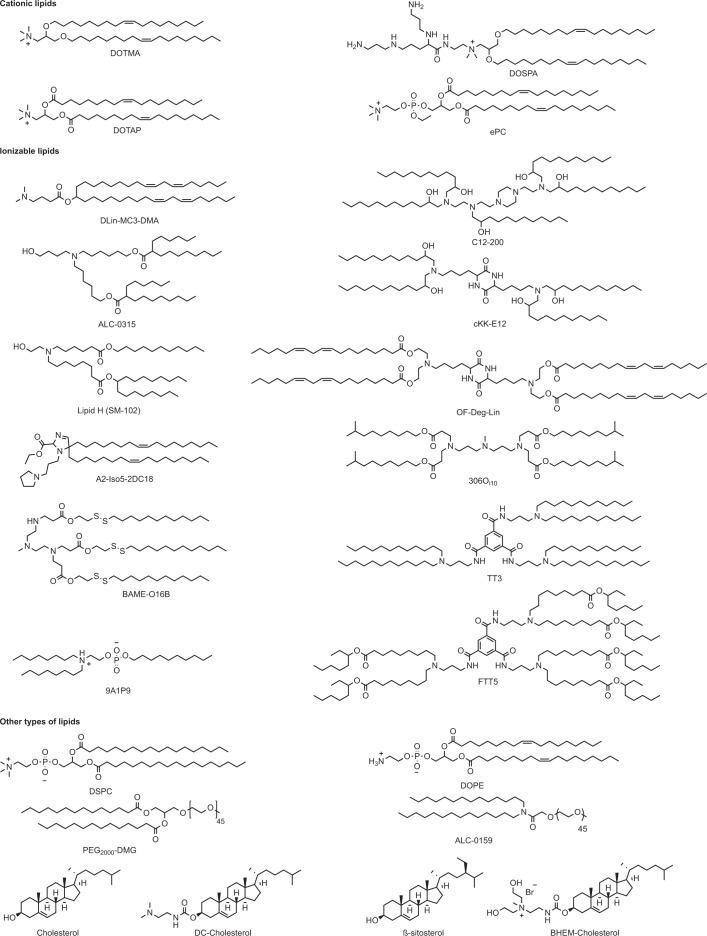
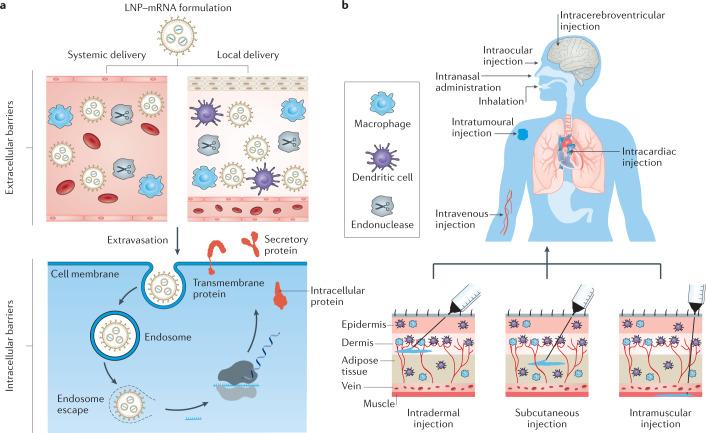
Messenger RNA (mRNA) has emerged as a new category of therapeutic agent to prevent and treat various diseases. To function in vivo, mRNA requires safe, effective and stable delivery systems that protect the nucleic acid from degradation and that allow cellular uptake and mRNA release. Lipid nanoparticles have successfully entered the clinic for the delivery of mRNA; in particular, lipid nanoparticle-mRNA vaccines are now in clinical use against coronavirus disease 2019 (COVID-19), which marks a milestone for mRNA therapeutics. In this Review, we discuss the design of lipid nanoparticles for mRNA delivery and examine physiological barriers and possible administration routes for lipid nanoparticle-mRNA systems. We then consider key points for the clinical translation of lipid nanoparticle-mRNA formulations, including good manufacturing practice, stability, storage and safety, and highlight preclinical and clinical studies of lipid nanoparticle-mRNA therapeutics for infectious diseases, cancer and genetic disorders. Finally, we give an outlook to future possibilities and remaining challenges for this promising technology.
信使核糖核酸(mRNA)已成为一类用于预防和治疗各种疾病的新型治疗剂。为了在体内发挥作用,mRNA需要安全、有效且稳定的递送系统,该系统可保护核酸不被降解,并允许细胞摄取和mRNA释放。脂质纳米颗粒已成功进入临床用于mRNA的递送;特别是,脂质纳米颗粒-mRNA疫苗目前正在临床上用于对抗2019冠状病毒病(COVID-19),这标志着mRNA治疗学的一个里程碑。在本综述中,我们讨论了用于mRNA递送的脂质纳米颗粒的设计,并研究了脂质纳米颗粒-mRNA系统的生理屏障和可能的给药途径。然后,我们考虑脂质纳米颗粒-mRNA制剂临床转化的关键点,包括良好生产规范、稳定性、储存和安全性,并重点介绍脂质纳米颗粒-mRNA治疗传染病、癌症和遗传疾病的临床前和临床研究。最后,我们展望了这项有前途的技术未来的可能性和 remaining challenges(原文有误,可能是remaining challenges,即“剩余挑战”) 。


 Zotero 插件