
活性氧在干细胞中的生理信号功能:从果蝇到人类
Physiological Signaling Functions of Reactive Oxygen Species in Stem Cells: From Flies to Man.
作者信息
Sinenko Sergey A, Starkova Tatiana Yu, Kuzmin Andrey A, Tomilin Alexey N
机构信息
Institute of Cytology, Russian Academy of Sciences, St. Petersburg, Russia.
出版信息
Front Cell Dev Biol. 2021 Aug 6;9:714370. doi: 10.3389/fcell.2021.714370. eCollection 2021.
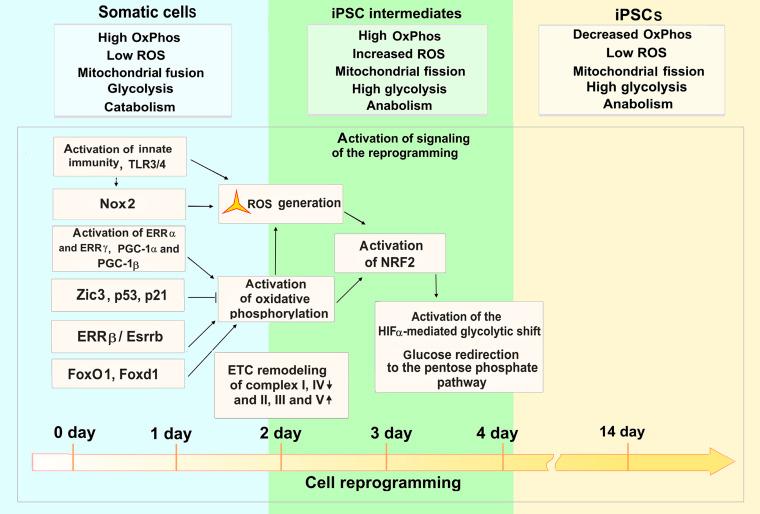
Reactive oxygen species (ROS), superoxide anion and hydrogen peroxide, are generated as byproducts of oxidative phosphorylation in the mitochondria or via cell signaling-induced NADPH oxidases in the cytosol. In the recent two decades, a plethora of studies established that elevated ROS levels generated by oxidative eustress are crucial physiological mediators of many cellular and developmental processes. In this review, we discuss the mechanisms of ROS generation and regulation, current understanding of ROS functions in the maintenance of adult and embryonic stem cells, as well as in the process of cell reprogramming to a pluripotent state. Recently discovered cell-non-autonomous ROS functions mediated by growth factors are crucial for controlling cell differentiation and cellular immune response in . Importantly, many physiological functions of ROS discovered in may allow for deciphering and understanding analogous processes in human, which could potentially lead to the development of novel therapeutic approaches in ROS-associated diseases treatment.
活性氧(ROS),即超氧阴离子和过氧化氢,是线粒体中氧化磷酸化的副产物,或通过细胞信号诱导的胞质溶胶中的NADPH氧化酶产生。在最近二十年中,大量研究表明,氧化应激产生的ROS水平升高是许多细胞和发育过程的关键生理介质。在这篇综述中,我们讨论了ROS的产生和调节机制,目前对ROS在维持成体和胚胎干细胞以及细胞重编程为多能状态过程中的功能的理解。最近发现的由生长因子介导的细胞非自主ROS功能对于控制细胞分化和细胞免疫反应至关重要。重要的是,在[此处原文缺失具体内容]中发现的ROS的许多生理功能可能有助于解读和理解人类中的类似过程,这可能潜在地导致开发与ROS相关疾病治疗的新方法。


 Zotero 插件