
FasL刺激对IDG-SW3骨细胞中硬化蛋白表达和成骨特性的影响。
Impact of FasL Stimulation on Sclerostin Expression and Osteogenic Profile in IDG-SW3 Osteocytes.
作者信息
Kratochvilova Adela, Ramesova Alice, Vesela Barbora, Svandova Eva, Lesot Herve, Gruber Reinhard, Matalova Eva
机构信息
Laboratory of Odontogenesis and Osteogenesis, Institute of Animal Physiology and Genetics, Academy of Sciences, 60200 Brno, Czech Republic.
Department of Oral Biology, University Clinic of Dentistry, Medical University Vienna, Sensengasse 2a, 1090 Vienna, Austria.
出版信息
Biology (Basel). 2021 Aug 7;10(8):757. doi: 10.3390/biology10080757.
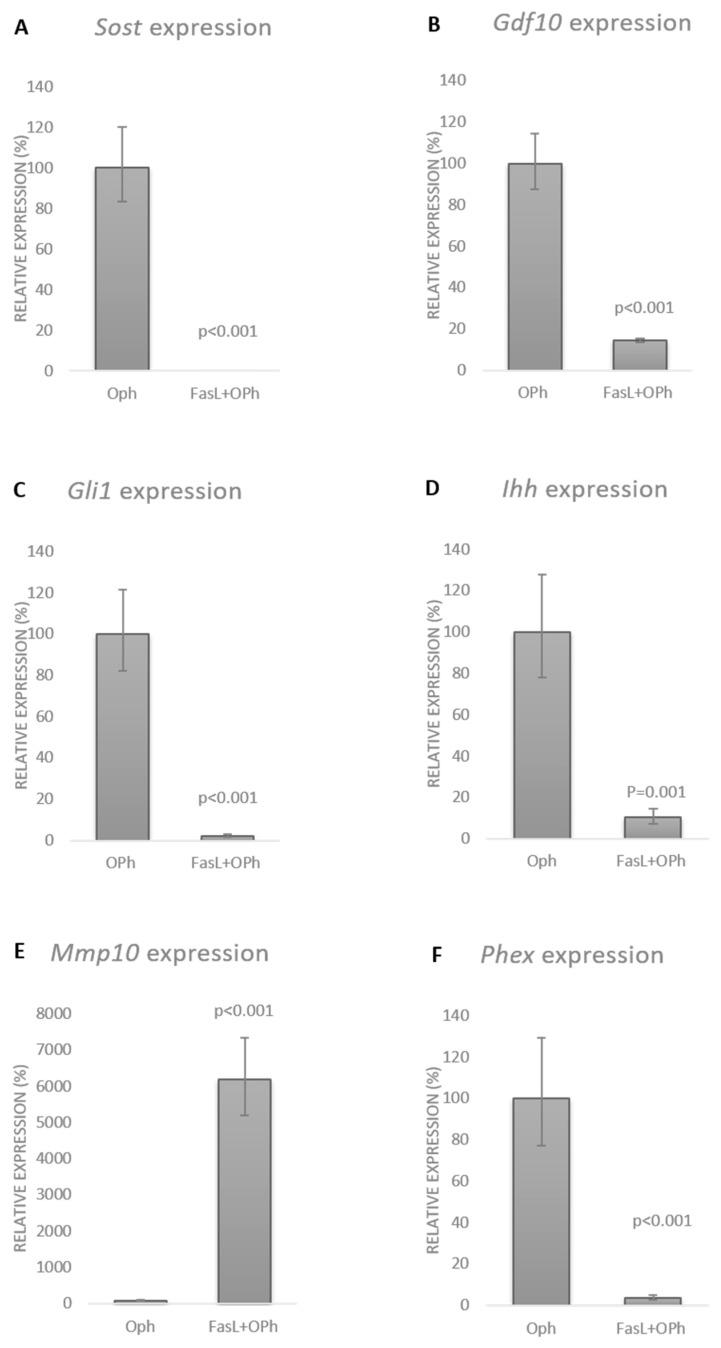
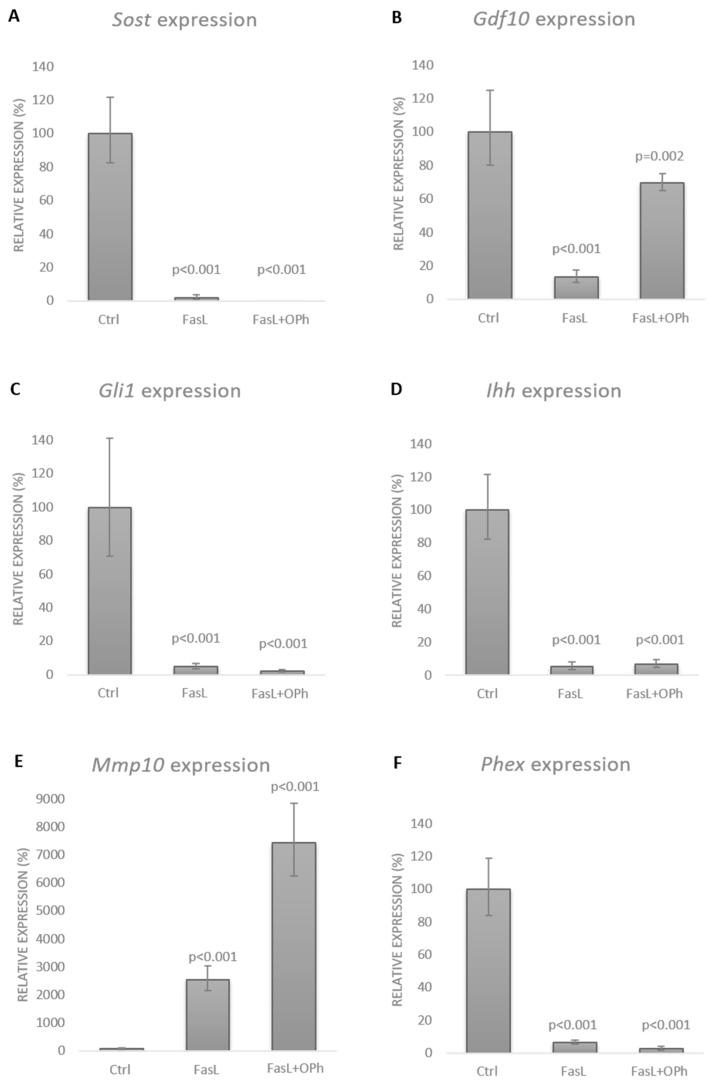
The Fas ligand (FasL) is known from programmed cell death, the immune system, and recently also from bone homeostasis. As such, Fas signalling is a potential target of anti-osteoporotic treatment based on the induction of osteoclastic cell death. Less attention has been paid to osteocytes, although they represent the majority of cells within the mature bone and are the key regulators. To determine the impact of FasL stimulation on osteocytes, differentiated IDG-SW3 cells were challenged by FasL, and their osteogenic expression profiles were evaluated by a pre-designed PCR array. Notably, the most downregulated gene was the one for sclerostin, which is the major marker of osteocytes and a negative regulator of bone formation. FasL stimulation also led to significant changes (over 10-fold) in the expression of other osteogenic markers: Gdf10, Gli1, Ihh, Mmp10, and Phex. To determine whether these alterations involved caspase-dependent or caspase-independent mechanisms, the IDG-SW3 cells were stimulated by FasL with and without a caspase inhibitor: Q-VD-OPh. The alterations were also detected in the samples treated by FasL along with Q-VD-OPh, pointing to the caspase-independent impact of FasL stimulation. These results contribute to an understanding of the recently emerging pleiotropic effects of Fas/FasL signalling and specify its functions in bone cells.
Fas配体(FasL)在程序性细胞死亡、免疫系统中广为人知,最近在骨稳态方面也有所涉及。因此,基于诱导破骨细胞死亡,Fas信号传导是抗骨质疏松治疗的一个潜在靶点。尽管骨细胞占成熟骨中细胞的大多数且是关键调节因子,但对其关注较少。为了确定FasL刺激对骨细胞的影响,用FasL刺激分化的IDG-SW3细胞,并通过预先设计的PCR阵列评估其成骨表达谱。值得注意的是,下调最明显的基因是骨硬化蛋白基因,它是骨细胞的主要标志物和骨形成的负调节因子。FasL刺激还导致其他成骨标志物的表达发生显著变化(超过10倍):生长分化因子10(Gdf10)、Gli1、印度刺猬蛋白(Ihh)、基质金属蛋白酶10(Mmp10)和磷酸盐调节内肽酶同源物X连锁(Phex)。为了确定这些改变是否涉及半胱天冬酶依赖性或非依赖性机制,在有和没有半胱天冬酶抑制剂Q-VD-OPh的情况下,用FasL刺激IDG-SW3细胞。在FasL与Q-VD-OPh共同处理的样本中也检测到了这些改变,表明FasL刺激具有不依赖半胱天冬酶的作用。这些结果有助于理解Fas/FasL信号传导最近出现的多效性作用,并明确其在骨细胞中的功能。


 Zotero 插件