
通过酵母相互作用来理解葡萄酒。
Understanding Wine through Yeast Interactions.
作者信息
Zilelidou Evangelia A, Nisiotou Aspasia
机构信息
Institute of Technology of Agricultural Products, Hellenic Agricultural Organization "Demeter", Sofokli Venizelou 1, GR-14123 Lykovryssi, Athens, Greece.
出版信息
Microorganisms. 2021 Jul 29;9(8):1620. doi: 10.3390/microorganisms9081620.
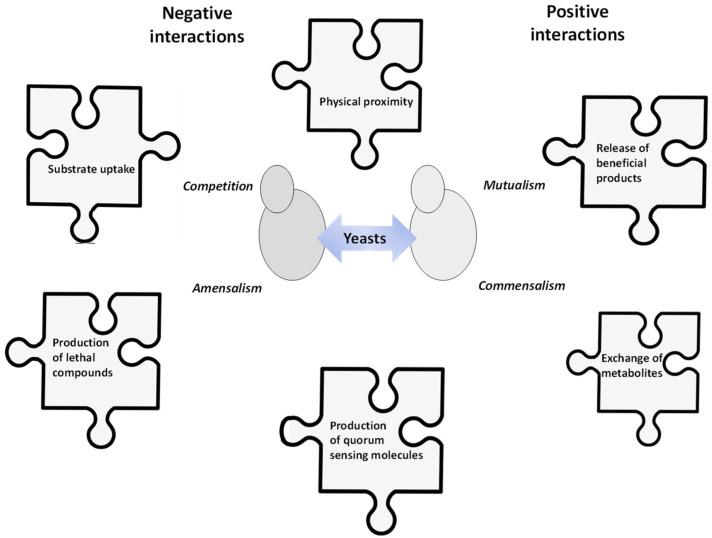
Wine is a product of microbial activities and microbe-microbe interactions. Yeasts are the principal microorganisms responsible for the evolution and fulfillment of alcoholic fermentation. Several species and strains coexist and interact with their environment and with each other during the fermentation course. Yeast-yeast interactions occur even from the early stages of fermentation, determining yeast community structure and dynamics during the process. Different types of microbial interactions (e.g., mutualism and commensalism or competition and amensalism) may exert positive or negative effects, respectively, on yeast populations. Interactions are intimately linked to yeast metabolic activities that influence the wine analytical profile and shape the wine character. In this context, much attention has been given during the last years to the interactions between (SC) and non- (NS) yeast species with respect to their metabolic contribution to wine quality. Yet, there is still a significant lack of knowledge on the interaction mechanisms modulating yeast behavior during mixed culture fermentation, while much less is known about the interactions between the various NS species or between SC and non- (SNC) yeasts. There is still much to learn about their metabolic footprints and the genetic mechanisms that alter yeast community equilibrium in favor of one species or another. Gaining deeper insights on yeast interactions in the grape-wine ecosystem sets the grounds for understanding the rules underlying the function of the wine microbial system and provides means to better control and improve oenological practices.
葡萄酒是微生物活动以及微生物间相互作用的产物。酵母是酒精发酵过程进展和完成的主要微生物。在发酵过程中,多种酵母菌种和菌株共存,并与它们的环境以及彼此相互作用。酵母间的相互作用甚至在发酵早期就已发生,决定了该过程中酵母群落的结构和动态变化。不同类型的微生物相互作用(例如互利共生、偏利共生或竞争、偏害共生)可能分别对酵母群体产生正面或负面影响。这些相互作用与酵母的代谢活动密切相关,而酵母代谢活动会影响葡萄酒的分析指标并塑造葡萄酒的特性。在这种背景下,近年来人们十分关注酿酒酵母(SC)与非酿酒酵母(NS)之间的相互作用,以及它们对葡萄酒品质的代谢贡献。然而,对于混合培养发酵过程中调节酵母行为的相互作用机制,我们仍知之甚少,对于各种非酿酒酵母之间或酿酒酵母与非酿酒酵母(SNC)之间的相互作用更是了解不足。关于它们的代谢足迹以及改变酵母群落平衡以利于某一物种或另一物种的遗传机制,仍有许多有待探索之处。深入了解葡萄-葡萄酒生态系统中的酵母相互作用,为理解葡萄酒微生物系统功能的潜在规律奠定了基础,并提供了更好地控制和改进酿酒工艺的方法。
 Zotero 插件