
提高 γδ T 细胞免疫疗法抗肿瘤作用的策略及其临床应用。
Strategies to Improve the Antitumor Effect of γδ T Cell Immunotherapy for Clinical Application.
机构信息
Department of Urology, Kyoto Prefectural University of Medicine, Kyoto 602-8566, Japan.
Department of Urology, Japanese Red Cross Kyoto Daini Hospital, Kyoto 602-8026, Japan.
出版信息
Int J Mol Sci. 2021 Aug 18;22(16):8910. doi: 10.3390/ijms22168910.
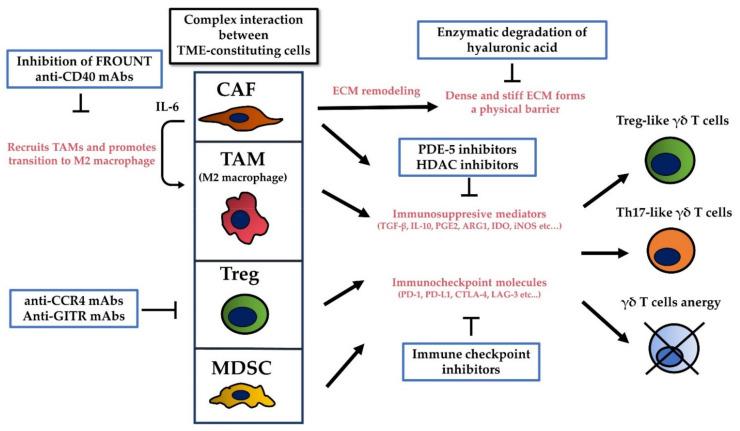
Human γδ T cells show potent cytotoxicity against various types of cancer cells in a major histocompatibility complex unrestricted manner. Phosphoantigens and nitrogen-containing bisphosphonates (N-bis) stimulate γδ T cells via interaction between the γδ T cell receptor (TCR) and butyrophilin subfamily 3 member A1 (BTN3A1) expressed on target cells. γδ T cell immunotherapy is classified as either in vivo or ex vivo according to the method of activation. Immunotherapy with activated γδ T cells is well tolerated; however, the clinical benefits are unsatisfactory. Therefore, the antitumor effects need to be increased. Administration of γδ T cells into local cavities might improve antitumor effects by increasing the effector-to-target cell ratio. Some anticancer and molecularly targeted agents increase the cytotoxicity of γδ T cells via mechanisms involving natural killer group 2 member D (NKG2D)-mediated recognition of target cells. Both the tumor microenvironment and cancer stem cells exert immunosuppressive effects via mechanisms that include inhibitory immune checkpoint molecules. Therefore, co-immunotherapy with γδ T cells plus immune checkpoint inhibitors is a strategy that may improve cytotoxicity. The use of a bispecific antibody and chimeric antigen receptor might be effective to overcome current therapeutic limitations. Such strategies should be tested in a clinical research setting.
人 γδ T 细胞以主要组织相容性复合体不受限制的方式表现出针对各种类型癌细胞的强大细胞毒性。磷酸抗原和含氮双膦酸盐(N-bis)通过靶细胞上表达的 γδ T 细胞受体(TCR)与 BTN3A1 之间的相互作用刺激 γδ T 细胞。根据激活方法,γδ T 细胞免疫疗法分为体内或体外。用激活的 γδ T 细胞进行免疫疗法耐受性良好;然而,临床获益并不令人满意。因此,需要增加抗肿瘤作用。通过增加效应细胞与靶细胞的比例,将 γδ T 细胞输注到局部腔室中可能会改善抗肿瘤作用。一些抗癌和分子靶向药物通过涉及自然杀伤组 2 成员 D(NKG2D)介导的靶细胞识别的机制增加 γδ T 细胞的细胞毒性。肿瘤微环境和癌症干细胞通过包括抑制性免疫检查点分子在内的机制发挥免疫抑制作用。因此,γδ T 细胞加免疫检查点抑制剂的联合免疫疗法是一种可能提高细胞毒性的策略。使用双特异性抗体和嵌合抗原受体可能是克服当前治疗局限性的有效方法。这些策略应在临床研究环境中进行测试。


 Zotero 插件