
胃肠道肿瘤的靶向免疫治疗:从分子机制到临床意义
Targeted Immunotherapies in Gastrointestinal Cancer: From Molecular Mechanisms to Implications.
机构信息
Ministry of Education (MOE), Key Laboratory of Tumor Molecular Biology and Key Laboratory of Functional Protein Research of Guangdong Higher Education Institutes, Institute of Life and Health Engineering, Jinan University, Guangzhou, China.
出版信息
Front Immunol. 2021 Aug 10;12:705999. doi: 10.3389/fimmu.2021.705999. eCollection 2021.
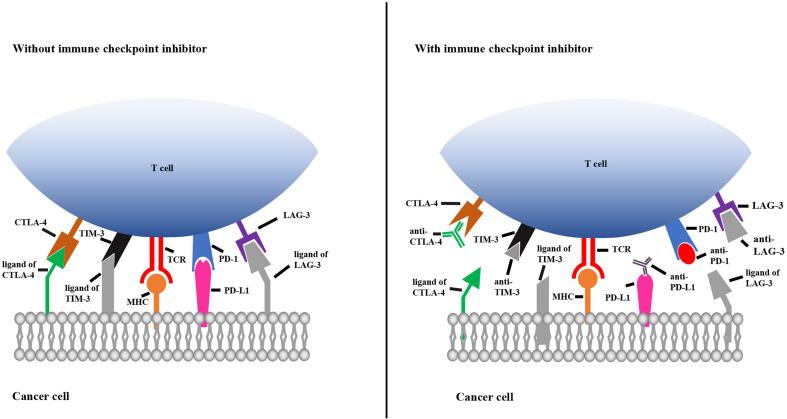
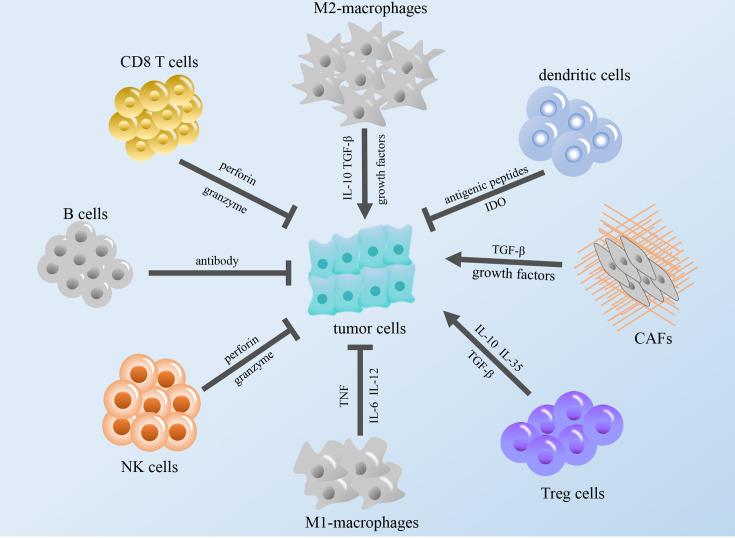
Gastrointestinal cancer is a leading cause of cancer-related mortality and remains a major challenge for cancer treatment. Despite the combined administration of modern surgical techniques and chemoradiotherapy (CRT), the overall 5-year survival rate of gastrointestinal cancer patients in advanced stage disease is less than 15%, due to rapid disease progression, metastasis, and CRT resistance. A better understanding of the mechanisms underlying cancer progression and optimized treatment strategies for gastrointestinal cancer are urgently needed. With increasing evidence highlighting the protective role of immune responses in cancer initiation and progression, immunotherapy has become a hot research topic in the integrative management of gastrointestinal cancer. Here, an overview of the molecular understanding of colorectal cancer, esophageal cancer and gastric cancer is provided. Subsequently, recently developed immunotherapy strategies, including immune checkpoint inhibitors, chimeric antigen receptor T cell therapies, tumor vaccines and therapies targeting other immune cells, have been described. Finally, the underlying mechanisms, fundamental research and clinical trials of each agent are discussed. Overall, this review summarizes recent advances and future directions for immunotherapy for patients with gastrointestinal malignancies.
胃肠道癌症是癌症相关死亡的主要原因,仍然是癌症治疗的主要挑战。尽管结合了现代手术技术和放化疗(CRT),但晚期胃肠道癌症患者的总体 5 年生存率仍低于 15%,这是由于疾病快速进展、转移和 CRT 耐药所致。因此,迫切需要更好地了解癌症进展的机制,并为胃肠道癌症制定优化的治疗策略。越来越多的证据强调了免疫反应在癌症发生和进展中的保护作用,免疫疗法已成为胃肠道癌症综合管理中的热门研究课题。在这里,我们对结直肠癌、食管癌和胃癌的分子机制进行了概述。随后,描述了最近开发的免疫治疗策略,包括免疫检查点抑制剂、嵌合抗原受体 T 细胞疗法、肿瘤疫苗和针对其他免疫细胞的疗法。最后,讨论了每种药物的潜在机制、基础研究和临床试验。总的来说,本综述总结了胃肠道恶性肿瘤免疫治疗的最新进展和未来方向。
 Zotero 插件