
EZH2 抑制剂 tazemetostat 上调 B 细胞淋巴瘤中 CCL17/TARC 的表达,并增强 T 细胞募集。
The EZH2 inhibitor tazemetostat upregulates the expression of CCL17/TARC in B-cell lymphoma and enhances T-cell recruitment.
机构信息
Department of Hematology/Oncology, Graduate School of Medicine, Kyoto University, Kyoto, Japan.
出版信息
Cancer Sci. 2021 Nov;112(11):4604-4616. doi: 10.1111/cas.15122. Epub 2021 Sep 9.
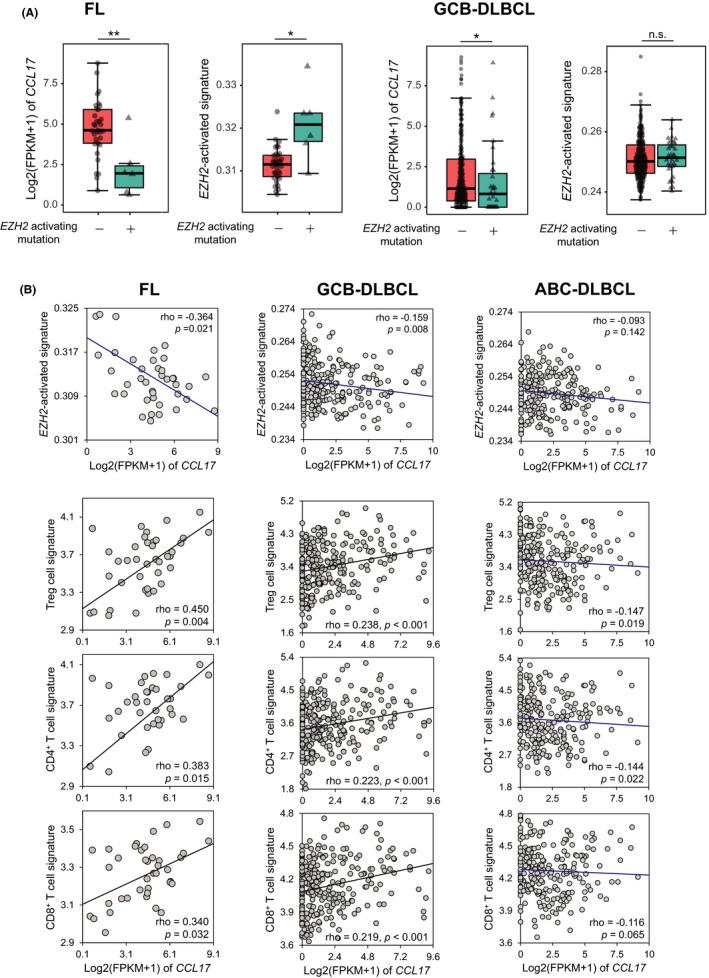
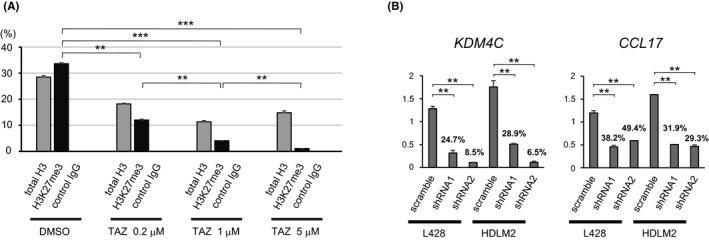
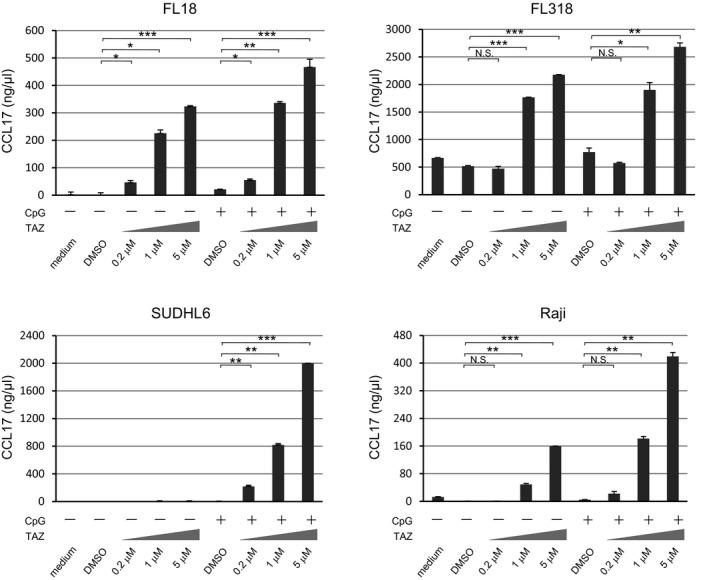
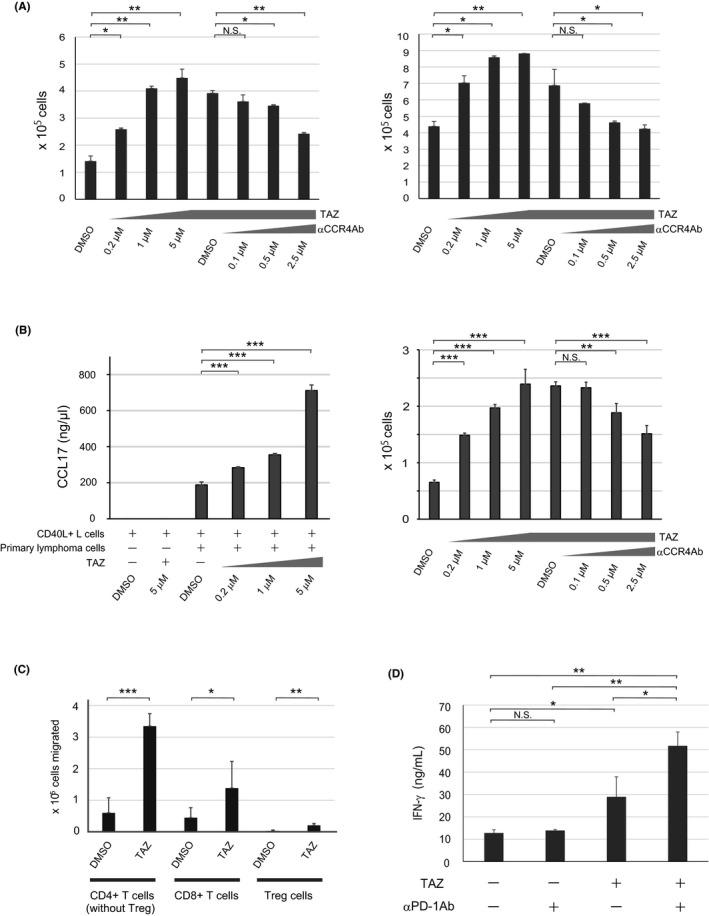
An inhibitor of the histone methyltransferase enhancer of zeste homologue 2 (EZH2), tazemetostat, has been developed for the treatment of B-cell lymphoma, but its mechanisms of action are not fully elucidated. We screened for genes targeted by tazemetostat in eleven B-cell lymphoma cell lines and found that tazemetostat significantly increased the expression of chemokine (C-C motif) ligand 17 (CCL17)/thymus- and activation-regulated chemokine (TARC) in all, which codes for a chemokine that is a hallmark of Hodgkin/Reed-Sternberg (H/RS) cells in Hodgkin lymphoma. Notably, gene set enrichment analysis demonstrated a positive correlation between the genes upregulated by tazemetostat in five follicular lymphoma (FL) cell lines and those reported to be overexpressed in H/RS cells. The CCL17 promoter region was enriched in repressive histone modification H3K27me3, and tazemetostat induced H3K27 demethylation and activated gene transcription. CCL17 protein secretion was also induced by EZH2 inhibition, which was further enhanced by concurrent CpG stimulation. In vitro transwell migration assay demonstrated that CCL17 produced by tazemetostat-treated B cells enhanced the recruitment of T cells, which had the potential to exert antilymphoma response. Analysis of publicly available human lymphoma databases showed that CCL17 gene expression was inversely correlated with the EZH2 activation signature and significantly paralleled the CD4 and CD8 T-cell-rich signature in FL and germinal center B-cell-like diffuse large B-cell lymphoma. Our findings indicate that tazemetostat can potentially activate antilymphoma response by upregulating CCL17 expression in B-cell lymphoma cells and promote T-cell recruitment, which provides a rationale for its combination with immunotherapy.
一种组蛋白甲基转移酶增强子的锌指蛋白 2(EZH2)抑制剂,他泽司他,已被开发用于治疗 B 细胞淋巴瘤,但它的作用机制尚未完全阐明。我们在 11 种 B 细胞淋巴瘤细胞系中筛选了他泽司他靶向的基因,发现他泽司他显著增加了所有细胞中趋化因子(C-C 基序)配体 17(CCL17)/胸腺激活和调节趋化因子(TARC)的表达,后者编码一种趋化因子,是霍奇金淋巴瘤中霍奇金/里德-斯特恩伯格(H/RS)细胞的标志。值得注意的是,基因集富集分析表明,他泽司他在 5 种滤泡性淋巴瘤(FL)细胞系中上调的基因与报告中 H/RS 细胞过度表达的基因之间存在正相关。CCL17 启动子区域富含抑制性组蛋白修饰 H3K27me3,他泽司他诱导 H3K27 去甲基化并激活基因转录。CCL17 蛋白分泌也被 EZH2 抑制所诱导,而同时的 CpG 刺激进一步增强了这种诱导作用。体外 Transwell 迁移实验表明,他泽司他处理的 B 细胞产生的 CCL17 增强了 T 细胞的募集,这有可能发挥抗淋巴瘤反应。对公开可用的人类淋巴瘤数据库的分析表明,CCL17 基因表达与 EZH2 激活标志呈负相关,并且在 FL 和生发中心 B 细胞样弥漫性大 B 细胞淋巴瘤中与 CD4 和 CD8 T 细胞丰富标志显著平行。我们的研究结果表明,他泽司他通过上调 B 细胞淋巴瘤细胞中 CCL17 的表达,有可能激活抗淋巴瘤反应,并促进 T 细胞募集,这为其与免疫疗法联合提供了依据。

 Zotero 插件