
轻度 SARS-CoV-2 感染与再感染无关,并提供持久的刺突、核衣壳和病毒中和抗体。
Mild SARS-CoV-2 Illness Is Not Associated with Reinfections and Provides Persistent Spike, Nucleocapsid, and Virus-Neutralizing Antibodies.
机构信息
Division of Allergy and Clinical Immunology, Department of Internal Medicine, University of Michigan, Ann Arbor, Michigan, USA.
Mary H. Weiser Food Allergy Center, University of Michigan, Ann Arbor, Michigan, USA.
出版信息
Microbiol Spectr. 2021 Oct 31;9(2):e0008721. doi: 10.1128/Spectrum.00087-21. Epub 2021 Sep 1.
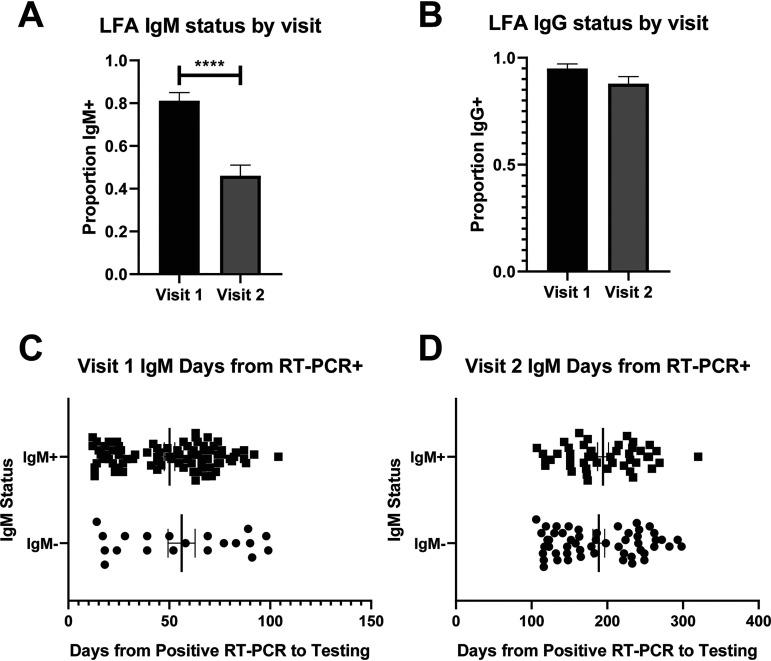
Uncertainty exists whether mild COVID-19 confers immunity to reinfection. Questions also remain regarding the persistence of antibodies against SARS-CoV-2 after mild infection. We prospectively followed at-risk individuals with and without SARS-CoV-2 for reinfection and monitored the spike and nucleocapsid antibodies. This prospective cohort study was conducted over two visits, 3 to 6 months apart, between May 2020 and February 2021. Adults with and without COVID-19, verified by FDA EUA-approved SARS-CoV-2 RT-PCR assays, were screened for spike and nucleocapsid antibody responses using FDA EUA-approved immunoassays and for pseudoviral neutralization activity. The subjects were monitored for symptoms, exposure to COVID-19, COVID-19 testing, seroconversion, reinfection, and vaccination. A total of 653 subjects enrolled; 129 (20%) had a history of COVID-19 verified by RT-PCR at enrollment. Most had mild disease, with only three requiring hospitalization. No initially seropositive subjects experienced a subsequent COVID-19 infection during the follow-up versus 15 infections among initially seronegative subjects (infection rates of 0.00 versus 2.05 per 10,000 days at risk [ = 0.0485]). In all, 90% of SARS-CoV-2-positive subjects produced spike and nucleocapsid responses, and all but one of these had persistent antibody levels at follow-up. Pseudoviral neutralization activity was widespread among participants, did not decrease over time, and correlated with clinical antibody assays. Reinfection with SARS-CoV-2 was not observed among individuals with mild clinical COVID-19, while infections continued in a group without known prior infection. Spike and nucleocapsid COVID-19 antibodies were associated with almost all infections and persisted at stable levels for the study duration. This article demonstrates that people who have mild COVID-19 illnesses and produce antibodies are protected from reinfection for up to 6 months afterward. The antibodies that people produce in this situation are stable for up to 6 months as well. Clinical antibody assays correlate well with evidence of antibody-related viral neutralization activity.
存在轻度 COVID-19 是否能提供再次感染免疫力的不确定性。轻度感染后针对 SARS-CoV-2 的抗体持续存在的问题也仍然存在。我们前瞻性地随访了有和没有 SARS-CoV-2 的高危个体,以了解再次感染情况,并监测了刺突和核衣壳抗体。这项前瞻性队列研究在 2020 年 5 月至 2021 年 2 月期间进行了两次访问,间隔 3 至 6 个月。通过 FDA EUA 批准的 SARS-CoV-2 RT-PCR 检测,对有和没有 COVID-19 的成年人进行了刺突和核衣壳抗体反应的筛查,并使用 FDA EUA 批准的免疫分析进行了伪病毒中和活性的筛查。对这些受试者进行了症状、接触 COVID-19、COVID-19 检测、血清转换、再次感染和疫苗接种的监测。共有 653 名受试者入组;129 名(20%)在入组时通过 RT-PCR 确诊 COVID-19。大多数人病情较轻,只有 3 人需要住院治疗。在随访期间,没有最初血清阳性的受试者发生后续 COVID-19 感染,而在最初血清阴性的受试者中则有 15 例感染(感染率分别为 0.00 和 2.05/10,000 天发病风险[=0.0485])。所有 SARS-CoV-2 阳性受试者均产生了刺突和核衣壳反应,其中除 1 例外,所有受试者在随访时均有持续的抗体水平。伪病毒中和活性在参与者中广泛存在,且随时间推移无下降,并与临床抗体检测相关。在有轻度临床 COVID-19 的个体中,未观察到 SARS-CoV-2 的再次感染,而在一组无已知既往感染的个体中,感染仍在继续。刺突和核衣壳 COVID-19 抗体与几乎所有感染都有关联,并且在研究期间持续稳定水平。本文表明,患有轻度 COVID-19 疾病并产生抗体的人在感染后长达 6 个月内可免受再次感染。在这种情况下产生的抗体在 6 个月内也保持稳定。临床抗体检测与抗体相关的病毒中和活性的证据密切相关。


 Zotero 插件