
基于网络药理学和分子对接技术探索中药(汤剂)治疗中风后抑郁症的作用机制
Exploring the Mechanism of Action of Herbal Medicine ( Decoction) for Poststroke Depression Based on Network Pharmacology and Molecular Docking.
作者信息
Ding Zhicong, Xu Fangfang, Sun Qidi, Li Bin, Liang Nengxing, Chen Junwei, Yu Shangzhen
机构信息
Jinan University, Guangzhou 510632, China.
Yangzhou University, Yangzhou 225009, China.
出版信息
Evid Based Complement Alternat Med. 2021 Aug 21;2021:2126967. doi: 10.1155/2021/2126967. eCollection 2021.
BACKGROUND
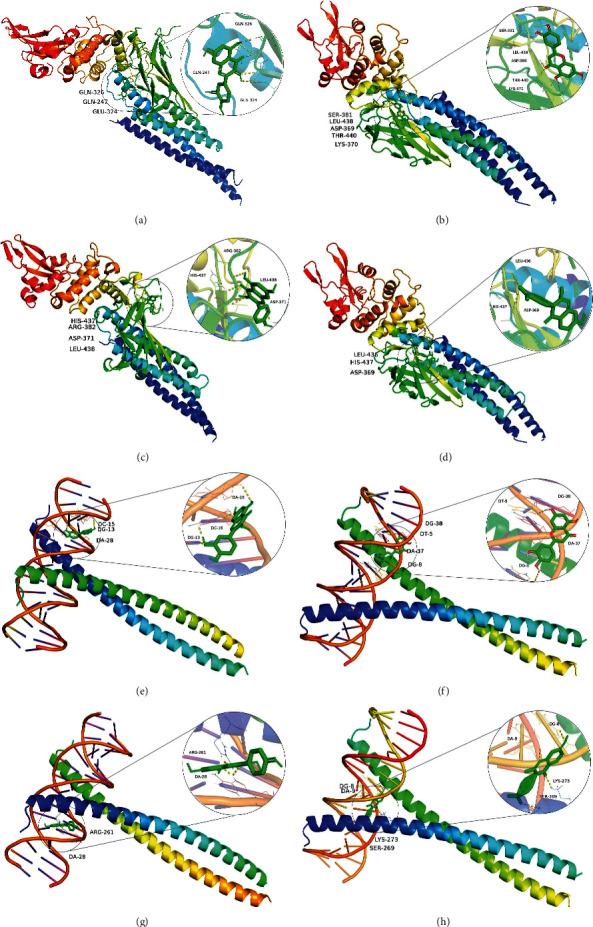
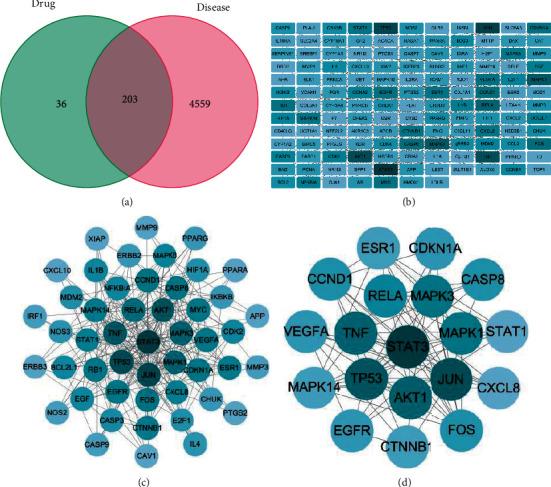
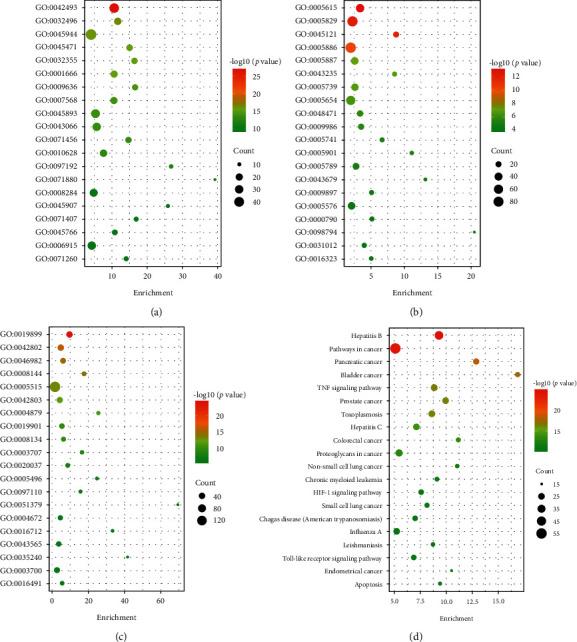
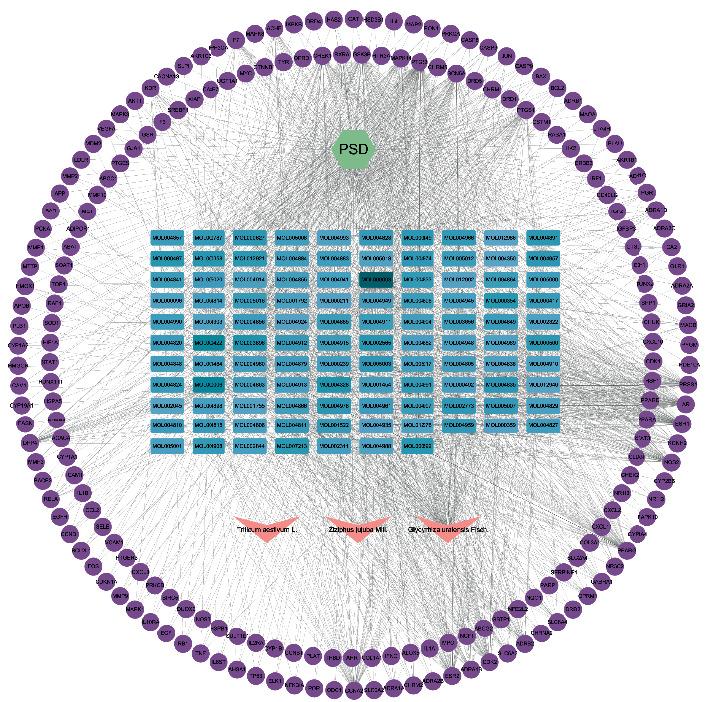
Poststroke depression (PSD) is the most common and serious neuropsychiatric complication occurring after cerebrovascular accidents, seriously endangering human health while also imposing a heavy burden on society. Nevertheless, it is difficult to control disease progression. Decoction (GMDZD) is effective for PSD, but its mechanism of action in PSD is unknown. In this study, we explored the mechanism of action of GMDZD in PSD treatment using network pharmacology and molecular docking. . We obtained the active components of all drugs and their targets from the public database TCMSP and published articles. Then, we collected PSD-related targets from the GeneCards and OMIM databases. Cytoscape 3.8.2 was applied to construct PPI and composite target disease networks. In parallel, the DAVID database was used to perform GO and KEGG enrichment analyses to determine the biological processes enriched in the treatment-related drugs in vivo. Finally, molecular docking was used to verify the association between the main active ingredients and their targets.
RESULTS
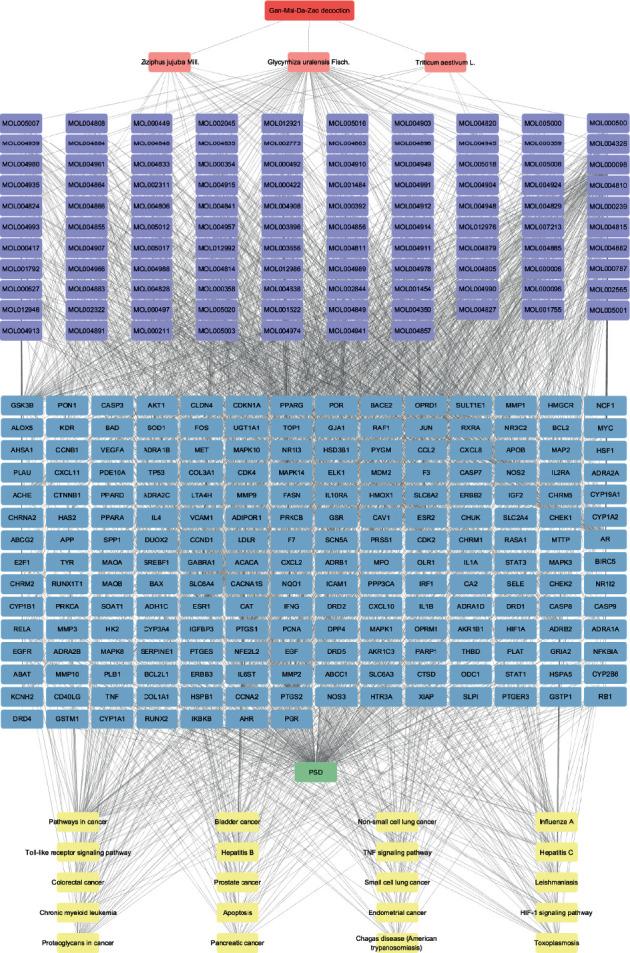
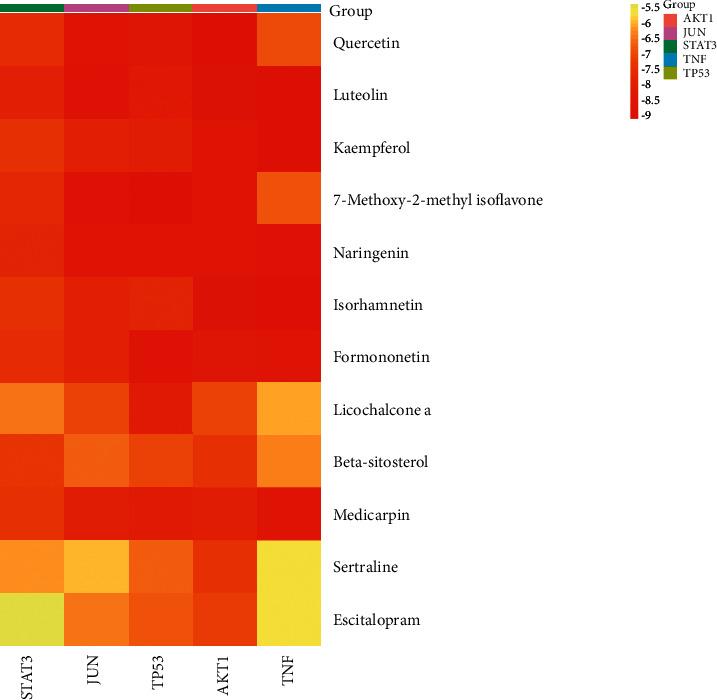
The network pharmacological analysis of GMDZD in PSD revealed 107 active ingredients with important biological effects, including quercetin, luteolin, kaempferol, naringenin, and isorhamnetin. In total, 203 potential targets for the treatment of this disease were screened, including STAT3, JUN, TNF, TPT53, AKT1, and EGFR. These drugs are widely enriched in a series of signaling pathways, such as TNF, HIF-1, and toll-like receptor. Moreover, molecular docking analysis showed that the core active components were tightly bound to their core targets, further confirming their anti-PSD effects.
CONCLUSION
This prospective study was based on the integrated analysis of large data using network pharmacology technology to explore the feasibility of GMDZD for PSD treatment that was successfully validated by molecular docking. It reflects the multicomponent and multitarget characteristics of Chinese medicine and, more importantly, brings hope for the clinical treatment of PSD.
背景
脑卒中后抑郁(PSD)是脑血管意外后最常见且严重的神经精神并发症,严重危害人类健康,同时也给社会带来沉重负担。然而,控制疾病进展较为困难。解郁逐瘀汤(GMDZD)对PSD有效,但其在PSD中的作用机制尚不清楚。在本研究中,我们运用网络药理学和分子对接技术探讨GMDZD治疗PSD的作用机制。我们从公共数据库TCMSP和已发表的文章中获取所有药物的活性成分及其靶点。然后,我们从GeneCards和OMIM数据库中收集PSD相关靶点。应用Cytoscape 3.8.2构建蛋白质-蛋白质相互作用(PPI)和复合靶点疾病网络。同时,使用DAVID数据库进行基因本体(GO)和京都基因与基因组百科全书(KEGG)富集分析,以确定体内治疗相关药物中富集的生物学过程。最后,使用分子对接来验证主要活性成分与其靶点之间的关联。
结果
GMDZD治疗PSD的网络药理学分析显示,有107种具有重要生物学效应的活性成分,包括槲皮素、木犀草素、山奈酚、柚皮素和异鼠李素。总共筛选出203个治疗该疾病的潜在靶点,包括信号转导和转录激活因子3(STAT3)、原癌基因蛋白c-Jun(JUN)、肿瘤坏死因子(TNF)、肿瘤蛋白p53(TPT53)、蛋白激酶B(AKT1)和表皮生长因子受体(EGFR)。这些药物广泛富集于一系列信号通路,如TNF、缺氧诱导因子-1(HIF-1)和Toll样受体。此外,分子对接分析表明核心活性成分与其核心靶点紧密结合,进一步证实了它们对PSD的治疗作用。
结论
本前瞻性研究基于网络药理学技术对大数据的综合分析,探讨GMDZD治疗PSD的可行性,并通过分子对接成功验证。它体现了中药的多成分、多靶点特点,更重要的是,为PSD的临床治疗带来了希望。

 Zotero 插件