
人为噪声对黑头山雀(Poecile atricapillus)通过雌鸟鸣声进行个体识别的影响。
The impact of anthropogenic noise on individual identification via female song in Black-capped chickadees (Poecile atricapillus).
机构信息
Department of Psychology, University of Alberta, Edmonton, AB, Canada.
University of Alberta, Neuroscience and Mental Health Institute, Edmonton, AB, Canada.
出版信息
Sci Rep. 2021 Sep 2;11(1):17530. doi: 10.1038/s41598-021-96504-3.
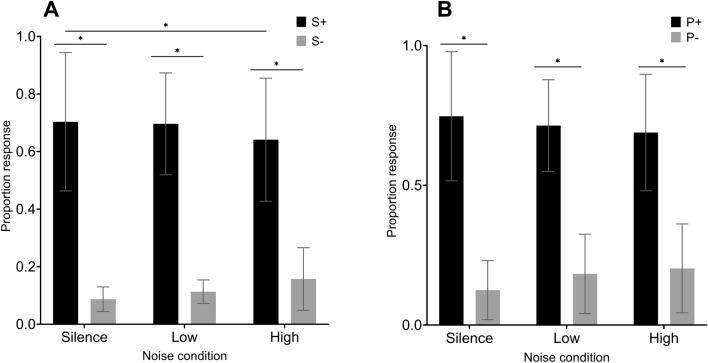
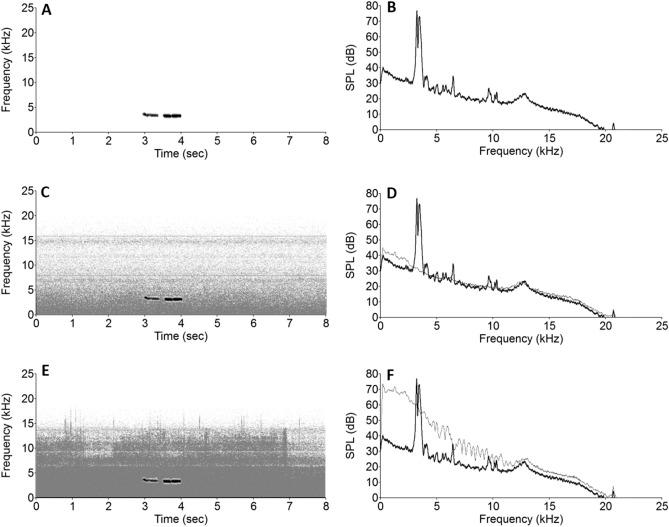
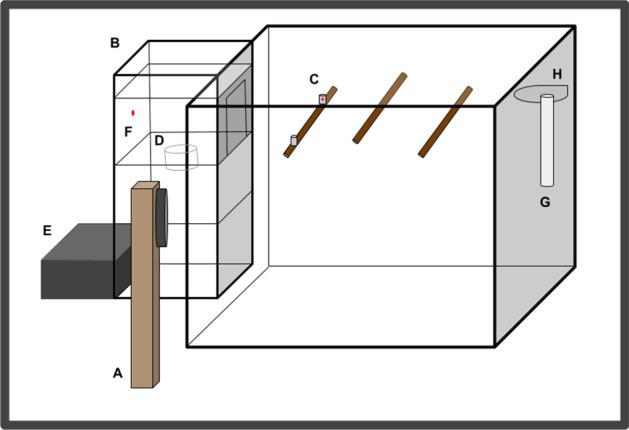
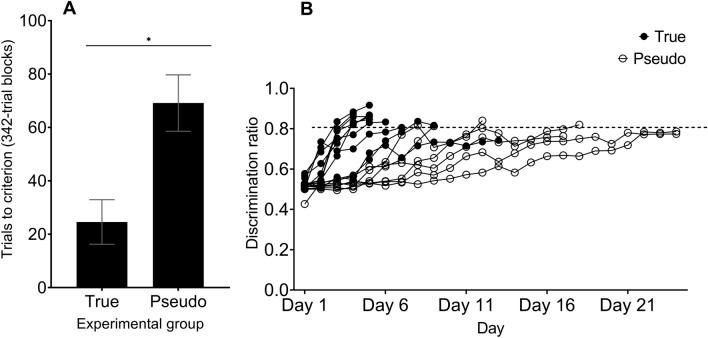
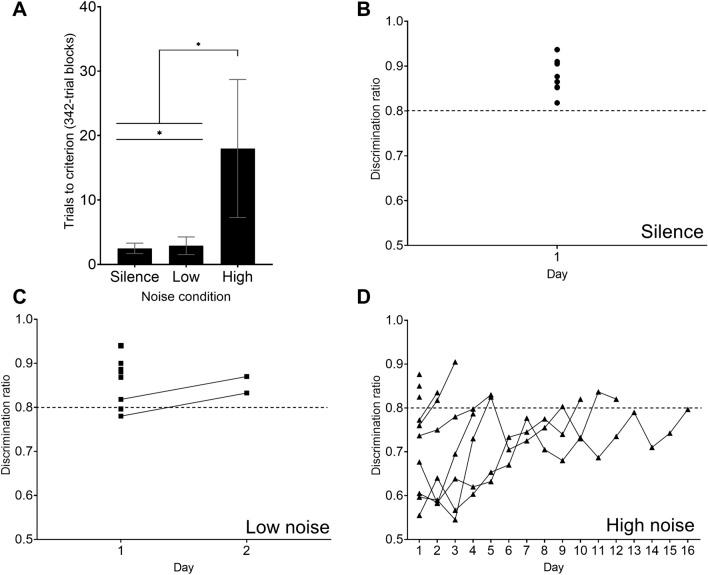
When anthropogenic noise occurs simultaneously with an acoustic signal or cue, it can be difficult for an animal to interpret the information encoded within vocalizations. However, limited research has focused on how anthropogenic noise affects the identification of acoustic communication signals. In songbirds, research has also shown that black-capped chickadees (Poecile atricapillus) will shift the pitch and change the frequency at which they sing in the presence of anthropogenic, and experimental noise. Black-capped chickadees produce several vocalizations; their fee-bee song is used for mate attraction and territorial defence, and contains information about dominance hierarchy and native geographic location. Previously, we demonstrated that black-capped chickadees can discriminate between individual female chickadees via their fee-bee songs. Here we used an operant discrimination go/no-go paradigm to discern whether the ability to discriminate between individual female chickadees by their song would be impacted by differing levels of anthropogenic noise. Following discrimination training, two levels of anthropogenic noise (low: 40 dB SPL; high: 75 dB SPL) were played with stimuli to determine how anthropogenic noise would impact discrimination. Results showed that even with low-level noise (40 dB SPL) performance decreased and high-level (75 dB SPL) noise was increasingly detrimental to discrimination. We learned that perception of fee-bee songs does change in the presence of anthropogenic noise such that birds take significantly longer to learn to discriminate between females, but birds were able to generalize responding after learning the discrimination. These results add to the growing literature underscoring the impact of human-made noise on avian wildlife, specifically the impact on perception of auditory signals.
当人为噪声与声音信号或提示同时出现时,动物可能难以解释声音信号中编码的信息。然而,很少有研究关注人为噪声如何影响对声音通信信号的识别。在鸣禽中,研究还表明,黑头山雀(Poecile atricapillus)在人为和实验性噪声存在的情况下,会改变其鸣叫的音调和频率。黑头山雀会发出几种叫声;它们的“fee-bee”歌用于求偶和领地防御,并包含有关支配等级和本地地理位置的信息。之前,我们已经证明,黑头山雀可以通过它们的“fee-bee”歌来区分不同的雌性山雀。在这里,我们使用操作性辨别“是/否”的范式来辨别,通过歌声来区分不同雌性山雀的能力是否会受到人为噪声水平的影响。在辨别训练之后,播放了两种人为噪声水平(低:40 dB SPL;高:75 dB SPL)的刺激,以确定人为噪声会如何影响辨别。结果表明,即使是低水平的噪声(40 dB SPL)也会降低性能,而高水平的(75 dB SPL)噪声对辨别则越来越不利。我们了解到,在人为噪声的存在下,对“fee-bee”歌曲的感知确实会发生变化,鸟类需要更长的时间来学习区分雌性,但在学习辨别后,鸟类能够概括其反应。这些结果增加了越来越多的强调人为噪声对鸟类野生动物的影响的文献,特别是对听觉信号感知的影响。
 Zotero 插件