
青蒿抗 SARS-CoV-2 特性概述、其抗病毒作用、蛋白相关机制及其在 COVID-19 治疗中的再利用。
An overview of the anti-SARS-CoV-2 properties of Artemisia annua, its antiviral action, protein-associated mechanisms, and repurposing for COVID-19 treatment.
机构信息
Holistic Sync-Holistic Integrative Medicine, USA/Brazil.
出版信息
J Integr Med. 2021 Sep;19(5):375-388. doi: 10.1016/j.joim.2021.07.003. Epub 2021 Jul 22.
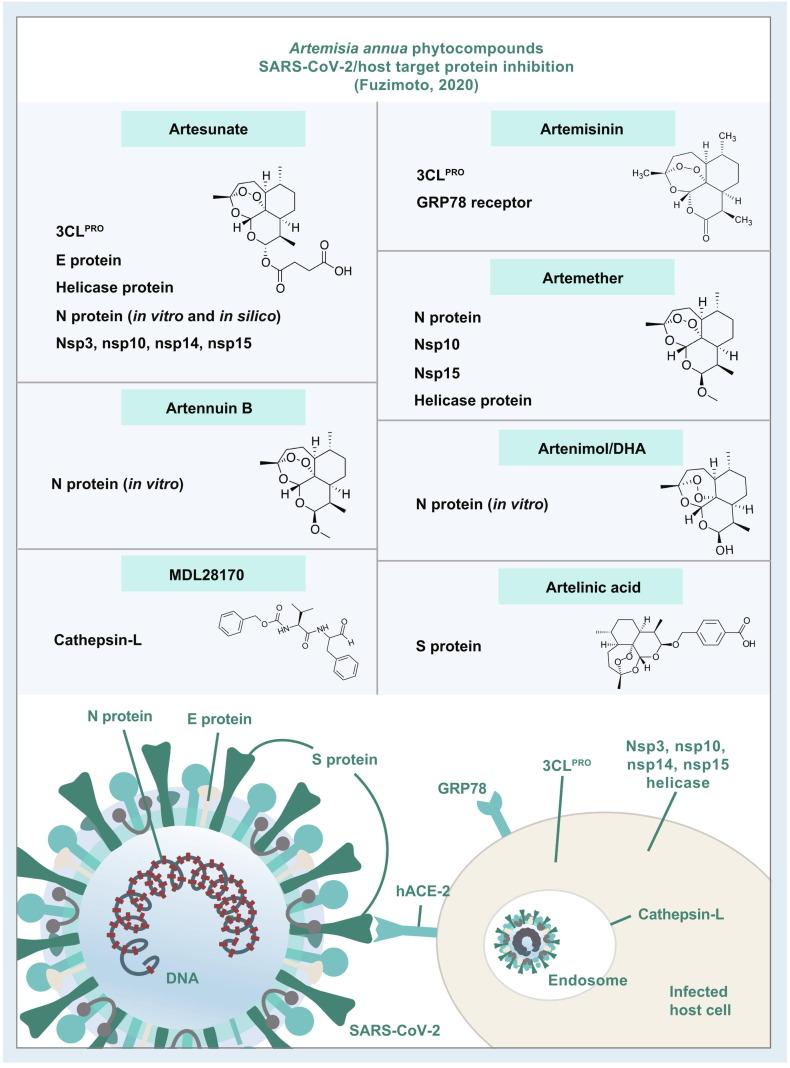
Artemisia annua and its phytocompounds have a rich history in the research and treatment of malaria, rheumatoid arthritis, systemic lupus erythematosus, and other diseases. Currently, the World Health Organization recommends artemisinin-based combination therapy as the first-line treatment for multi-drug-resistant malaria. Due to the various research articles on the use of antimalarial drugs to treat coronaviruses, a question is raised: would A. annua and its compounds provide anti-severe acute respiratory syndrome coronavirus-2 (SARS-CoV-2) properties? PubMed/MEDLINE, Scopus, and Google Scholar were searched for peer-reviewed articles that investigated the antiviral effects and mechanisms of A. annua and its phytochemicals against SARS-CoVs. Particularly, articles that evidenced the herb's role in inhibiting the coronavirus-host proteins were favored. Nineteen studies were retrieved. From these, fourteen in silico molecular docking studies demonstrated potential inhibitory properties of artemisinins against coronavirus-host proteins including 3CL, S protein, N protein, E protein, cathepsin-L, helicase protein, nonstructural protein 3 (nsp3), nsp10, nsp14, nsp15, and glucose-regulated protein 78 receptor. Collectively, A. annua constituents may impede the SARS-CoV-2 attachment, membrane fusion, internalization into the host cells, and hinder the viral replication and transcription process. This is the first comprehensive overview of the application of compounds from A. annua against SARS-CoV-2/coronavirus disease 2019 (COVID-19) describing all target proteins. A. annua's biological properties, the signaling pathways implicated in the COVID-19, and the advantages and disadvantages for repurposing A. annua compounds are discussed. The combination of A. annua's biological properties, action on different signaling pathways and target proteins, and a multi-drug combined-therapy approach may synergistically inhibit SARS-CoV-2 and assist in the COVID-19 treatment. Also, A. annua may modulate the host immune response to better fight the infection.
青蒿及其化合物在疟疾、类风湿性关节炎、系统性红斑狼疮等疾病的研究和治疗方面有着丰富的历史。目前,世界卫生组织推荐青蒿素联合疗法作为治疗耐多药疟疾的一线药物。由于有大量关于抗疟药物治疗冠状病毒的研究文章,人们提出了一个问题:青蒿及其化合物是否具有抗严重急性呼吸综合征冠状病毒 2(SARS-CoV-2)的特性?在 PubMed/MEDLINE、Scopus 和 Google Scholar 上搜索了研究青蒿及其植物化学物质对 SARS-CoV 的抗病毒作用和机制的同行评议文章。特别优先考虑了证明该草药在抑制冠状病毒宿主蛋白方面作用的文章。共检索到 19 篇研究论文。其中,14 项基于计算机的分子对接研究表明青蒿素类化合物对冠状病毒宿主蛋白具有潜在的抑制作用,这些蛋白包括 3CL、S 蛋白、N 蛋白、E 蛋白、组织蛋白酶-L、解旋酶蛋白、非结构蛋白 3(nsp3)、nsp10、nsp14、nsp15 和葡萄糖调节蛋白 78 受体。总的来说,青蒿的成分可能会阻碍 SARS-CoV-2 的附着、膜融合、进入宿主细胞,并阻碍病毒的复制和转录过程。这是首次全面综述了青蒿化合物对 SARS-CoV-2/冠状病毒病 2019(COVID-19)的应用,描述了所有的靶蛋白。讨论了青蒿的生物学特性、COVID-19 中涉及的信号通路,以及重新利用青蒿化合物的优缺点。青蒿的生物学特性、对不同信号通路和靶蛋白的作用以及多药物联合治疗方法的结合可能会协同抑制 SARS-CoV-2,并有助于 COVID-19 的治疗。此外,青蒿可能会调节宿主的免疫反应,以更好地对抗感染。

 Zotero 插件