
人类暴露于微塑料的研究综述及微塑料作为肥胖物的作用机制
A Review of Human Exposure to Microplastics and Insights Into Microplastics as Obesogens.
机构信息
Department of Pediatrics and Department of Environmental Medicine, New York University School of Medicine, New York, NY, United States.
出版信息
Front Endocrinol (Lausanne). 2021 Aug 18;12:724989. doi: 10.3389/fendo.2021.724989. eCollection 2021.
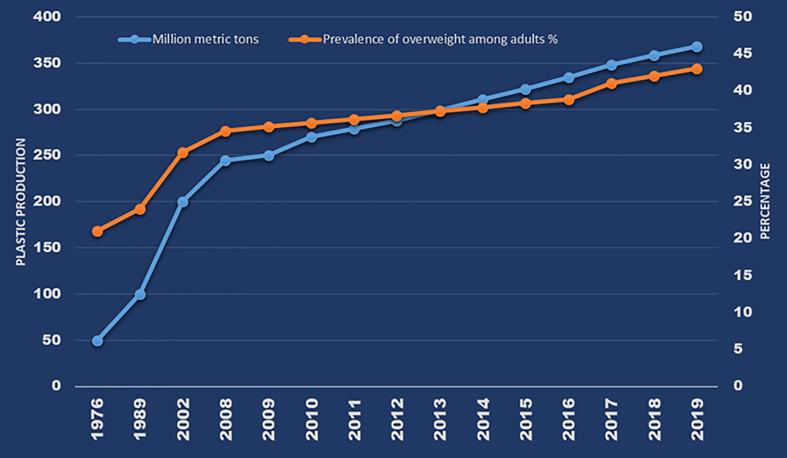
The ubiquitous exposure of humans to microplastics (MPs) through inhalation of particles in air and ingestion in dust, water, and diet is well established. Humans are estimated to ingest tens of thousands to millions of MP particles annually, or on the order of several milligrams daily. Available information suggests that inhalation of indoor air and ingestion of drinking water bottled in plastic are the major sources of MP exposure. Little is known on the occurrence of MPs in human diet. Evidence is accumulating that feeding bottles and medical devices can contribute to MP exposure in newborns and infants. Biomonitoring studies of human stool, fetus, and placenta provide direct evidence of MP exposure in infants and children. MPs <20 µm were reported to cross biological membranes. Although plastics were once perceived as inert materials, MP exposure in laboratory animals is linked to various forms of inflammation, immunological response, endocrine disruption, alteration of lipid and energy metabolism, and other disorders. Whereas exposure to MPs itself is a concern, MPs can also be sources of exposure to plastic additives and other toxicants. Exposure of human cell lines to MP additives such as phthalates, bisphenols, and organotins causes adverse effects through the activation of nuclear receptors, peroxisome proliferator-activated receptors (PPARs) α, β, and γ, and retinoid X receptor (RXR), leading to oxidative stress, cytotoxicity, immunotoxicity, thyroid hormone disruption, and altered adipogenesis and energy production. The size, shape, chemical composition, surface charge, and hydrophobicity of MPs influence their toxicity. Maternal transfer of MPs to the developing fetus has been demonstrated in exposed laboratory animals and through the analysis of human placenta. In laboratory animal studies, maternal exposure to MPs altered energy and lipid metabolism in offspring and subsequent generations. Moreover, concomitant with the global increase in plastics production, the prevalence of overweight and obesity in human populations has increased over the past five decades, and there is evidence to support the hypothesis that MPs and their additives are potential obesogens. Even though MP exposures are ubiquitous and toxic effects from such exposures are a concern, systematic studies on this topic remain urgently needed.
人类通过吸入空气中的颗粒和在灰尘、水和饮食中摄入微塑料(MPs)而普遍接触 MPs 已得到充分证实。据估计,人类每年摄入数万至数百万个 MPs 颗粒,或每天摄入数毫克。现有信息表明,吸入室内空气和摄入塑料瓶装饮用水是接触 MPs 的主要来源。对于 MPs 在人类饮食中的存在情况知之甚少。有证据表明,奶瓶和医疗器械会导致新生儿和婴儿接触 MPs。对人类粪便、胎儿和胎盘的生物监测研究为婴儿和儿童接触 MPs 提供了直接证据。据报道,<20 µm 的 MPs 可穿过生物膜。尽管塑料曾经被认为是惰性材料,但动物实验中的 MPs 暴露与各种形式的炎症、免疫反应、内分泌干扰、脂质和能量代谢改变以及其他疾病有关。虽然接触 MPs 本身令人担忧,但 MPs 也可能成为接触塑料添加剂和其他有毒物质的来源。暴露于 MPs 添加剂(如邻苯二甲酸酯、双酚 A 和有机锡)的人类细胞系通过激活核受体、过氧化物酶体增殖物激活受体(PPAR)α、β和γ 以及视黄酸受体(RXR)引起不良反应,导致氧化应激、细胞毒性、免疫毒性、甲状腺激素紊乱以及脂肪生成和能量产生改变。 MPs 的大小、形状、化学成分、表面电荷和疏水性会影响其毒性。在暴露于 MPs 的实验动物和通过对人类胎盘的分析中已经证明了 MPs 从母体向发育中的胎儿的转移。在动物实验中,母体接触 MPs 改变了后代和随后几代的能量和脂质代谢。此外,随着塑料产量在全球范围内的增加,过去五十年中人类超重和肥胖的患病率有所增加,有证据支持 MPs 及其添加剂是潜在的肥胖诱导物这一假设。尽管 MPs 暴露普遍存在,且此类暴露的毒性作用令人担忧,但仍迫切需要对此主题进行系统研究。


 Zotero 插件